


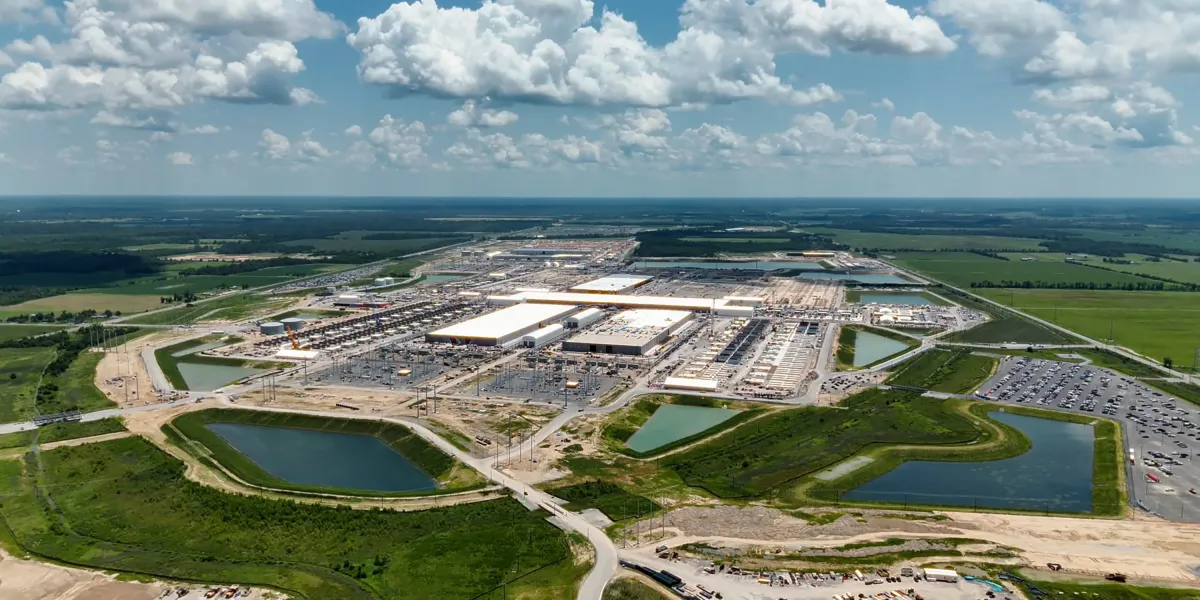
Plans for Meta’s Louisiana data center are expanding, increasing the site’s power requirements and prompting new natural-gas generation proposals. The development is part of a broader shift in the U.S. electricity sector: although wind and solar have dominated power-plant interconnection queues in recent years, data-center growth driven by artificial intelligence is increasing demand for natural-gas power, including plants built outside the traditional grid.
Data centers drive new demand for gas power
Plans for the Meta data center in Louisiana featured in an earlier report are growing, along with the facility’s electricity needs. The local power company’s plans include three natural-gas plants, according to reporting. Data-center developers are also looking beyond the power grid and planning to build their own off-grid gas plants.
One way to understand the future of the electricity system is to examine the interconnection queue—the list of power plants seeking to connect to the grid. In recent years, renewable energy projects, particularly wind and solar, have dominated these queues. Renewable sources are generally the cheapest way to add new generating capacity today.
That pattern is changing in some regions, especially at PJM, the nation’s largest grid operator. PJM serves parts of 13 states across an area stretching from Illinois to Washington, D.C., and has reported a significant increase in proposed natural-gas generation.
In August, PJM announced that it had accepted 715 project proposals into its queue, representing more than 200 gigawatts of capacity. Natural-gas plants accounted for nearly half of the proposed generating capacity.
PJM queue points to a broader fossil-fuel trend
If all the projects in PJM’s queue were built, the share of fossil fuels in the grid’s generation mix would rise from 61% to 67%, according to an analysis by Kevin Kircher, an energy modeler and assistant professor of mechanical engineering at Purdue University.
PJM’s interconnection queue reflects a wider trend across the United States. Natural gas is already the country’s largest source of electricity and is increasingly being used as the default option to meet rapidly growing power demand.
AI expansion is affecting technology companies’ emissions
The AI-driven increase in electricity demand is already affecting technology companies’ greenhouse-gas emissions. Meta’s 2026 Sustainability Report said the company’s emissions increased 45% from the previous year.
That increase was larger than the increases reported by other hyperscalers, including Google, at 18%; Amazon, at 16%; and Microsoft, at 25%.
Meta is also “reevaluating” its goal of achieving net-zero emissions by 2030, the report said, without specifying when or how the company would make that decision.
Source: www.technologyreview.com