


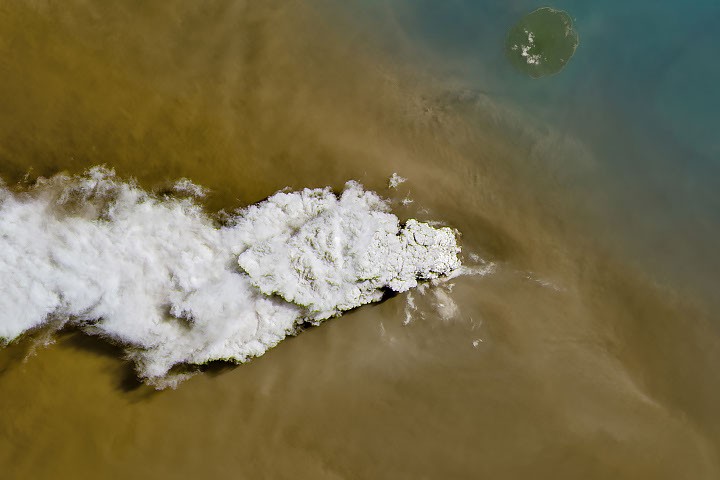
Anak Krakatau Eruption Sends Ash Into the Atmosphere and Disrupts Flights in Indonesia
Indonesia’s Anak Krakatau volcano
erupts regularly in the Sunda Strait between the islands of Java and Sumatra. While much of its
activity is relatively mild, the volcano can produce powerful and hazardous eruptions. In early
September 2026, Anak Krakatau erupted violently for more than 24 hours, sending volcanic gas and
ash high into the atmosphere, affecting air quality, and disrupting thousands of flights across Indonesia.
Satellite observations captured the eruption on September 5, 2026. The Operational Land Imager
(OLI) aboard the NASA-USGS Landsat 8 satellite
recorded a bright white plume of volcanic gas rising above a broad, brown ash cloud. Data from
the Visible Infrared Imaging Radiometer Suite (VIIRS)
instrument aboard the Suomi National Polar-orbiting Partnership (Suomi NPP) satellite showed that
volcanic material had spread widely from the volcano.
Volcanic ash reaches up to 15,000 meters
Indonesia’s meteorological agency, BMKG,
reported that volcanic ash had reached approximately 6,000 meters (20,000 feet) east of Anak
Krakatau and as high as 15,000 meters (50,000 feet) west of the volcano by September 6.
The ash in the atmosphere created a serious aviation hazard. Eight airports on Java and Sumatra
were temporarily closed, and nearly 3,000 flights in and out of the region were affected, according
to BMKG
and news reports. Volcanic ash can
damage aircraft engines, reduce visibility, and create dangerous conditions for commercial aviation.
Volcanic ash affects air quality and public health
Ashfall reached densely populated areas, including Jakarta and parts of West Java, according to
the Indonesia Humanitarian Coordination Platform (IHCP).
Volcanic ash can irritate the respiratory system, eyes, and skin. The IHCP emphasized that ash-related
air pollution differs from smoke generated by peatland fires elsewhere in Indonesia. The particles
have different characteristics, travel through the atmosphere differently, and require distinct
protective measures.
Anak Krakatau activity decreases after explosive eruption
The explosive phase of the Anak Krakatau eruption weakened on September 6, although the volcano
continued to rumble and produce intermittent ash and volcanic material. Its activity returned to
a more typical Strombolian-style eruption pattern,
which is characterized by periodic bursts of gas, ash, and lava fragments.
Flight operations gradually resumed after the ash cloud moved away from key aviation routes. By
September 8, the eruption had significantly declined, but Anak Krakatau remained at Indonesia’s
second-highest alert level. The volcano had also shown increased activity in early July 2026.
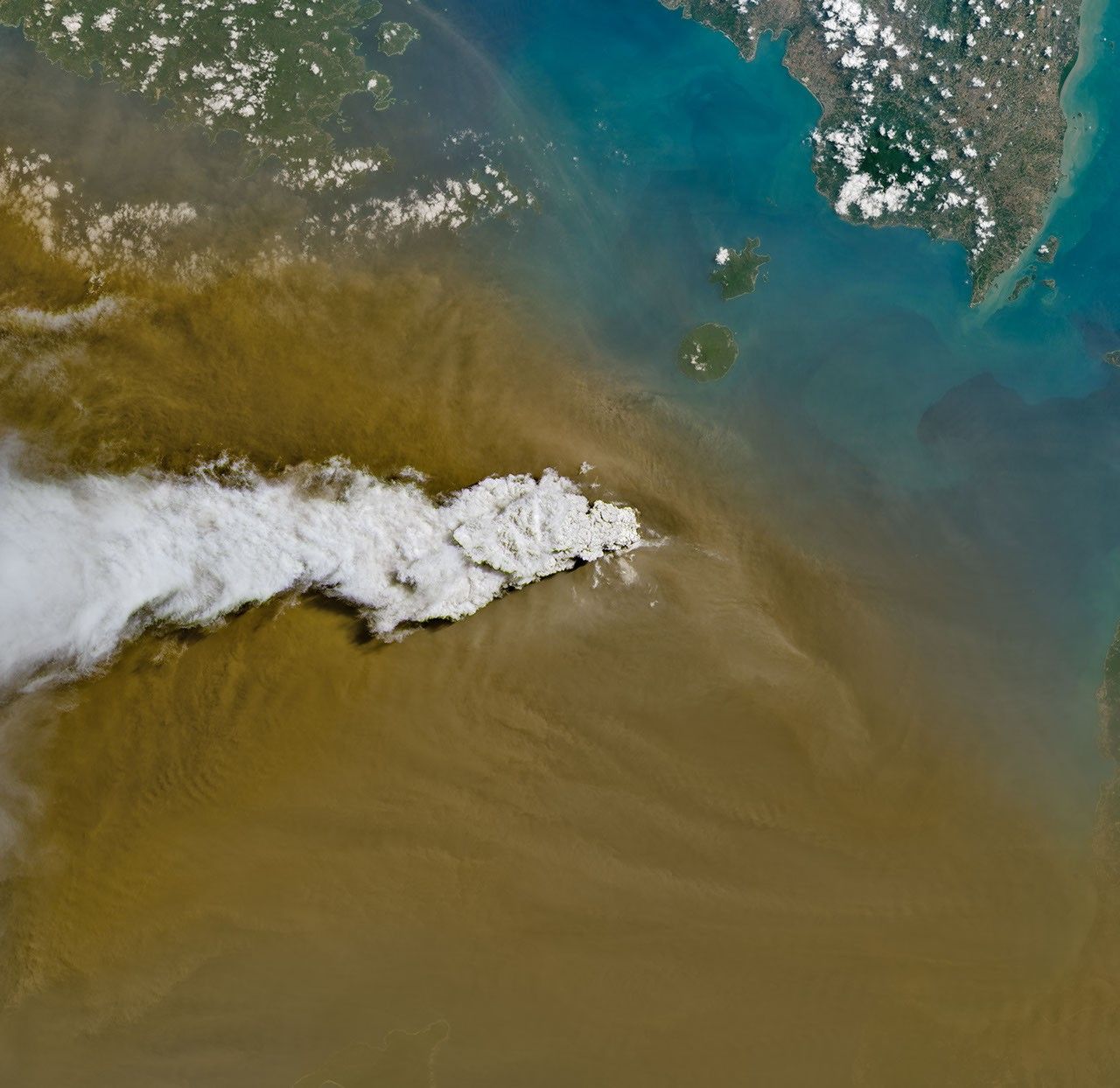
September 5, 2026: Landsat 8 Image
NASA-USGS Landsat 8 captured the volcanic gas plume and ash cloud rising from Anak Krakatau.
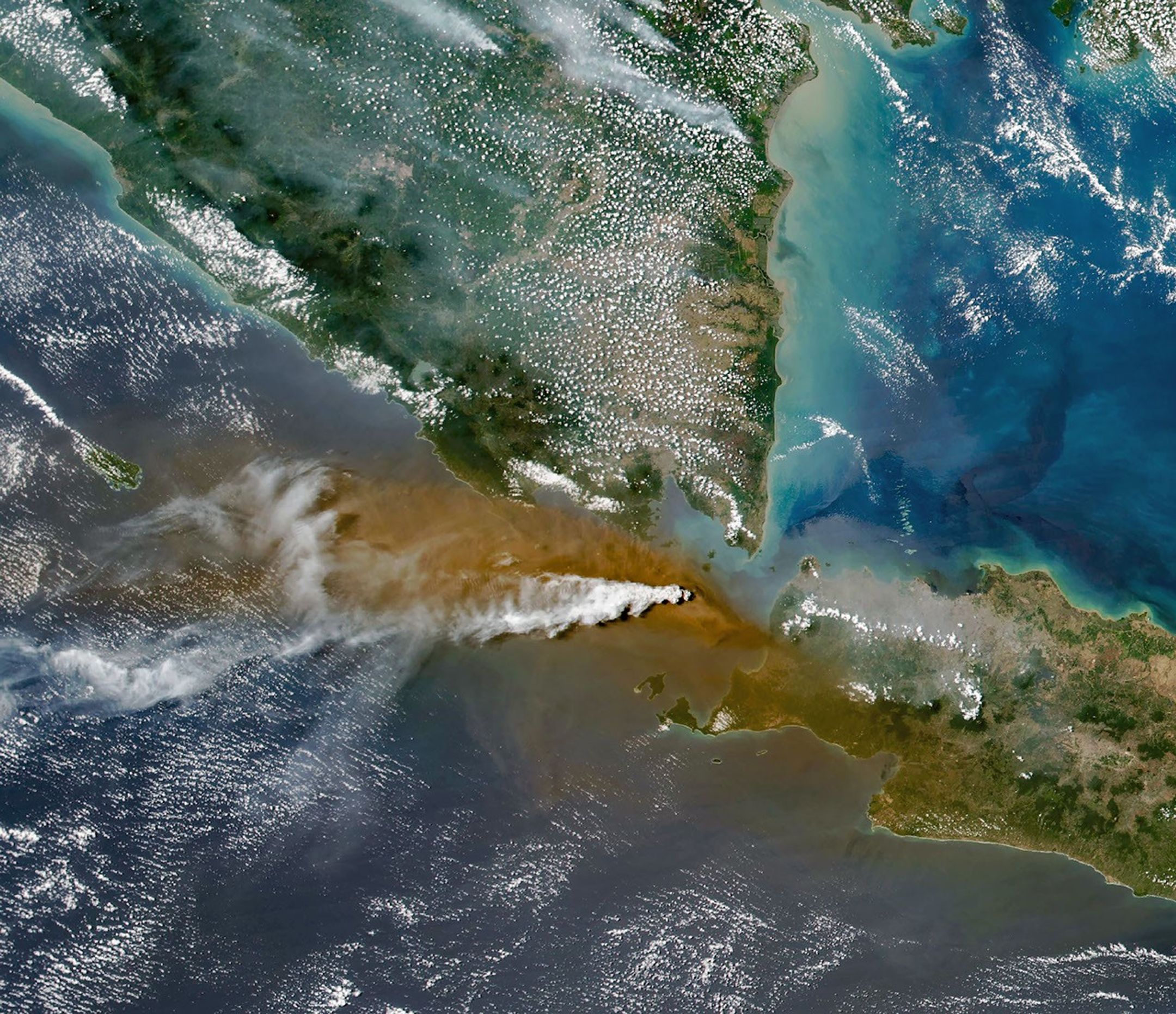
September 5, 2026: Suomi NPP VIIRS Image
VIIRS observations show the eruption’s ash and gas plume spreading across the surrounding region.
NASA Earth Observatory images by Michala Garrison using Landsat data from the
U.S. Geological Survey and VIIRS data from
NASA’s Land, Atmosphere Near Real-Time Capability for EOS (LANCE),
GIBS/Worldview, and the Suomi National Polar-orbiting Partnership satellite.
Story by Lindsay Dorman.
Sources
-
ABC News (September 7, 2026).
Flights to and from Indonesia’s capital resume after two days of suspension due to volcanic eruption
. Accessed September 8, 2026. -
BBC (September 8, 2026).
Indonesian airport reopens after 340,000 people were stranded due to volcanic eruption
. Accessed September 8, 2026. -
BMKG (September 7, 2026).
Anak Krakatau volcanic ash closes eight airports temporarily
. Accessed September 8, 2026. -
BMKG (September 6, 2026).
BMKG monitors the impacts of the Anak Krakatau eruption
. Accessed September 8, 2026. -
Global Volcanism Program (2026).
Krakatoa. Accessed September 8, 2026. -
Indonesia Humanitarian Coordination Platform (September 6, 2026).
Anak Krakatau eruption, volcanic ashfall, and concurrent forest fire haze
. Accessed September 8, 2026. - NASA Earth Observatory, Anak Krakatau. Accessed September 8, 2026.
Source: science.nasa.gov