


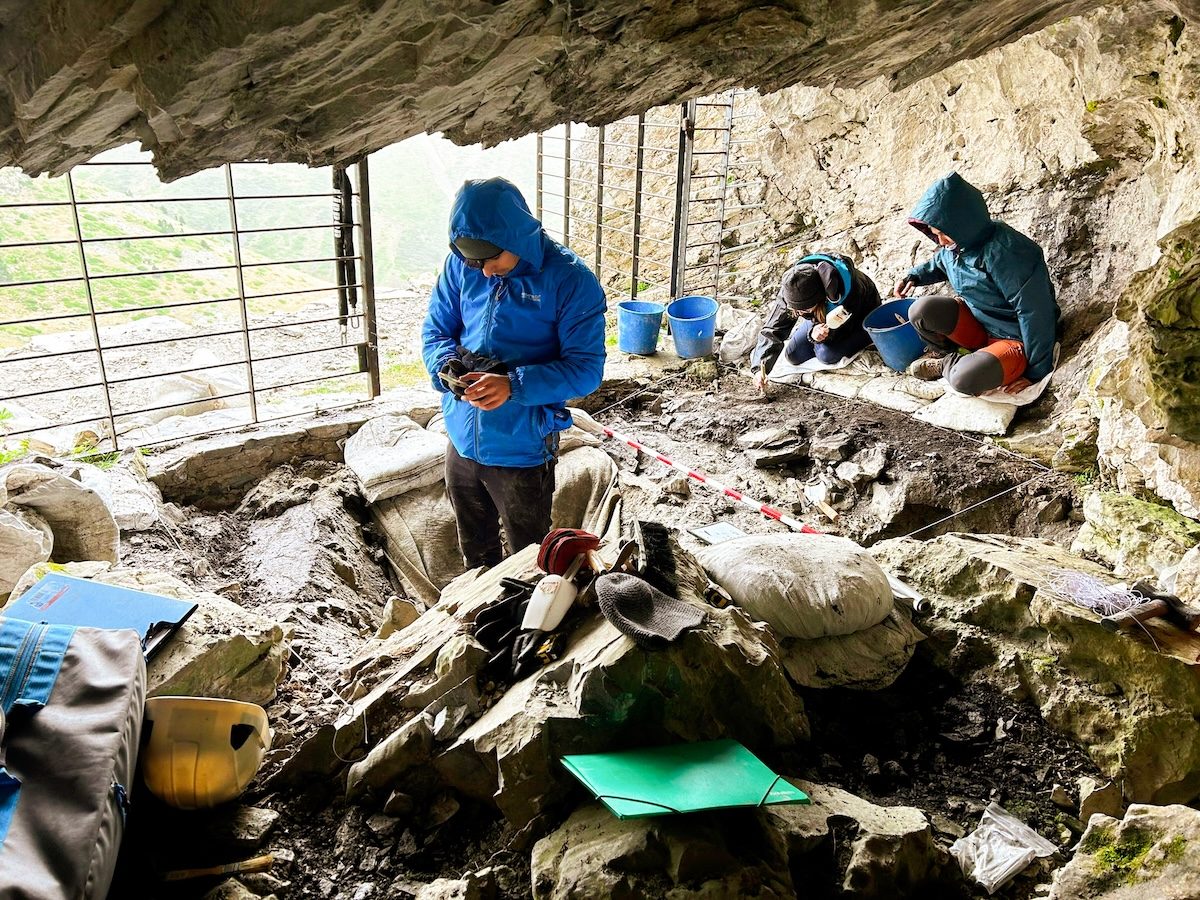
An astonishing ancient settlement has been uncovered in the heights of Spain’s Pyrenees.
Documented in a new study, the prehistoric cave known as Cova 338 is positioned at an impressive 2,235 meters (7,333 feet) above sea level in the Nuria Valley, making it the highest known dwelling of its kind in the region.
For years, archaeologists believed that locations above 2,000 meters (6,562 feet) were merely transit points for inhabitants. However, recent findings spanning a timeline of over 5,000 years (from the 5th century to the 1st millennium BC) indicate that various groups occupied these caves for extended periods.
Interestingly, this occupation was not continuous. Archaeological dating reveals a notable period of abandonment, suggesting that the return of these groups was strategic and pre-planned, according to the researchers.
The excavation of Cova 338 took place between 2021 and 2023, spearheaded by specialists from Spain’s Autonomous University of Barcelona (UAB) and the Institute of Paleoecology, Human Evolution, and Society of Catalonia (IPHES-CERCA).
During the excavation, scientists uncovered fire residues, animal bones, pottery shards, and two unique pendants (one crafted from a sea shell and another from a brown bear’s tooth).
Additionally, the cave contained intriguing green minerals believed to be malachite, a copper carbonate mineral, suggesting evidence of early copper extraction practices in Western Europe.
This study implies that these minerals were intentionally collected and processed in the caves, showcasing an organized approach to resource exploitation in alpine environments.
Based on the structured nature of these activities, researchers speculate that people inhabited these caves during distinct historical periods to accomplish specific tasks.
“Mountains were not barriers, but thriving sites in the economic and territorial strategies of prehistoric communities,” stated Dr. Udaldo Carbonell, a co-author of the study, from IPHES-CERCA.
Main author Carlos Tornello emphasized, “For an extended period, these areas were perceived as peripheral. Our findings document repeated occupations with intricate activities and significant mineral resource exploitation,” said the professor from UAB’s Department of Prehistory.
This groundbreaking study was published in the journal Frontiers of Environmental Archaeology.
Read more:
Source: www.sciencefocus.com