


Close Menu
HitechubHitechub
    What's Hot
    AI

    AI created opening credits for the series “Friends”

    Science

    Revolutionary Mathematics AI Solves Decades-Old Research Problems in Just Weeks

    Technology

    10 Tips for Using Technology to Grow Your Business

    Important Pages:
    • About Us
    • Privacy Policy
    • Terms & Conditions
    Facebook X (Twitter) Instagram Pinterest
    Facebook X (Twitter) Instagram
    HitechubHitechub
    Thursday, June 4
    • Technology
      1. AI
      2. Gadgets
      3. View All

      This is the most popular CEO in the world

      Sectors in which “Chat-GPT” is most often used

      AI Pioneer Expresses Concern About Potential for AI to Surpass Humanity

      Artificial intelligence has begun to “swallow” professions

      What’s new in Android 14

      Europeans have about 700 million old mobile phones in their drawers

      Here’s how you can tell if your phone is being tapped

      “Sneaker X” – computer case in the shape of a sneaker

      Russian Gamers Unite to Prevent Nuclear War: Join the Fight Online

      Challenges of Space Travel: Why Journeying to Space is So Difficult

      NASA Astronaut Casts Historic Vote from Space

      Discover the Future of Comfort: What If You Could Wear a Chair?

    • Science
      1. Space
      2. Wheels
      3. View All

      Galaxies in the universe are growing more slowly than they should

      “Espace” presented the new lander “Apex 1.0”

      The largest asteroid sample ever collected has arrived on Earth

      (VIDEO) Incredible flight of the Parker Solar Probe

      Toyota wants to make a new generation battery with a range of up to 1,200 km

      Meet Toyota’s lunar “baby” that could make exploring the Moon easier

      Microlino – Is this the perfect city car?

      Alfa Romeo 4C gets an electric successor

      Discover the Giant Scorpion That Dominated Ancient Britain in the Devonian Period

      Pigeons Utilize Superparamagnetic Immune Cells in Their Livers to Detect Earth’s Magnetic Field

      Webb Telescope Discovers Methane in Interstellar Comet 3I/ATLAS

      Silent Spring: How Rachel Carson’s 1962 Science Book Transformed the World

    HitechubHitechub
    Home » The Impacts of El Niño: Potential Negative Effects and What Lies Ahead
    Science

    The Impacts of El Niño: Potential Negative Effects and What Lies Ahead

    Share Facebook Twitter Pinterest WhatsApp
    Share
    Facebook Twitter LinkedIn Pinterest WhatsApp

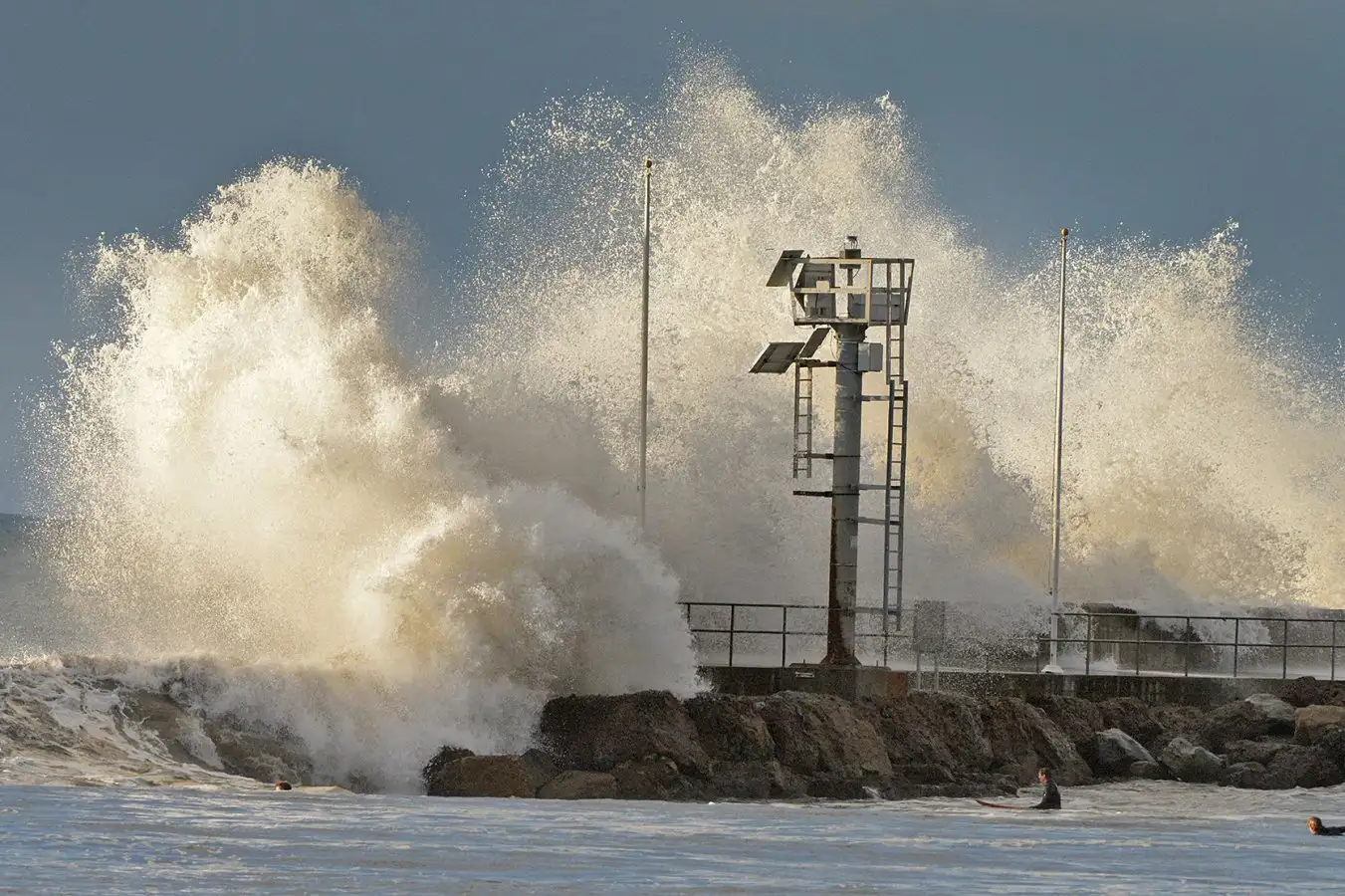
    In 2016, waves accelerated by El Niño hit the California coast.

    Eliasson/Zuma Wire/Shutterstock

    According to various reports, the “Godzilla El Niño” phenomenon is on the horizon, indicating that there is an 80% chance of El Niño developing by September. While most predictions suggest a moderate event, there’s a possibility that a Super El Niño could form, triggering significant changes.

    The implications of this are concerning. Regardless of its intensity, more damaging El Niño events are anticipated in the future. Even if subsequent events are less powerful, their effects will likely be amplified in a warming world.

    “Even a standard El Niño could cause larger regional and global impacts,” states Axel Timmermann from Busan National University in South Korea.

    Research by Timmermann’s team indicates that El Niño and La Niña events, part of the ENSO cycle, may also become significantly stronger, affecting Atlantic weather patterns as well. This could further amplify their impacts.

    “Our latest models predict that the extremes of El Niño and La Niña will not only become more frequent but also increasingly intense, with a broader influence on remote regions, notably Europe,” Timmermann mentions.

    The El Niño phenomenon results from variations in water temperature and wind patterns in the Pacific Ocean. During a neutral state, trade winds push warm waters westward, causing cold waters to rise off the coast of South America. This shifting generates heavy rainfall in the western Pacific.

    Occasionally, weakened trade winds allow warm waters to flow back toward the east, which can strengthen precipitation patterns and create positive feedback loops that lead to El Niño events. This shift results in severe droughts in countries like Australia and Indonesia, while South America faces increased flooding.

    This is why El Niño can lead to rapid surface warming of the Earth. An expansive area of warm water leads to increased evaporation, and as clouds form, they release latent heat, transferring significant warmth from the ocean to the atmosphere.

    The El Niño’s strength hinges on how far warm water sprawls east toward South America. It is gauged based on how much warmer the central and eastern Pacific becomes compared to average temperatures. Generally, an El Niño is defined by sea surface temperature anomalies exceeding 0.5°C. The term “Super El Niño” is sometimes used for anomalies above 2°C, while “Godzilla El Niño” refers to anomalies surpassing 3°C, as suggested by Adam Scaife at the Met Office Hadley Centre.

    As the El Niño phase progresses, negative feedback mechanisms may emerge. Specifically, cloud cover can lead to a cooling effect, reverting to neutral states or transitioning to La Niña, where strengthened trade winds push cold upwelling water even farther west.

    The three most significant El Niño events recorded occurred in 1982-83, 1997-98, and 2015-16. Each of these events caused severe detriment to both human lives and wildlife, notably resulting in the mass mortality of corals and other marine life.

    Each Super El Niño has incurred trillions in damages, as detailed in a 2023 study by Christopher Callahan from Indiana University. “Our findings indicate a direct relationship between the strength of Pacific ocean temperatures and the magnitude of economic losses,” Callahan remarked. “If a major El Niño occurs this year, we should brace for economic losses similar to previous catastrophic events.”

    With global warming, future El Niño and Super El Niño events will likely be even more devastating. “The science is undeniably clear,” claims Richard Allan from the University of Reading, UK.

    Allan notes that ENSO-related flooding will intensify due to increased moisture in the atmosphere, leading to heavier rainfall during storms. On the contrary, hotter temperatures will accelerate soil drying rates, prolonging and intensifying drought conditions.

    Some climate models indicate that warming may exacerbate the feedback loops of ENSO events, potentially amplifying both El Niño and La Niña occurrences and leading to greater “climate whiplash,” making it increasingly challenging for societies to adapt to a warming planet.

    “This implies that numerous regions will experience heightened fluctuations between wet and dry periods,” states Malte Stucker, a member of Timmermann’s team at the University of Hawaii.

    Moreover, the research suggests that intensified fluctuations could synchronize ENSO events with a climate phenomenon known as the North Atlantic Oscillation. Should this occur, Europe could witness substantial variations in floods and droughts.

    “This would represent a significant regime change for Europe, as El Niño currently has minimal effects on European weather,” Stucker comments.

    While there’s considerable certainty that a similarly large El Niño will have more severe repercussions, there’s less consensus on its potential intensification. “A range of opinions exists regarding the future dynamics of El Niño and La Niña,” Scaife explains.

    Despite the uncertainty, many climate models do indicate a more profound connection with regions such as the Atlantic Ocean, which may enhance El Niño’s influence across the Pacific.

    Even if ENSO events intensify, they won’t do so indefinitely, Timmermann clarifies. This intensification is linked partly to rapid warming of waters at depths of 100 meters across much of the Pacific. He anticipates that the ENSO events will likely weaken as groundwater catches up and temperature differentials lessen.

    What about the timeline for this decline? It may not occur until beyond 2150, so it’s prudent to be prepared.

    Topics:

    • climate change/
    • abnormal weather

    Source: www.newscientist.com

    Share. Facebook Twitter Pinterest LinkedIn WhatsApp
    Previous ArticleUnderstanding the Dying Process: Insights from Medical Experts on What Happens When We Die
    Next Article Exploring Earth’s Mysterious Triple Symmetry and Its Impact on Climate Change

    Related Posts

    Science

    Discover the Giant Scorpion That Dominated Ancient Britain in the Devonian Period

    Science

    Pigeons Utilize Superparamagnetic Immune Cells in Their Livers to Detect Earth’s Magnetic Field

    Science

    Webb Telescope Discovers Methane in Interstellar Comet 3I/ATLAS

    Science

    Silent Spring: How Rachel Carson’s 1962 Science Book Transformed the World

    Science

    New Axolotl Fossil Discovered in Mexico: A Significant Paleontological Find

    Science

    When Food is Scarce: This Single-Celled Organism Becomes a Giant Man-Eater for Survival

    Science

    Unlocking Multitasking: How Science Reveals Your Brain’s Potential with Practice

    Science

    Revealing the Truth: Stonehenge’s Altar Stones Likely Not Transported by Glaciers

    Add A Comment
    Leave A Reply Cancel Reply

    Stay In Touch
    • Facebook
    • Twitter
    • Instagram
    • Pinterest
    Top Picks
    Wheels

    Toyota wants to make a new generation battery with a range of up to 1,200 km

    Toyota has entered into a major strategic partnership with the intention of reshaping the electric vehicles industry by mass-producing state-of-the-art solid-state batteries.

    Top 5 Expert-Approved Strategies for Managing Hair Loss, According to a Psychologist

    What’s new in Android 14

    What would happen if you were without a suit in space?

    The 10 Key Security Analytics You Need for Effective Security

    Most Popular
    Science

    Experts Recommend Ditching AI Prompts to Reduce Energy Consumption

    AI

    AI created opening credits for the series “Friends”

    Categories
    • AI (13)
    • Gadgets (10)
    • Science (47)
    • Space (9)
    • Technology (37)
    • Wheels (9)
    Our Picks
    Wheels

    What does a night drive look like with one of the most beautiful cars in the world: the Rolls-Royce Ghost

    Science

    Understanding the Dying Process: Insights from Medical Experts on What Happens When We Die

    © 2026 Hitechub.
    • Home
    • About Us
    • Privacy Policy
    • Terms & Conditions

    Type above and press Enter to search. Press Esc to cancel.

    We are using cookies to give you the best experience on our website.

    You can find out more about which cookies we are using or switch them off in .

    Ad Blocker Enabled!
    Ad Blocker Enabled!
    Our website is made possible by displaying online advertisements to our visitors. Please support us by disabling your Ad Blocker.
    Go to mobile version
    Hitechub
    Powered by  GDPR Cookie Compliance
    Privacy Overview

    This website uses cookies so that we can provide you with the best user experience possible. Cookie information is stored in your browser and performs functions such as recognising you when you return to our website and helping our team to understand which sections of the website you find most interesting and useful.

    Strictly Necessary Cookies

    Strictly Necessary Cookie should be enabled at all times so that we can save your preferences for cookie settings.