


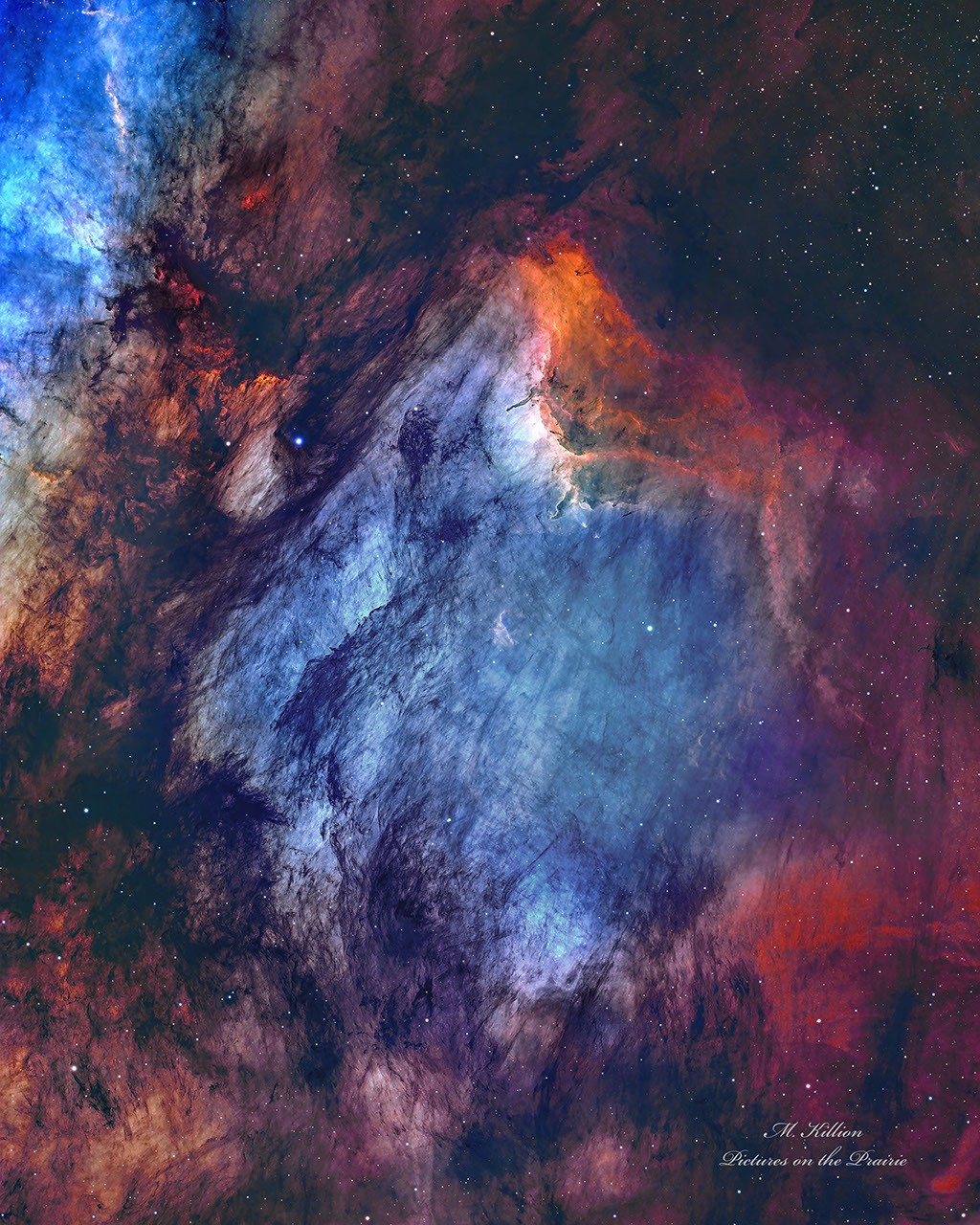
Explanation: The Pelican Nebula, officially known as IC 5070, is a dynamic region of gas and dust that is slowly changing over time. It is separated from the larger North America Nebula by a molecular cloud filled with dark interstellar dust. This detailed image combines a 25-hour exposure to reveal the nebula’s delicate, fibrous dust structures. Featured astrophotography from Utah, United States, captures the intricate features of this remarkable Pelican Nebula.
Nebulae such as IC 5070 are widely studied because they combine active star formation with evolving clouds of gas. Radiation from young, energetic stars is gradually transforming cold gas into hot, ionized gas. The boundary between these regions, known as the ionization front, appears as a bright orange feature in the upper-right portion of the image. Dense pillars of cold gas, including the prominent tentacle-like structure, remain visible throughout the nebula. Millions of years from now, the Pelican Nebula, surrounded by dark nebulae such as LDN 935, may look so different that it will no longer resemble a pelican. The balance and arrangement of stars and gas will continue to evolve, leaving behind a dramatically different celestial landscape.
APOD’s main website is moving: Visit science.nasa.gov/apod.
Tomorrow’s photo: Geometric Saturn
Source: science.nasa.gov