


Reverse osmosis (RO) filtration can produce substantially cleaner water than an inexpensive Brita-style carbon filter, but it also costs more, wastes some water and removes minerals that many people may prefer to keep. For most households, the right choice depends first on the quality of the local water supply, then on taste, installation requirements and ongoing filter costs.
Carbon filtration can improve water’s taste and smell, and it may capture certain volatile organic compounds through adsorption. RO systems cannot remove every contaminant, but most include an additional carbon filter to provide broader treatment.
Tank-based and tankless reverse osmosis systems
There are two main types of residential RO systems. Tank-based systems filter water slowly, generally without electricity, and store the treated water in a fairly large tank beneath the sink.
Tankless systems treat water on demand and have become more popular. They require electricity to move water quickly, however, and their added complexity makes them considerably more expensive.
What are the real risks of contaminants in water today?
“Tap water in the United States is safe for most people, most of the time,” says the industrial water treatment veteran. The website tap & air, which monitors water and air quality in hundreds of municipalities, adds: “The problem is local, not universal.”
The first step in assessing your household’s risk is to check the latest water-quality data for your area. Under the Safe Drinking Water Act, local water systems must issue an annual report on the quality of the water they supply by July 1 each year.
These reports can be lengthy, so Voll recommends focusing on three main contaminant indicators: lead, nitrates or arsenic, and PFAS, sometimes called “forever chemicals.” PFAS are used in nonstick cookware and other products.
Lead, nitrates and arsenic remain serious concerns, although the source says they are relatively rare today. PFAS, meanwhile, are a particular concern nationally. Voll said at least one PFAS compound had been detected in the water supplies of 98 of the 200 largest cities in the United States.
RO systems can treat PFAS compounds, lead and other contaminants. Carbon filters usually cannot.
“Most people don’t need an RO,” Voll says. “But some homes clearly need it. The way to tell is to first read your water report.”
What are the disadvantages of using an RO system?
RO systems have several drawbacks, many of which are linked to their cost and complexity.
- RO can waste water: The technology has historically required large amounts of untreated tap water to produce relatively small amounts of purified water. Older systems could use up to 4 or more gallons of tap water for every gallon of clean water. More recent systems have improved considerably: the source notes that 4 gallons of tap water can produce up to 3 gallons of clean water, described as a 3:1 pure-water-to-wastewater ratio.
- Replacement filters can be expensive: An RO system may use as many as six filtration cartridges. Depending on the application, these typically need replacement every one to two years. Annual replacement-cartridge costs can range from $50 to $200, so buyers should check those prices before purchasing.
- RO removes beneficial minerals: Calcium, magnesium and potassium cannot pass through the RO membrane. The process also removes fluoride, which some users do not want removed and dentists generally do not favor removing. Some systems offer remineralization or pH-boosting cartridges, but those add to ongoing replacement costs.
- Installation may require professional help: Because even a small leak can cause serious water damage, professional installation may be worthwhile. Most RO systems also require a dedicated faucet, which can mean drilling a new hole in the countertop if one is not already available.
Do you need an under-sink RO system?
In the example discussed here, the local water report suggests that an RO system is not necessary for safety reasons. However, the water supplier uses chloramines as disinfectants, and chloramine-treated water has a slight but noticeable unpleasant taste when consumed directly from the tap.
The issue is intensified by the area’s very hard water. The part of Texas described in the source is built largely on limestone, and the high level of calcium carbonate can give the water a slightly bitter flavor. The local report is available through this city water report.
For the author, the main benefit of RO is the taste of the water. Any residual contaminants removed during the process are an additional benefit rather than the primary reason for using the system.
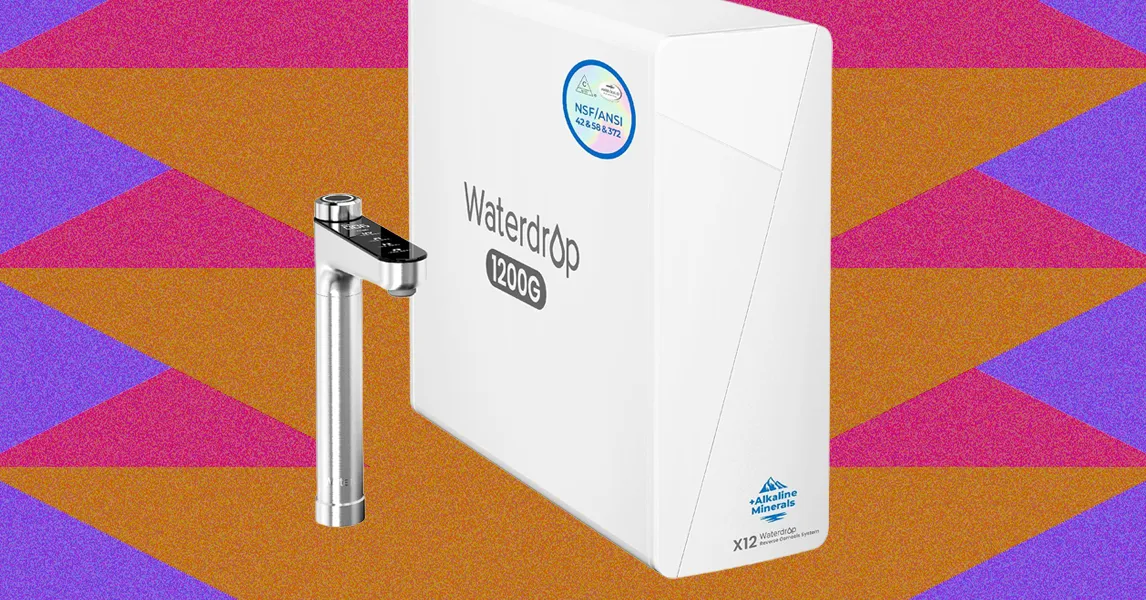
Waterdrop X12 under-sink tankless RO system
The source tested the Waterdrop X12, a higher-end tankless RO system. A plumber removed the old unit beneath the sink and installed the replacement in less than an hour.
Under-sink RO systems operate separately from a home’s existing plumbing. They typically use three color-coded tubes: one connects to the water supply through an adapter valve, another connects to the wastewater drain using the included fitting, and the third connects to the dedicated faucet.
The author says the connections might have been manageable as a DIY replacement, particularly because an existing system was already in place. However, previous experience with even minor leaks led to choosing professional installation for added peace of mind.
Source: www.wired.com