


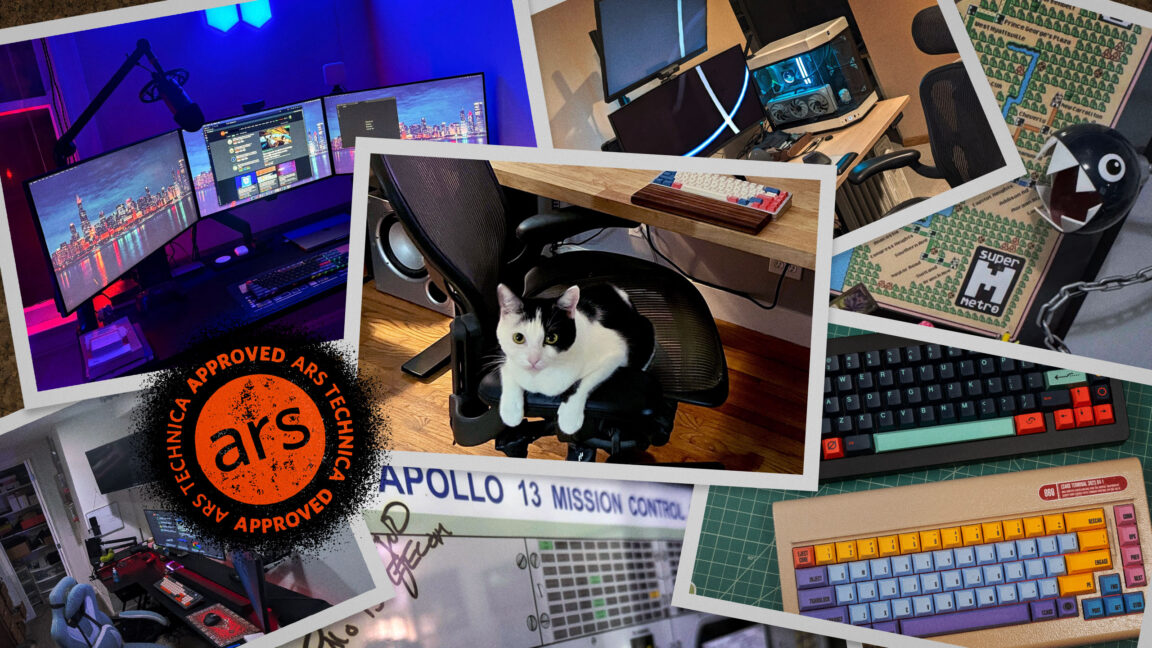
Ars Technica contributors Aaron Zimmerman and Samuel Axon describe how their home workspaces combine technology, gaming and creative hobbies. Zimmerman’s desk shifts between PC work, MacBook use, Steam Deck gaming and crafts, while Axon’s compact Chicago office accommodates professional writing, gaming and nighttime lighting alongside a MacBook Pro and a gaming desktop.
Aaron Zimmerman’s desk doubles as a workshop
The image suggests that Aaron Zimmerman is working at the pictured PC, which has an RTX 4070, Ryzen 5 3600X and 32GB of RAM. That is sometimes the case, but he often moves around his apartment during work hours with an M4 MacBook Air. He no longer sits at the desk to play games. When a game cannot run natively on Steam Deck, he recommends using Moonlight and Apollo to stream it from a PC to the handheld; Apollo was formerly known as Moonlight and Sunshine.
The adjustable desk comes from Uplift. Zimmerman says he does not enjoy working while standing, so its ability to raise the tabletop is mainly useful for retrieving anything he drops onto it.
At night, the desk becomes a craft area. Replacing the Wobkey Rainy75 keyboard with a cutting mat makes room for assembling a Gundam, putting together a corner of a book or working on a crochet pattern. Several amigurumi projects are scattered around the desk, and supplies stored in drawers and containers can be brought over when needed.
“Sure, I work here from time to time.”
Samuel Axon’s compact Chicago office
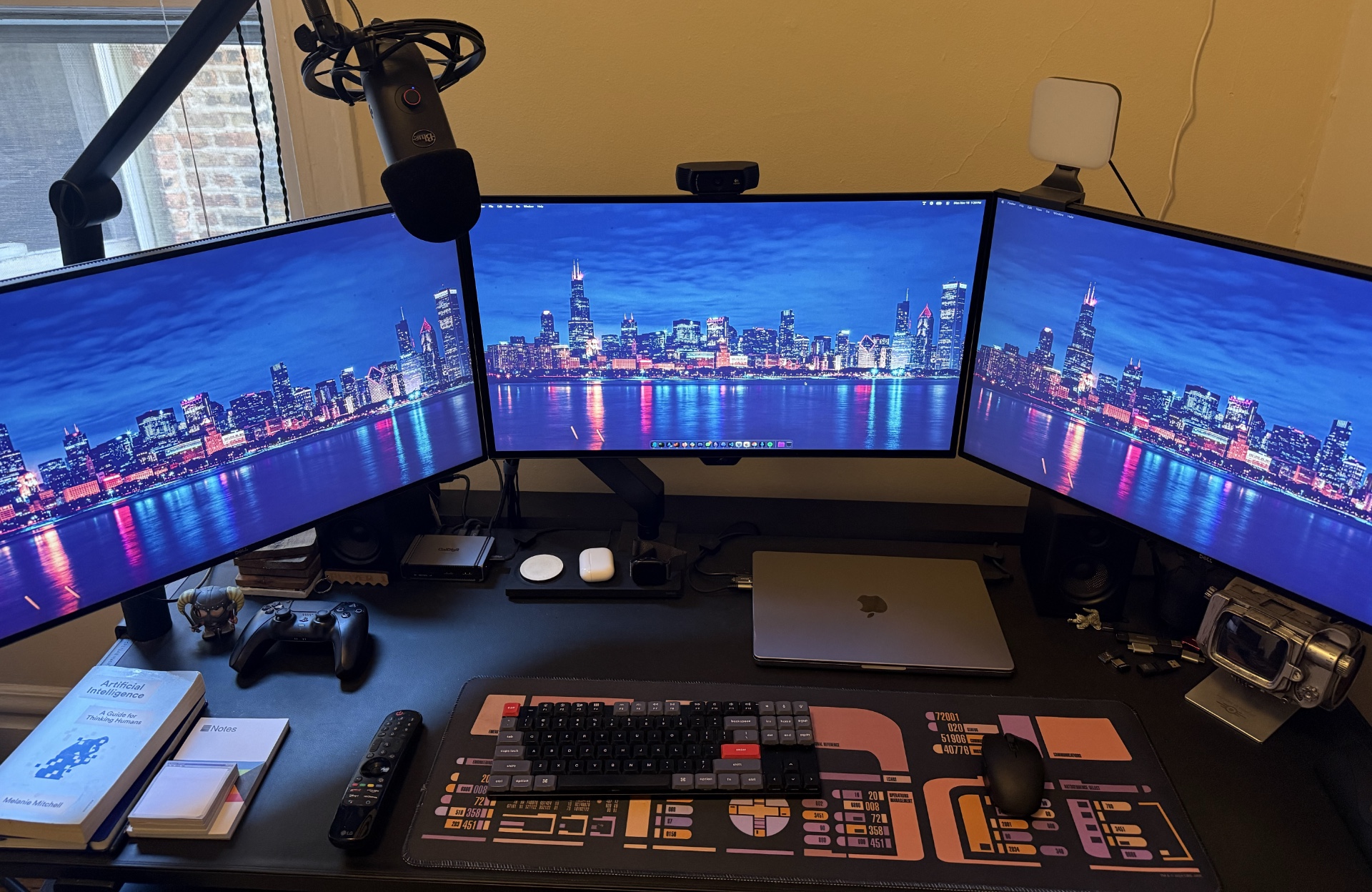
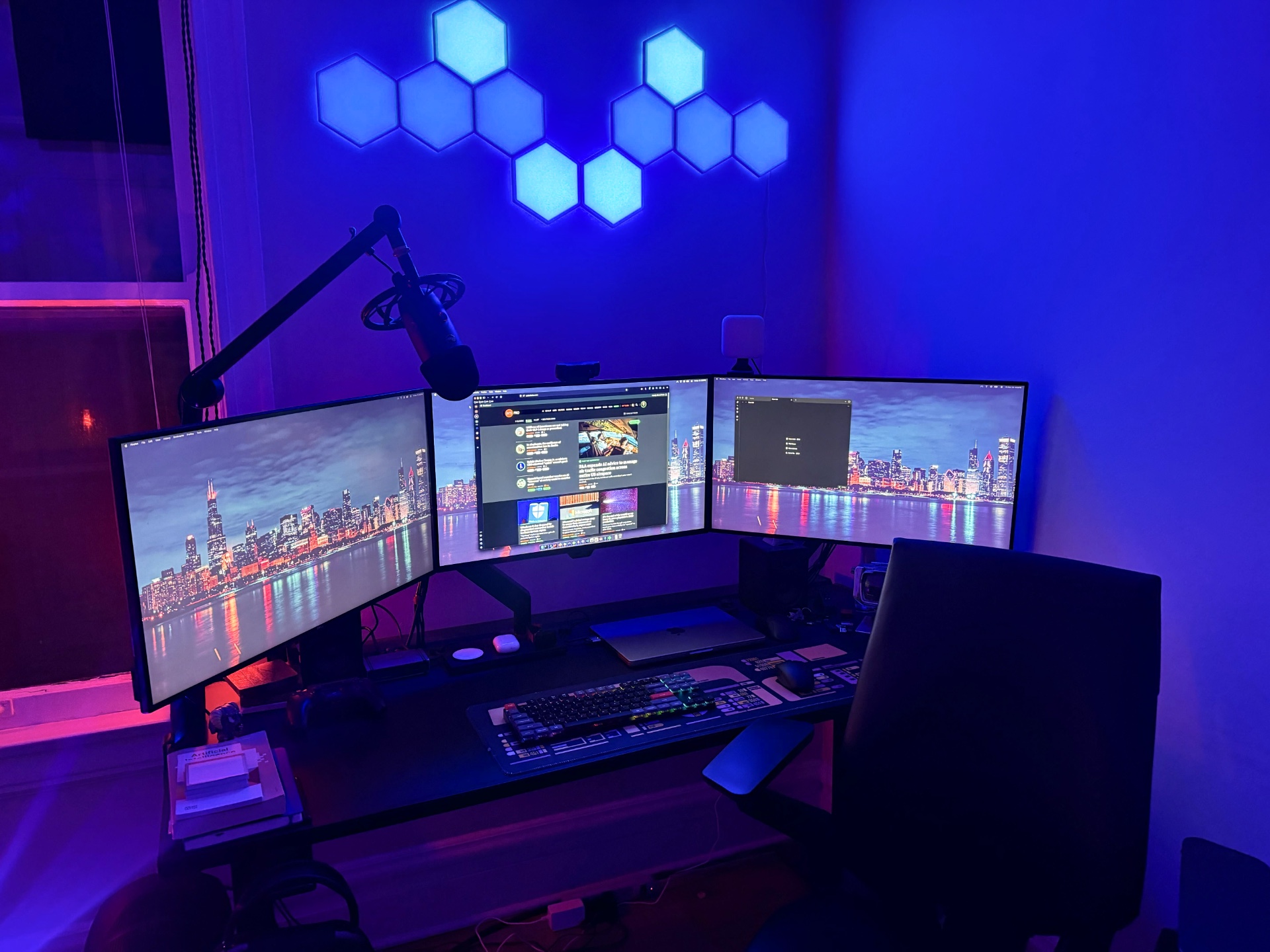
Samuel Axon and his wife, Anna, rent an apartment in Chicago and chose city life over additional space. Their 10-by-10-foot office therefore serves several purposes. Axon primarily works there, but both he and Anna are gamers who often play on a PlayStation 5 in the living room, leaving him with a separate gaming setup in the office.
During the day, Axon edits and writes news stories. He describes himself as a night owl, however, and says he can write demanding material, including long feature articles, only at night. The workspace therefore has two distinct moods. A collection of Govee products—including a Govee Hexa panel, RGB Edison bulbs and a Star Light Aurora galaxy projector—provides ambience for nighttime writing and gaming sessions.
Hardware and desk accessories
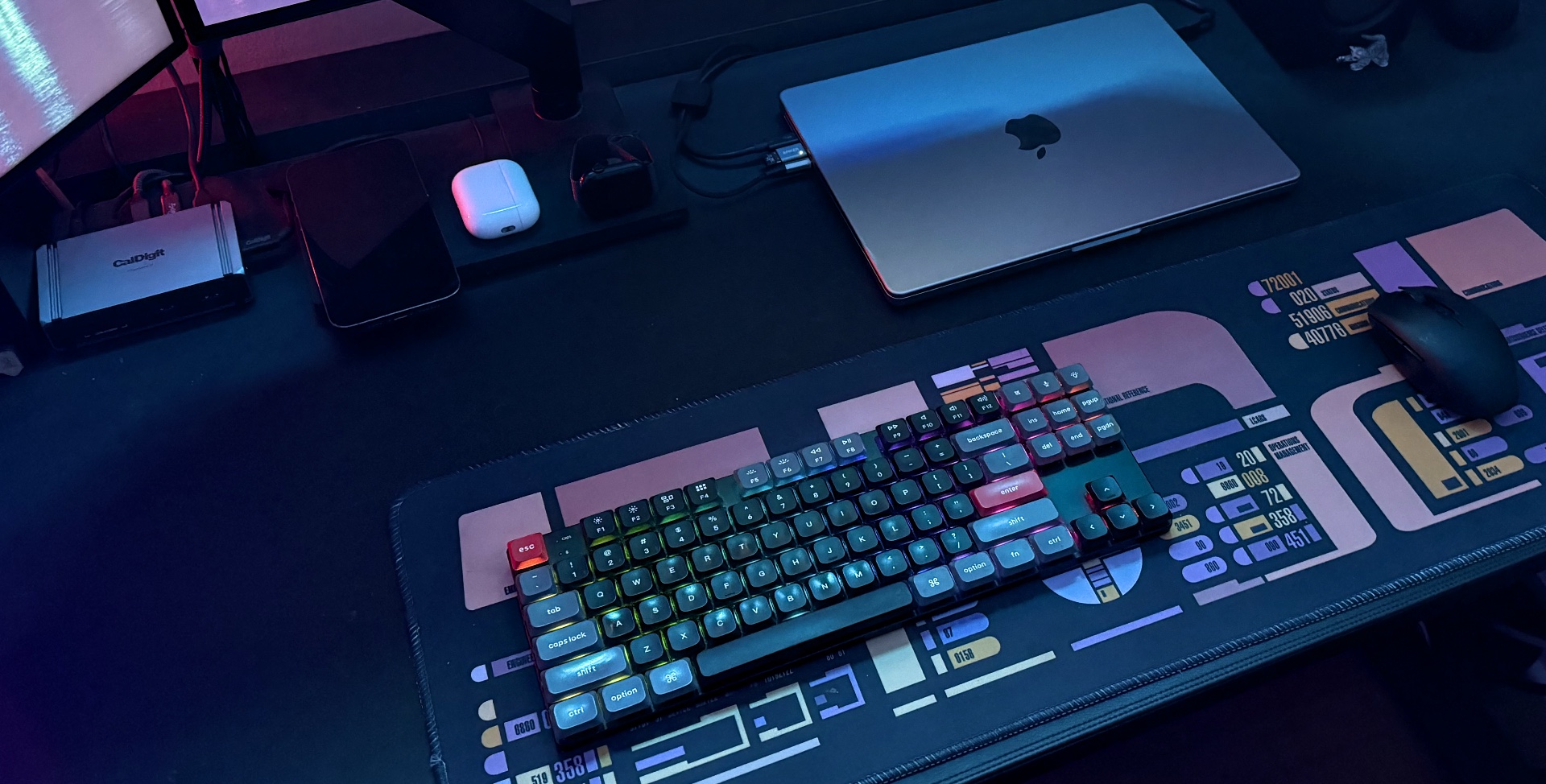
Axon and Anna moved to the apartment in the middle of the pandemic. Most of the office equipment was purchased in 2020 or 2021, giving the room what he calls very “2020-2021 coded” hardware.
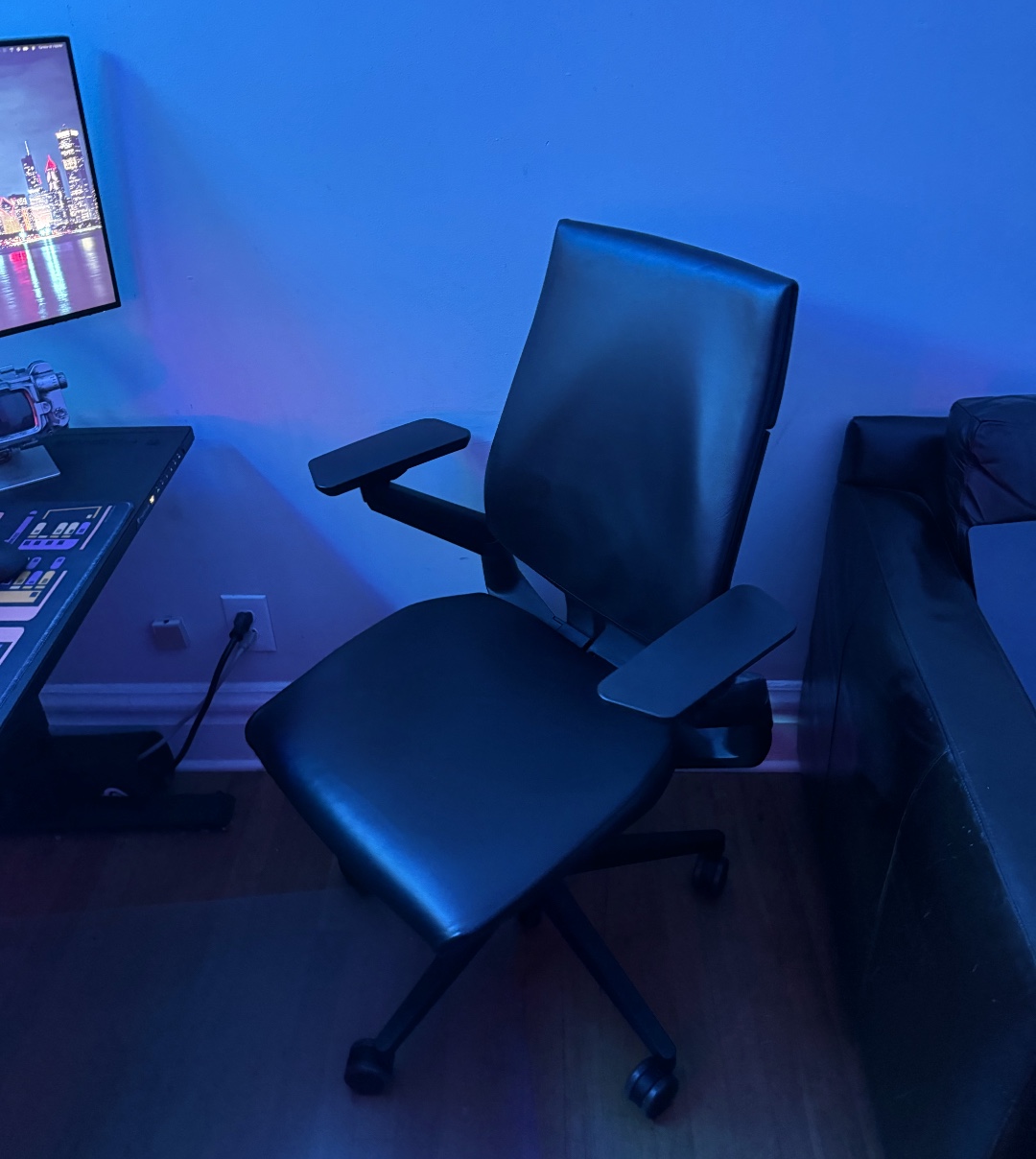
The desk is a Secretlab Magnus Pro, paired with a Steelcase Gesture chair. Axon says he has mixed feelings about office chairs. He dislikes the material on the Herman Miller Aeron, but repeatedly heard that an ergonomic chair would help protect his lower back over the long term, so he bought other models that people recommended. Even so, he says he is never comfortable and wishes he had chosen something comfortable, even if it were bad for him.
His primary computer is a 14-inch MacBook Pro with an M1 Max chip, 64GB of RAM and a 2TB hard drive. It remains capable after five years. The office also houses an Alienware Aurora R10, a prebuilt gaming desktop with a Ryzen 9 5900X processor and RTX 3080 graphics card.
Axon bought the Alienware during the COVID-19-era GPU shortage, when he says obtaining the desired graphics card otherwise was not possible. He describes the system as noisy, hot and cumbersome and would like to replace it with a custom-built computer, but has not yet needed to do so. He generally keeps hardware until it literally stops working.
Source: arstechnica.com