


Science has always been central to Star Trek, from gravitational waves to time travel. But the franchise’s science adviser, Erin Macdonald, says the job is not simply to enforce scientific accuracy: it is to understand the science well enough to know where a story can take creative liberties and how to make those ideas feel convincing on screen. Macdonald, who holds a doctorate in general relativity and gravitational waves and previously worked at the Laser Interferometer Gravitational-Wave Observatory (LIGO), has advised six Star Trek series, including Star Trek: Discovery, as well as other television and film projects.
Live Science spoke with Macdonald about the role of a science adviser, the moments she is proudest of and the challenges of balancing scientific detail with storytelling.
From gravitational waves to Hollywood
After completing her Ph.D. and doing some research, Macdonald realized that an academic career was not for her. She moved into engineering but missed teaching and engaging with students, so she began looking for ways to communicate science to the public.
A science-fiction fan, she started attending conventions and giving solo talks and workshops on subjects such as the physics behind faster-than-light travel and the science in Star Trek.
“Through that particular talk and just life happening, I met a lot of people on the convention circuit,” Macdonald said. “I decided I wanted to go to L.A. I learned that science advising was a job, so I moved out there, still working as an engineer.”
CBS and Star Trek eventually heard about her convention talks and invited her to present at official licensed Star Trek events. That brought her to the attention of the production team. A few years later, as several Star Trek series were being produced, the franchise was looking for a science adviser for Star Trek: Discovery.
Star Trek: Discovery ran for five seasons, comprising 65 episodes, from September 2017 to May 2024 on CBS. After the work went well, Macdonald joined the production as an in-house science adviser.
She has since advised on six Star Trek shows, along with films and other television productions. Macdonald said that working in Hollywood often means that one job leads to another.
“I think a lot of being successful in L.A. and Hollywood is that every job is an audition for your next job,” she said. “You work on one show, everyone goes their separate ways and works on new shows, and if they know someone they might want to bring in, they’ll give you a call. I’ve been very lucky in that regard.”
What does a science adviser do?
The day-to-day work varies widely depending on the production and when the adviser is brought in. Macdonald said the ideal arrangement is to join a show when the writers’ room is first being established.
“They’ll bring me in to sit in that writers’ room and help contribute to the ideas and stories as they’re being developed,” she said. “If questions come up in real time, I can help answer them.”
Working at that early stage allows a science adviser to identify potential problems before plots become fixed. But advisers are also sometimes handed production scripts shortly before filming begins and asked to check them.
That arrangement can mean less work, Macdonald said, but it also leaves less opportunity to correct major problems. In those cases, her advice may involve removing a line of dialogue or telling the writers not to explain an idea that could invite unnecessary scrutiny.
“A lot of the time, when you’re doing something wild like that, I’ll just say, ‘Great, don’t explain it. Do your thing. Try not to science it.’”
— Erin Macdonald
Science advisers may also work on set design or visual effects. Their job can be to make sure that the scientific material shown on screen looks plausible, even when it is not central to the plot.
One familiar example is the equations written on the whiteboards in CBS’s The Big Bang Theory. A scientist was brought in to create that material.
Macdonald performed a similar role on Hulu’s Good American Family, a show that is not about science but includes a child interested in physics.
“I went in and wrote all the equations and talked to the actor about how to say the things he was going to be saying,” she said.
Even within Star Trek, Macdonald’s relationship with each production has differed. Sometimes she contributes to the underlying story; in other cases, she checks scripts or helps with individual scenes. That variety, she said, is part of what makes the position exciting.
Building the science of Star Trek
Macdonald said one of the projects closest to her heart was the season-two finale of Star Trek: Lower Decks. She was not brought onto the show until its second season, when the showrunner presented her with a scene and asked her to develop the science around it.
The result was a story involving an asteroid belt filled with charged particles that disrupted the ship’s protective shields. The episode also included plenty of Star Trek technobabble.
“Watching that episode, it just feels like a really authentic ‘Star Trek’ episode because of all the science in it,” Macdonald said. “I’m really proud that I was able to contribute to that.”
Another memorable project was the musical episode of Star Trek: Strange New Worlds. Macdonald initially suggested that the production should embrace the unusual premise without trying to explain it scientifically.
“A lot of the time, when you’re doing something wild like that, I’ll just say, ‘Great, don’t explain it. Do your thing. Try not to science it,’” she said.
The production team disagreed. It wanted a detailed scientific explanation, so Macdonald worked with the writers to develop one. The result was a lengthy ready-room scene in which Spock explains what is happening and why the crew must respond in a particular way.
“It’s goofy, but there was a lot of science put into that episode, which was a really fun process,” Macdonald said.
How Dr. Erin came to life
Macdonald’s influence on Star Trek also led to the creation of Dr. Erin, a character based on her. The character has appeared in multiple series, video games and comic books.
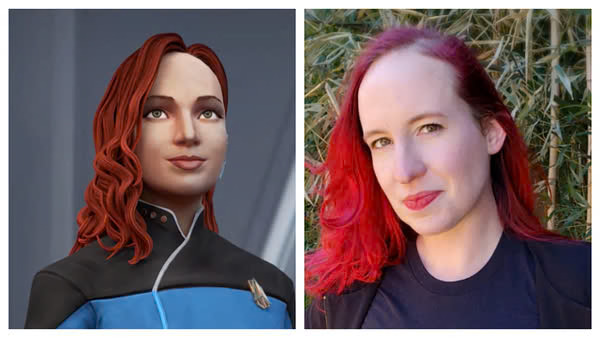
The character originated with Star Trek: Prodigy, a series aimed at children. Macdonald was brought in not only to check the science but also to help with science communication and the creation of a character who wanted to become a scientist.
That character was Rok-Tahk. Near the end of the first season, as the characters prepared to attend Starfleet Academy, the showrunners decided that Rok-Tahk should meet Dr. Erin, the scientist who had inspired her.
“That was just one of the greatest honors,” Macdonald said. “It was a quick, one-line mention, not even named in the episode.”
When scientific accuracy conflicts with storytelling
Macdonald said some of the projects she worked on closely left little she would change. Other assignments came so late that there was no time to correct problems in the plot.
One example came from Star Trek: Discovery, in an episode involving characters riding gravitational waves out of a nebula. During an explanatory scene, the waves were initially depicted as literal sine waves, similar to ocean waves.
Macdonald worked with the visual-effects team and argued that the waves should instead be shown as compression waves, more like sound waves. The team animated the sequence accordingly, but viewers felt that the dialogue and the visual effects did not work together. The production ultimately reverted to the original depiction.
“It was funny because when that aired, I had three or four former gravitational wave colleagues who were like, ‘Erin, you had one job,’” she said.
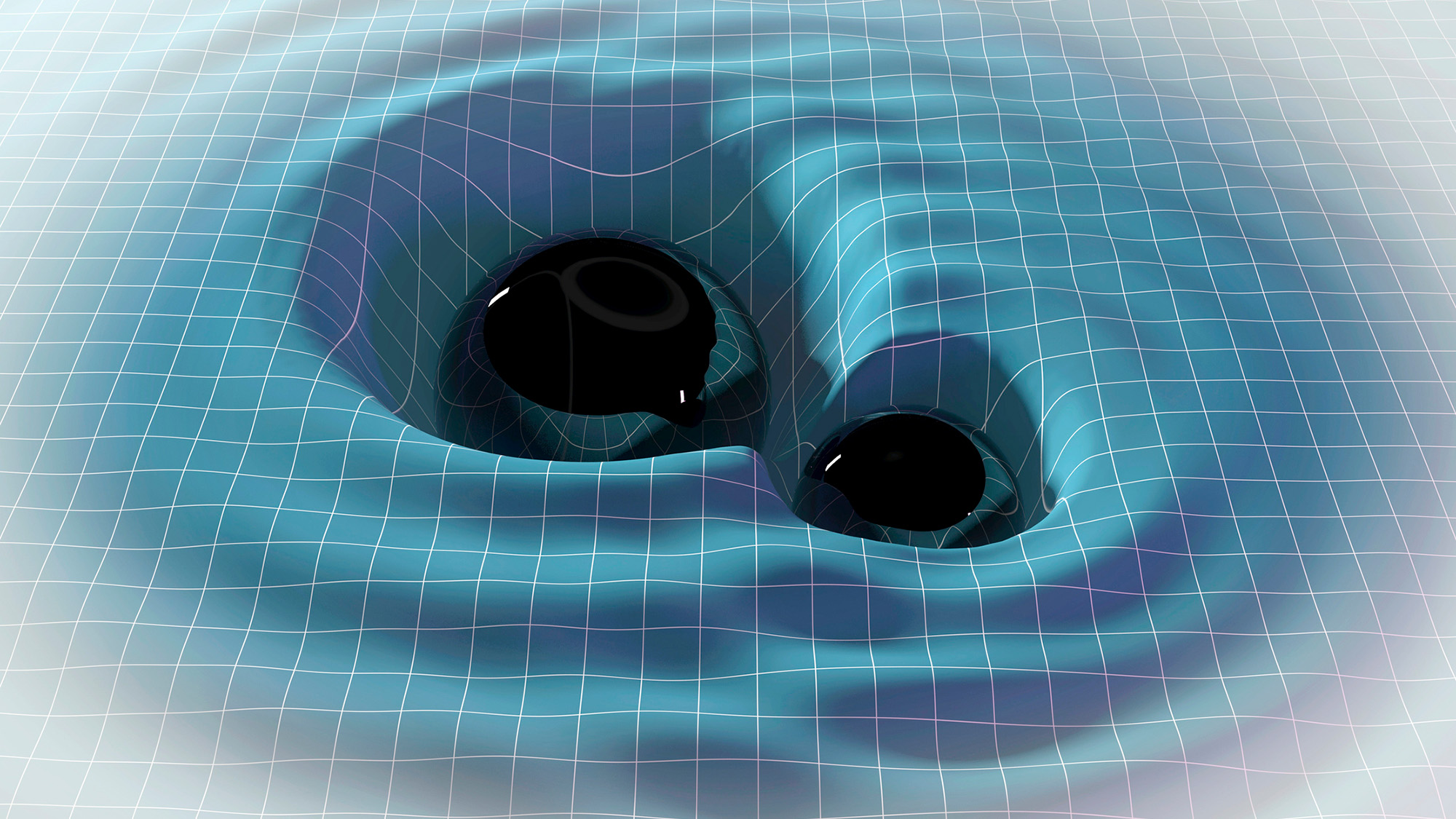
She also recalled a line from the first season of Star Trek: Strange New Worlds in which Spock says, “We’re being pulled into the black hole.”
Macdonald considers that wording technically incorrect. Objects fall into black holes; black holes do not act like cosmic vacuum cleaners that pull in everything around them. Their effects are governed by gravity.
In the scene, however, Spock is speaking condescendingly to La’an and simplifying the language for a general audience. That context made the line acceptable to Macdonald.
Science advising starts with saying “yes”
Macdonald said that science advising requires more than knowing the science. Advisers must also understand the purpose of a scene and work with the story rather than simply criticize it.
“I meet a lot of people who, delicately or not, say, ‘I could do your job. I’d be a great science adviser,’” she said. “I think what’s made me successful in science advising is that I take a very ‘yes, and’ attitude.”
She describes herself as a fan first. Someone who spends their time pointing out scientific errors in films and television, she said, is unlikely to enjoy the job.
“If you spend your time just criticizing the science in films and TV, this is not the job for you. You need to work with the stories you’re given, and you need to understand the mission.”
— Erin Macdonald
Macdonald offered Space Cadet as an example. The Amazon film is a stoner comedy, and its producers had struggled to find a science adviser because many potential advisers objected to the script.
“It’s ridiculous, goofy, and fun,” Macdonald said. “They were like, ‘Look, we just want someone who makes sure the NASA people know what NASA people would say. That’s it.’”
Her response was simple: “Great, let’s do it.”
“The job isn’t for everyone,” Macdonald said. “Storytelling comes first.”
This interview has been edited and shortened for length and clarity.
Source: www.livescience.com