


Close Menu
HitechubHitechub
    What's Hot
    Science

    Top New Science Fiction Novels to Read in June 2026: Featuring Adrian Tchaikovsky and M. John Harrison

    Science

    How Hot Is Too Hot? When to Turn Off Your Fan for Optimal Comfort

    Science

    How Capitalism Distorts Our Understanding of Ecology and the Origins of Life

    Important Pages:
    • About Us
    • Privacy Policy
    • Terms & Conditions
    Facebook X (Twitter) Instagram Pinterest
    Facebook X (Twitter) Instagram
    HitechubHitechub
    Wednesday, June 24
    • Technology
      1. AI
      2. Gadgets
      3. View All

      This is the most popular CEO in the world

      Sectors in which “Chat-GPT” is most often used

      AI Pioneer Expresses Concern About Potential for AI to Surpass Humanity

      Artificial intelligence has begun to “swallow” professions

      What’s new in Android 14

      Europeans have about 700 million old mobile phones in their drawers

      Here’s how you can tell if your phone is being tapped

      “Sneaker X” – computer case in the shape of a sneaker

      Russian Gamers Unite to Prevent Nuclear War: Join the Fight Online

      Challenges of Space Travel: Why Journeying to Space is So Difficult

      NASA Astronaut Casts Historic Vote from Space

      Discover the Future of Comfort: What If You Could Wear a Chair?

    • Science
      1. Space
      2. Wheels
      3. View All

      Galaxies in the universe are growing more slowly than they should

      “Espace” presented the new lander “Apex 1.0”

      The largest asteroid sample ever collected has arrived on Earth

      (VIDEO) Incredible flight of the Parker Solar Probe

      Toyota wants to make a new generation battery with a range of up to 1,200 km

      Meet Toyota’s lunar “baby” that could make exploring the Moon easier

      Microlino – Is this the perfect city car?

      Alfa Romeo 4C gets an electric successor

      Discover How Certain Brains Achieve Remarkable Recovery After Stroke

      Australia’s Giant Crater: Unveiling the Oldest Impact Structure on Earth

      How Parenting Boosts Brain Health for Moms and Dads: Long-Term Benefits

      New Feathered Dinosaur from China Discovered with Stunning Peacock-Like Tail

    HitechubHitechub
    Home » Australia’s Giant Crater: Unveiling the Oldest Impact Structure on Earth
    Science

    Australia’s Giant Crater: Unveiling the Oldest Impact Structure on Earth

    Share Facebook Twitter Pinterest WhatsApp
    Share
    Facebook Twitter LinkedIn Pinterest WhatsApp

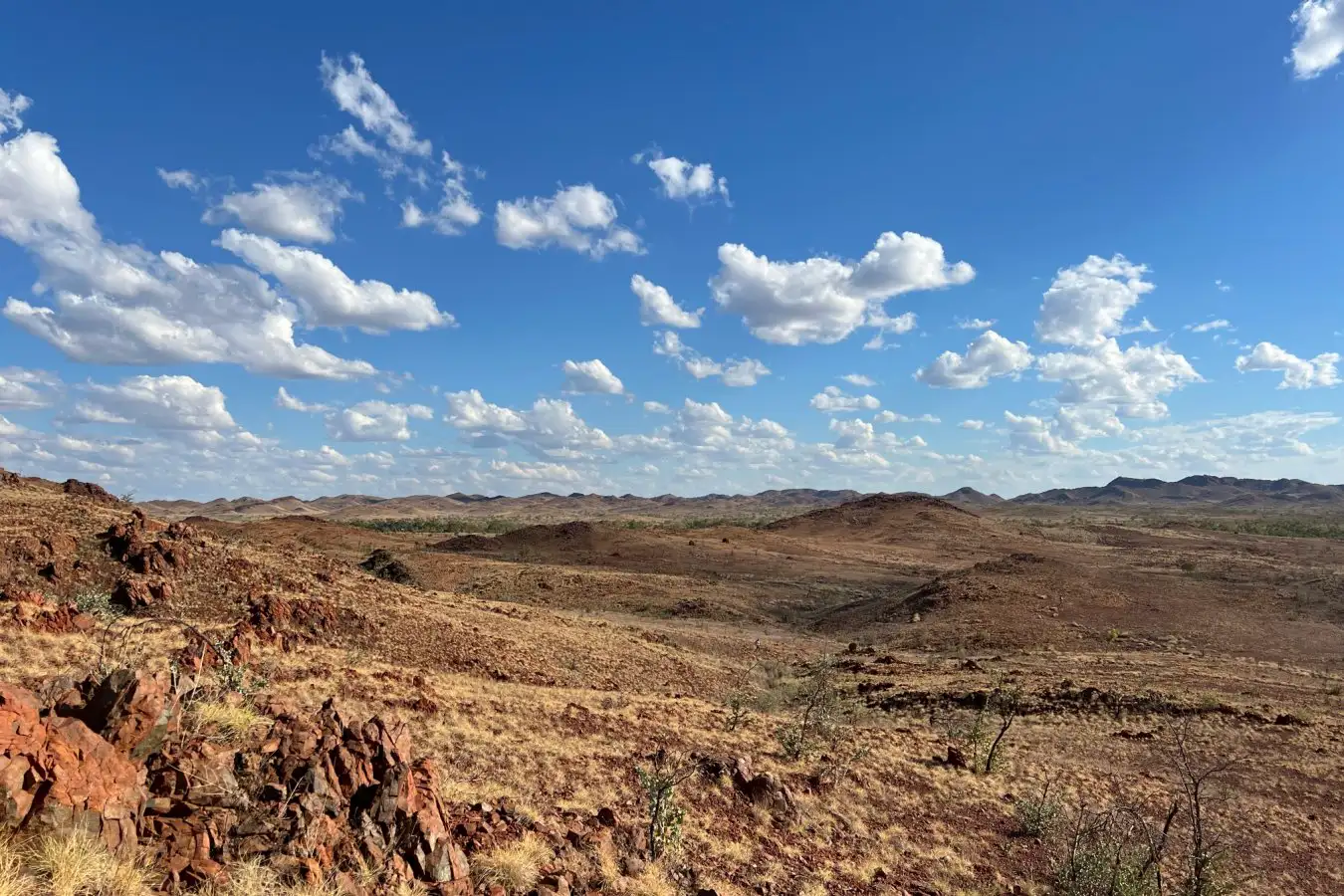
    Arctic Dome Crater Landscape in Western Australia

    Curtin University

    The Arctic Dome Crater, located in Western Australia, is believed to have formed from an asteroid impact approximately 3 billion years ago. This makes it the oldest known impact crater on Earth, although its age is currently under scrutiny by some researchers.

    First identified by Chris Kirkland of Curtin University in Perth, studies suggest that the crater may reach up to 100 kilometers in diameter. Kirkland’s team discovered a layer of rock featuring unique cone-shaped structures known as shatter cones, which are indicative of high-energy impacts.

    While their initial research did not provide a direct age, they correlated the rock with other dated layers, estimating the age to be around 3.47 billion years. This estimation makes it significantly older than Yarrababa Crater, which is also an asteroid impact site.

    This crater represents a rare occurrence from the Archean Era, when Earth’s surface was largely submerged beneath water.

    However, another team, led by Aaron Cavosie, disputes the 3.47 billion-year age, asserting that the impact occurred 2.77 billion years ago. Kirkland and his researchers contend that they have now successfully dated minerals at the site, including detrital cones. Intrigued by the crater’s formation, Kirkland stated, “We’ve analyzed the rock to find minerals that directly respond to the impact’s force.”

    Utilizing uranium decay rates, the researchers dated zircon found within the shatter cones and also examined apatite, believed to have formed in the heated conditions post-impact. Both minerals yielded an age of approximately 3.02 billion years, providing compelling evidence of hydrothermal activity linked to the impact.

    Rocks in the North Pole Dome crater

    Arctic Dome Crater Rock

    Curtin University

    Kirkland emphasizes that other geological processes, such as mountain-building or localized metamorphism, cannot easily account for the observed mineralogical changes in the shocked rocks. “The only plausible explanation for these changes is a shock event,” he states. “This provides strong evidence for an impact 3 billion years ago, solidifying its status as the oldest impact crater on Earth.”

    While Kavosie appreciates the revised age estimates, he still believes that Kirkland’s group may be overstating the age of the crater. “We are relieved that the ‘3.5 billion year impact’ hypothesis has been withdrawn; however, we are not convinced by the arguments for an impact occurring 3.02 billion years ago,” he notes. “Science is a slow journey toward the truth.”

    Kavosie pointed out that younger rocks, which are dated at 2.77 billion years, also exhibit shatter cones, indicating that any impact must have occurred after this date. Alec Brenner, a Yale University professor who criticized the original study, agrees that the rocks are the most likely younger than 2.77 billion years.

    “Kirkland’s group dismisses the correlation with dated rocks on the grounds that these rocks haven’t been dated themselves. However, they are directly associated with nearby rocks that have been,” Brenner asserts.

    Citing significant advancements, Kirkland asserts that his team has directly established the age of the minerals within the impact rock itself. “The young age argument continues to rely on correlations of undated rocks, primarily through satellite-based mapping. We now have two mineral clocks of the same age derived from the impacted rock itself, showcasing the importance of direct dating,” he states.

    Topic:

    Source: www.newscientist.com

    Share. Facebook Twitter Pinterest LinkedIn WhatsApp
    Previous ArticleHow Parenting Boosts Brain Health for Moms and Dads: Long-Term Benefits
    Next Article Discover How Certain Brains Achieve Remarkable Recovery After Stroke

    Related Posts

    Science

    Discover How Certain Brains Achieve Remarkable Recovery After Stroke

    Science

    How Parenting Boosts Brain Health for Moms and Dads: Long-Term Benefits

    Science

    New Feathered Dinosaur from China Discovered with Stunning Peacock-Like Tail

    Science

    Mayan Elite Buried Their Teeth in Caves: Unearthing Ancient Rituals Beyond Graves

    Science

    Exploring the Timeless and Universal Bond Between Humans and Dogs: Findings from Recent Study

    Science

    How Hot Is Too Hot? When to Turn Off Your Fan for Optimal Comfort

    Science

    New Research Shows Domestic Cats Age Similar to Humans: What You Need to Know

    Science

    SpaceX’s Innovative Strategy for Earth Cargo Delivery from Space

    Add A Comment
    Leave A Reply Cancel Reply

    Stay In Touch
    • Facebook
    • Twitter
    • Instagram
    • Pinterest
    Top Picks
    Science

    Breakthrough: First Images of Cozumel Dwarf Fox Captured by Scientists

    Researchers have captured the first-ever photograph of the Cozumel dwarf fox (Urocyon sp.), an elusive…

    Exploring Galaxies During Cosmic Noon: A Sciworthy Analysis

    Newly Discovered Microraptorin Dinosaur Species Unveiled in China

    Easy Trick to Prevent Carsickness for Everyone

    Chimpanzees Exhibit Increased Aggression After Social Division: Exclusive Video Analysis

    Most Popular
    Science

    How Technology Transforms Our Perception of Nature Across All Scales

    Science

    Schrödinger’s Cat Unleashed: Physicists Reveal Groundbreaking Quantum State Discovery

    Categories
    • AI (13)
    • Gadgets (10)
    • Science (336)
    • Space (9)
    • Technology (37)
    • Wheels (9)
    Our Picks
    Science

    Entomologists Uncover the Evolutionary Journey of Millipedes

    Science

    New Supernova Research Confirms Continued Acceleration of Universal Expansion

    © 2026 Hitechub.
    • Home
    • About Us
    • Privacy Policy
    • Terms & Conditions

    Type above and press Enter to search. Press Esc to cancel.

    We are using cookies to give you the best experience on our website.

    You can find out more about which cookies we are using or switch them off in .

    Ad Blocker Enabled!
    Ad Blocker Enabled!
    Our website is made possible by displaying online advertisements to our visitors. Please support us by disabling your Ad Blocker.
    Hitechub
    Powered by  GDPR Cookie Compliance
    Privacy Overview

    This website uses cookies so that we can provide you with the best user experience possible. Cookie information is stored in your browser and performs functions such as recognising you when you return to our website and helping our team to understand which sections of the website you find most interesting and useful.

    Strictly Necessary Cookies

    Strictly Necessary Cookie should be enabled at all times so that we can save your preferences for cookie settings.