



The term “survival of the fittest” is frequently associated with Darwinism, leading many to mistakenly believe that Charles Darwin coined it. In truth, the phrase originates with his contemporary, Herbert Spencer. Nevertheless, Darwin’s theory holds significant merit. In his pivotal work, On the Origin of Species, Darwin underscored competition as a central mechanism of evolution. However, he was influenced by the socio-cultural context of his time.
Darwin characterized nature as a battleground not merely from observation but as a reflection of societal norms prevalent during the age of empire and the industrial revolution. This perspective was shaped by the theories of Thomas Malthus and Thomas Hobbes, who portrayed humanity as inherently competitive and often ruthless. While valid to some extent, this view has led to Darwinism being misused as a justification for humanity’s darkest actions.
Alternative viewpoints are essential for a holistic understanding. Darwin approached the concept of life from an ecological perspective, even prior to the term “ecology” emerging. This communal viewpoint may unexpectedly illuminate one of science’s greatest enigmas: the origin of life.
“
Darwinism cited as scientific justification for humanity’s worst sins
“
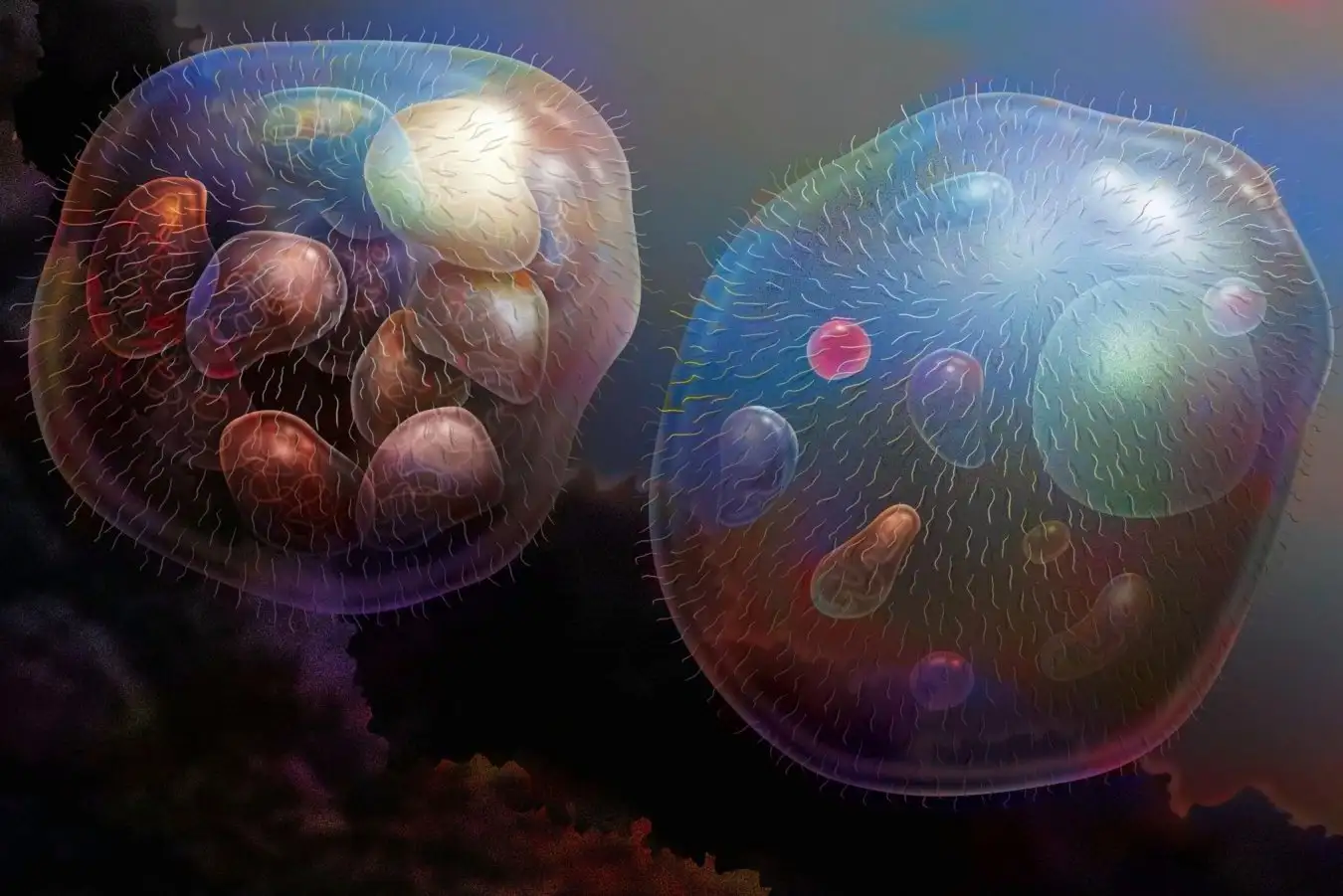
A promising direction in explaining the emergence of life from non-life posits ideas from microbiologist Carl Woese. He theorized that life evolved in a co-culture—a loosely organized assembly of shared molecules.
Remarkably, current research indicates that many vital components and processes of life, including metabolism and the genetic coding for functional proteins, can naturally emerge through chemical interactions. Instead of viewing life as merely one isolated victor emerging from a “warm little pond,” a concept attributed to Darwin himself, there seems to be an innate tendency for life forms to collaborate, possibly from the very beginning.
Source: www.newscientist.com