


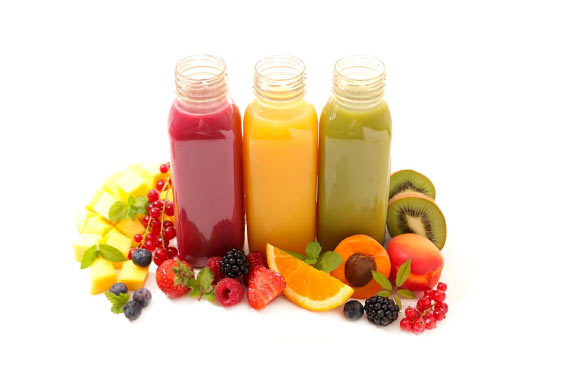
A recent randomized trial in the United Kingdom reveals that incorporating just one serving of 100% fruit juice or a smoothie into a healthier diet can significantly lower depression scores in adults after four weeks.
Daily drinking of 100% fruit juice or smoothies, as recommended in the UK’s Five Healthy Eating initiative, shows positive effects on mental health. Image credit: Joseph Musila.
“Although many people recognize the health benefits of consuming five servings of fruit and vegetables daily, adhering to this guideline can be challenging,” explains lead author Dr. Courtney Neale, who conducted this research while at Newcastle University and is currently based at the University of Liverpool.
“Our findings indicate that targeted financial and educational support can effectively address barriers to achieving five servings a day for individuals with low fruit and vegetable intake, leading to significant improvements in their dietary habits.”
“Simple and cost-effective methods, such as drinking a small glass of 100% fruit juice or a smoothie daily, can assist individuals in reaching their five-meal-a-day objective while also benefiting their mental health.”
This study, led by Dr. Neale and her team, focused on participants who incorporated one glass of 100% fruit juice or a smoothie into their daily diet as part of the five-a-day healthy eating strategy.
Participants with low fruit and vegetable consumption received support to enhance their daily intake, with or without the addition of juice or smoothies, aiming to achieve the five-cup-a-day recommendation.
The study involved 42 participants split into three groups: one control group that maintained their regular diet, another group that solely increased their intake of whole fruits and vegetables, and a third group that did the same while also incorporating a daily glass of juice or a smoothie.
Results after four weeks showed that both groups successfully increased their fruit and vegetable intake, but the group that added fruit juice reported significant reductions in depression scores.
Specifically, the depression scores, measured by a standardized questionnaire, were 2.52 points lower out of a possible 27, indicating a meaningful statistical difference. No negative impacts on metabolic health markers were observed.
Lead author Dr. Oliver Shannon, a Lecturer in Nutrition and Aging at Newcastle University, stated: “As living costs rise in the UK, the expense of fresh produce can deter individuals from increasing their fruit and vegetable consumption.”
“Our research indicates that integrating a glass of fruit juice or smoothie daily could help individuals meet their five-a-day fruit and vegetable aspirations.”
“The observation that fruit juice consumption correlates with lower depression scores is encouraging and warrants further exploration, particularly among individuals with existing mental health issues.”
This supports prior research documenting enhanced brain blood flow and cognitive function linked to citrus juice consumption.
Implementing simple dietary changes, like boosting fruit intake with a daily glass of juice, may be instrumental in promoting mental wellness.
The study was published in the May 22 issue of the British Journal of Nutrition.
_____
Courtney Neal et al. Including fruit juices and smoothies in the recommended daily intake of fruits and vegetables: a randomized controlled trial evaluating impacts on consumption, mood, and health markers. British Journal of Nutrition, published online on May 22, 2026. doi: 10.1017/S0007114526107569
Source: www.sci.news