6,500-Year-Old Neolithic Ceremonial Site Discovered in the Czech Republic
Archaeologists in the Czech Republic have discovered a 6,500-year-old prehistoric enclosure that may have served as a ceremonial center aligned with the movements of the sun and moon. The Neolithic monument is approximately 1,000 years older than Stonehenge, offering new insight into the religious beliefs and astronomical knowledge of Europe’s first farming communities.
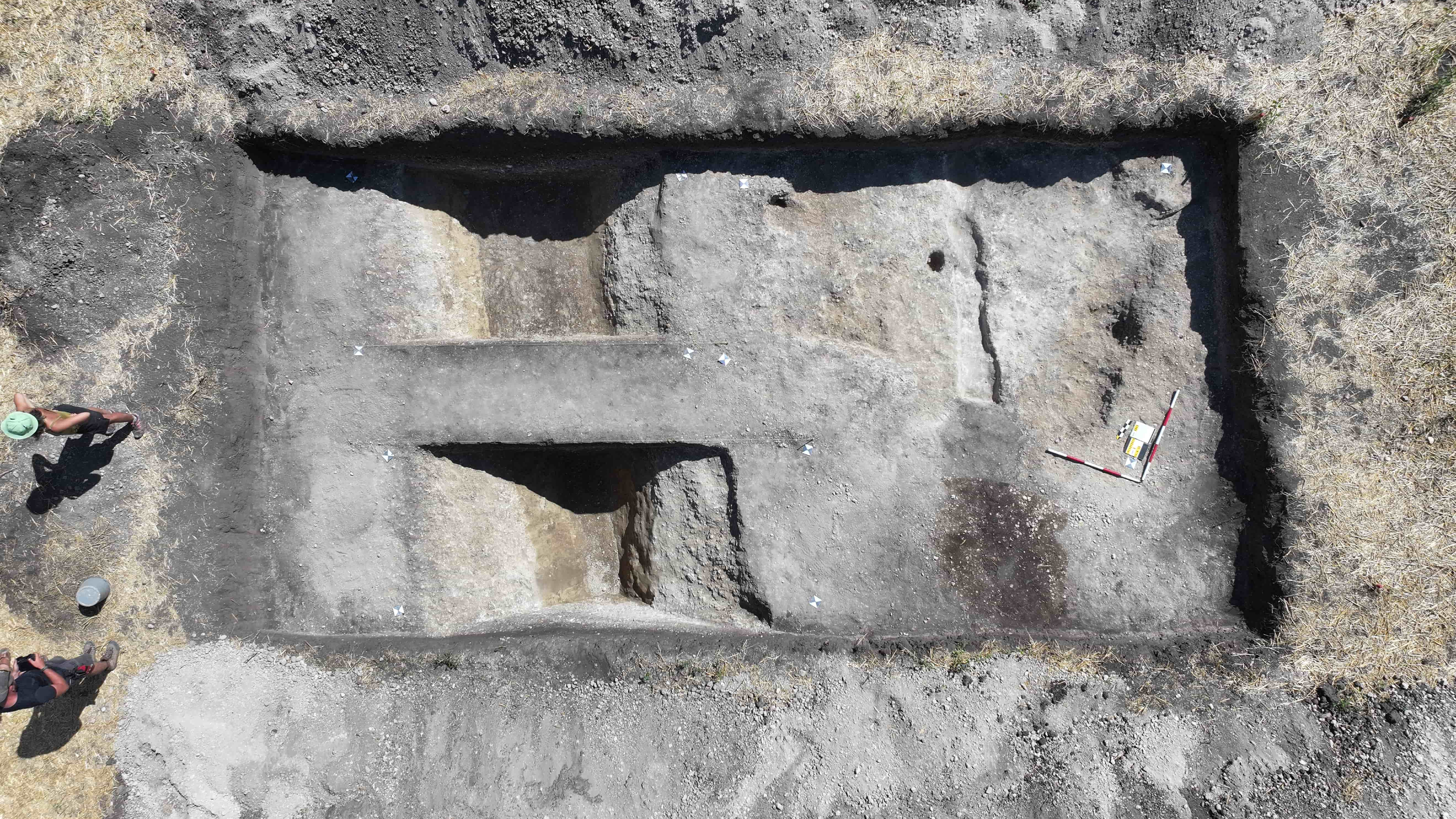
The circular structure was discovered near Krebi in the Central Bohemian region. Archaeological surveys revealed a ditch measuring approximately 750 feet (230 meters) across and up to 8 feet (2.5 meters) deep. Researchers identified 12 entrances positioned at different points around the enclosure, leading into the central area. According to an statement issued on August 18, the unusual layout could reveal how Neolithic people organized ceremonial spaces.
Archaeologists believe wooden posts may once have formed a wall around the enclosure. Animal bones found in the ditch suggest that some entrances may have been decorated with bull skulls and horns, symbols that were likely connected with strength, fertility and religious practice.
Latest videos fromLive Science
“Bull worship was an important religious symbol among the first farming communities and is known from many parts of prehistoric Europe,” Jan Turek, an archaeologist from Charles University in Prague involved in the research, said in a statement. He added that bulls were probably symbols of strength and fertility in Neolithic Europe.
Remote-sensing image of the Neolithic enclosure discovered in the Czech Republic.
Image source: University of West Bohemia
A Neolithic monument aligned with the sun and moon
The shape and orientation of the prehistoric enclosure are unusual for a Stone Age site. Researchers say the positions of its 12 entrances appear to follow a deliberate geometric pattern rather than being arranged at random.
“Round enclosures were completely unknown in our area at this time, which already makes this place special,” Petr Kristof, professor of archaeology at the University of West Bohemia and leader of the research team, said in a statement.
“When we analyzed the entrances in detail, it became clear that their arrangement was not random. Their geometry creates a system that allows us to observe important moments in the solar and lunar cycles.”
The entrances may have framed significant astronomical events, including the moon’s most extreme position above the horizon during its approximately 18.6-year cycle. They may also have enabled people inside the enclosure to observe sunrise at the summer solstice—the longest day of the year—and sunset at the winter solstice, the shortest day.
Get the world’s most fascinating archaeological discoveries delivered straight to your inbox.
“In prehistoric rural societies, sunrise and the summer solstice may have symbolized beginnings, while sunset and the winter solstice represented endings,” Kristof said. “The same principle can be seen in the main axis of Stonehenge. It is now clear that this Czech site was also carefully designed around astronomical observations.”
How the site changed over time
The enclosure’s ceremonial role appears to have changed or disappeared in later periods. Excavations at the site have uncovered 18 Bronze Age burials associated with the Únětice culture, which existed from approximately 2300 to 1600 B.C. Researchers have also found distinctive artifacts linked to this culture, including objects sometimes compared with the famous Nebra Sky Disc.
The site may have retained a ritual purpose during the Bronze Age. By the Iron Age, however—from approximately 800 to 1 B.C.—a settlement had been built over the earlier monument.
“By the Iron Age, this monument seems to have definitively lost its original significance. The ditch was gradually filled in, and an ordinary settlement was established on the site of the former sanctuary,” Kristof said.
Archaeologists continue to investigate the Neolithic enclosure
Research on the 6,500-year-old ceremonial site is ongoing. Archaeologists plan to analyze the soil for chemical traces that could reveal how people used the enclosure during different periods of prehistory.
“In addition to artifacts and human remains, people leave chemical traces in the soil. These can help us understand how this exceptional site was used over time,” Jan Fischer, an archaeologist from Hradec Králové University involved in the study, said in a statement.
How much do you know about the Paleolithic, Mesolithic and Neolithic periods? Test your knowledge with our Stone Age Quiz!