


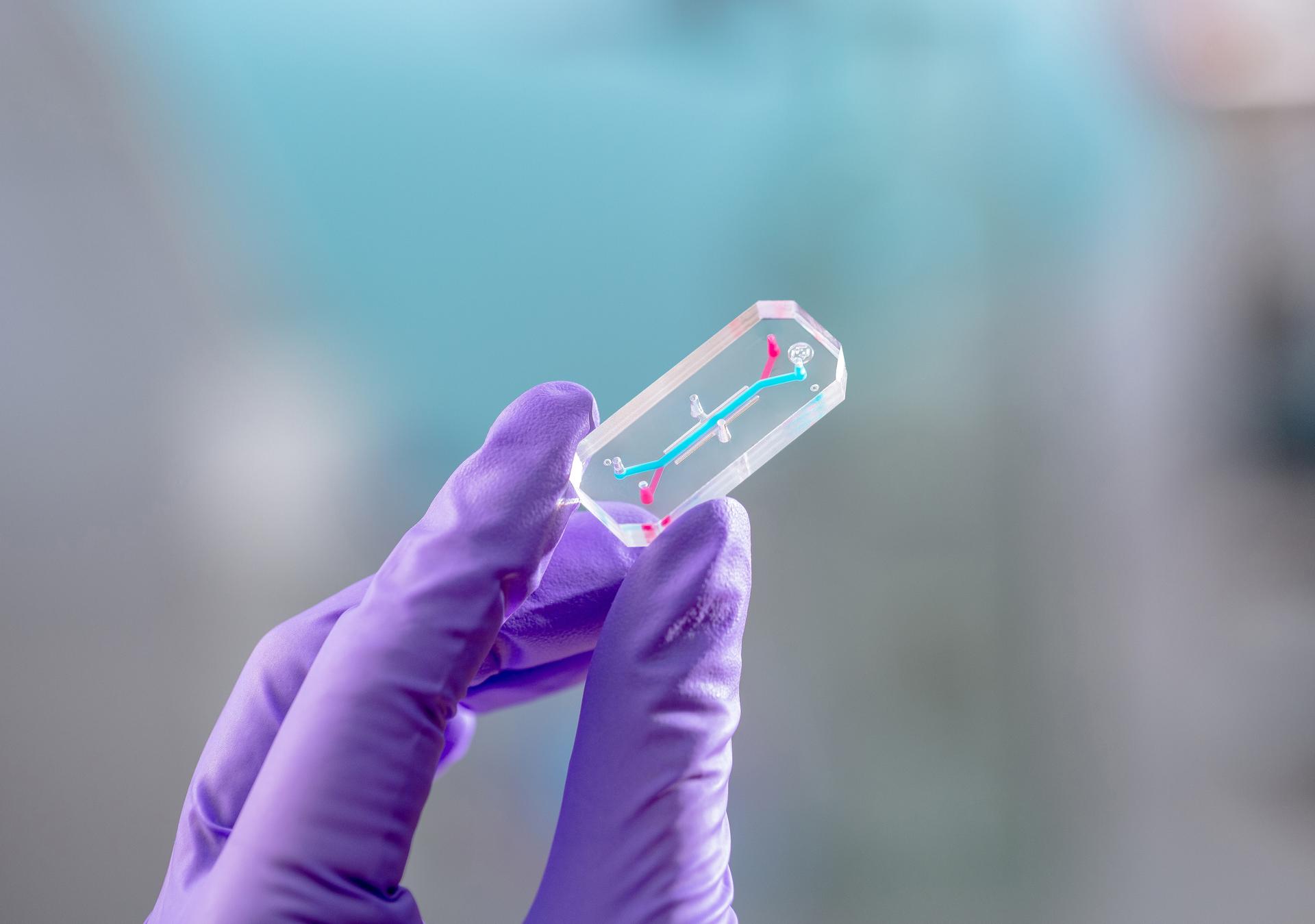
NASA’s Biological and Physical Sciences Division is seeking computational approaches to build a personalized digital twin of the AVATAR bone marrow chip, helping researchers predict how individual astronauts may respond to the biological stresses of spaceflight. The BPS Digital AVATAR Challenge will focus on immune and myelopoietic responses and offers a total of $150,000 in prize money.
AVATAR study provides the biological foundation
NASA’s Astrobiology Program Biological and Physical Sciences (BPS) Division investigates how living systems respond across a broad range of biological tissues. The work aims to improve understanding of how organisms respond to spaceflight stressors, including microgravity, ionizing radiation, low magnetic fields and elevated carbon dioxide levels.
As NASA prepares for long-duration deep-space missions, personalized, data-driven health strategies are becoming increasingly important for protecting individual crew members.
The original AVATAR study—short for Virtual Astronaut Tissue Analog Response—flew on the Artemis II mission. It marked a significant milestone by using an organ-on-a-chip device built from cells from an actual crew member who returned from a 10-day lunar flight on April 10, 2026.
AVATAR is the first demonstration of an Artemis astronaut analog that uses on-chip organ models to generate personalized biological insights. These insights could provide medical information to support the development of kits and countermeasures for future deep-space missions.
Digital twins for personalized spaceflight research
Digital twins are an important strategy for addressing the health challenges of spaceflight. These frameworks combine environmental, physiological and multi-omic inputs to create discrete computational models of physiology. Researchers can then refine the models iteratively using empirical data.
This approach makes it possible to simulate and predict how specific individuals may respond to the stressors of spaceflight.
The BPS Digital AVATAR Challenge invites the scientific community to apply computational digital-twin technology to biological discovery, biochemical and molecular modeling, and prediction of individual astronauts’ health status. The digital twin developed through the challenge will model how the AVATAR bone marrow chip responds to spaceflight stressors.
Challenge requirements
Proposed digital-twin frameworks must be able to handle diverse multimodal datasets and combine established computational-biology methods with modern digital-twin architectures. The goal is to create personalized predictive models of astronaut physiology.
The systems are expected to model each astronaut’s immune and myelopoietic response to spaceflight. They should also integrate multimodal data to produce customized health predictions, including comparative analyses that distinguish individual-specific effects from responses shared by the crew.
Proposals should provide a method for continuously updating the model as new empirical data becomes available, reflecting the iterative nature of a true digital twin.
Key dates and prize
- Total prize money: $150,000
- Registration opens: November 16, 2026
- Submission deadline: February 12, 2027
Source: www.nasa.gov