


Close Menu
HitechubHitechub
    What's Hot
    Science

    The Mona Lisa reveals another secret

    Technology

    The story of traffic lights

    Wheels

    (Video) The smallest Honda gets a new edition – motocompacto

    Important Pages:
    • About Us
    • Privacy Policy
    • Terms & Conditions
    Facebook X (Twitter) Instagram Pinterest
    Facebook X (Twitter) Instagram
    HitechubHitechub
    Thursday, June 4
    • Technology
      1. AI
      2. Gadgets
      3. View All

      This is the most popular CEO in the world

      Sectors in which “Chat-GPT” is most often used

      AI Pioneer Expresses Concern About Potential for AI to Surpass Humanity

      Artificial intelligence has begun to “swallow” professions

      What’s new in Android 14

      Europeans have about 700 million old mobile phones in their drawers

      Here’s how you can tell if your phone is being tapped

      “Sneaker X” – computer case in the shape of a sneaker

      Russian Gamers Unite to Prevent Nuclear War: Join the Fight Online

      Challenges of Space Travel: Why Journeying to Space is So Difficult

      NASA Astronaut Casts Historic Vote from Space

      Discover the Future of Comfort: What If You Could Wear a Chair?

    • Science
      1. Space
      2. Wheels
      3. View All

      Galaxies in the universe are growing more slowly than they should

      “Espace” presented the new lander “Apex 1.0”

      The largest asteroid sample ever collected has arrived on Earth

      (VIDEO) Incredible flight of the Parker Solar Probe

      Toyota wants to make a new generation battery with a range of up to 1,200 km

      Meet Toyota’s lunar “baby” that could make exploring the Moon easier

      Microlino – Is this the perfect city car?

      Alfa Romeo 4C gets an electric successor

      Discover the Giant Scorpion That Dominated Ancient Britain in the Devonian Period

      Pigeons Utilize Superparamagnetic Immune Cells in Their Livers to Detect Earth’s Magnetic Field

      Webb Telescope Discovers Methane in Interstellar Comet 3I/ATLAS

      Silent Spring: How Rachel Carson’s 1962 Science Book Transformed the World

    HitechubHitechub
    Home » Challenges of Space Travel: Why Journeying to Space is So Difficult
    Technology

    Challenges of Space Travel: Why Journeying to Space is So Difficult

    Share Facebook Twitter Pinterest WhatsApp
    Share
    Facebook Twitter LinkedIn Pinterest WhatsApp

    Story Highlights

    Astronauts can temporarily increase their height by two inches but face challenges like muscle loss and lower back pain.

    Implementing exercises may minimize these issues.

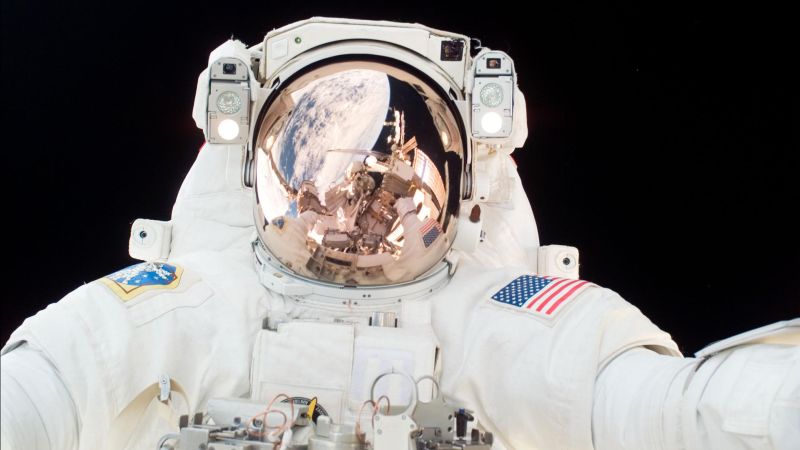
    A six-month mission on the International Space Station (ISS) presents various challenges for astronauts. Research indicates that while they can temporarily grow up to 2 inches taller, this growth is often accompanied by muscle deterioration and back pain. For further details, refer to this new research.

    Astronauts have reported experiencing back pain since the late 1980s due to longer missions. In-flight medical data shows that over half of U.S. astronauts suffer from back pain, especially in the lower back, with as many as 28% reporting moderate to severe pain lasting for the duration of their mission.

    Unfortunately, returning to Earth’s gravity does not alleviate these issues. Studies suggest that astronauts are 4.3 times more likely to develop herniated discs within the first year post-mission.

    Dr. Douglas Chan, the lead author of a recent study and associate professor of orthopedic surgery at the University of California, San Diego, emphasizes that addressing these issues is crucial: “This is an ongoing problem that poses serious concerns.”

    It’s Like Being in a Body Cast

    Research is focusing on the intervertebral discs—the shock-absorbing material between vertebrae—as a key factor in astronaut back pain. However, new findings challenge this notion. In a NASA-funded study, researchers found minimal changes in disc height or bulging.

    The study revealed significant degeneration and atrophy of the lumbar spine’s supportive muscles in six astronauts who were aboard the ISS for four to seven months. These muscles are critical for maintaining stability and mobility in gravity, while also protecting discs and ligaments from injury.

    In a microgravity environment, the torso elongates due to reduced spinal loading, leading to flattened vertebral curvature. The lack of lower back muscle tension also contributes to pain and stiffness, akin to being immobilized in a cast for extended periods.

    MRI scans conducted pre- and post-mission revealed that astronauts lost about 19% of their muscle mass during the flight. Despite undergoing six weeks of recovery training on Earth, they only regained approximately 68% of that loss, as noted by Dr. Chan.

    Chan’s research team warns that this muscle atrophy is a critical concern for long-term space missions, particularly with potential trips to Mars that could last eight to nine months, exposing astronauts to further risks of muscle weakness.

    Future studies will explore neck-related issues that may lead to additional muscle atrophy and slower recovery rates. Researchers aim to collaborate with other institutions to perform in-flight spinal ultrasound examinations to monitor astronaut health on the ISS.

    To combat back pain and muscle loss, Dr. Chan recommends that astronauts augment their two to three hours of daily exercise with a core-strengthening program targeting spinal health.

    In addition to using the “fetal tuck” position to stretch their hips and alleviate back pain, Chan advocates for incorporating yoga routines, though he acknowledges that this is challenging in microgravity.

    Many yoga postures rely on gravity to provide benefits, making them difficult to perform in a weightless environment; for example, the downward dog position helps with stretches that become less effective without gravitational pull.

    Equipment on the ISS must account for weight, size, and unique conditions, including potential reverberations in the spacecraft’s confined space.

    Scott Parazynski, an astronaut with seven spacewalks, played a crucial role in building the ISS in 2007.

    Dr. Chan and his team have collaborated with virtual reality experts to develop engaging exercise programs that allow astronauts to include friends and family in their workouts, making the routines more enjoyable and competitive.

    One team member, Dr. Scott Parazynski—the only astronaut to successfully summit Mount Everest—experienced a herniated disc after returning from the ISS. Following rehabilitation, he successfully climbed Everest and is now advising active astronauts on health research in microgravity.

    Join the Conversation

  • Stay updated with the latest news and share your thoughts on CNN Health. Follow us on Facebook and Twitter.
  • Dr. Chan emphasizes the importance of maintaining astronaut health: “It is imperative that we take every possible measure to ensure their well-being.”

    “Upon their return, astronauts gaze upon our beautiful blue planet and realize how fragile it is. They return with a new perspective on their role and place in the cosmos,” he adds.

    “Our commitment to expanding our understanding of space is unyielding, as is our dedication to ensuring the well-being of the next crew,” says Chan.

    Source: www.cnn.com

    Share. Facebook Twitter Pinterest LinkedIn WhatsApp
    Previous ArticleWhy Restoring Pluto’s Planet Status Isn’t as Simple as It Seems
    Next Article Top 5 Expert-Approved Strategies for Managing Hair Loss, According to a Psychologist

    Related Posts

    Technology

    Russian Gamers Unite to Prevent Nuclear War: Join the Fight Online

    Technology

    NASA Astronaut Casts Historic Vote from Space

    Technology

    Discover the Future of Comfort: What If You Could Wear a Chair?

    Technology

    How Cell Phones and Screens Disrupt Your Child’s Sleep: Tips for Better Rest

    Technology

    Empowering Girls: Launching Africa’s First Private Space Satellite

    Technology

    Essential Guide for Parents: What to Know About Kids’ VR Gear Choices

    Technology

    How to Identify and Combat Fake News on Your Facebook Feed

    Technology

    Roborace Car Makes Historic Street Circuit Debut in Marrakech

    Add A Comment
    Leave A Reply Cancel Reply

    Stay In Touch
    • Facebook
    • Twitter
    • Instagram
    • Pinterest
    Top Picks
    Science

    Unlocking Stonehenge: A New Breakthrough in Solving Its Greatest Mystery

    One of the most fascinating Stonehenge mysteries is the journey of its altar stone, which…

    4 most common mistakes when charging your mobile phone

    Unlocking Multitasking: How Science Reveals Your Brain’s Potential with Practice

    How Land Plants Transform River Ecosystems – Cyworthy

    How fast commercial airplanes really are?

    Most Popular
    AI

    Artificial intelligence has begun to “swallow” professions

    Gadgets

    The Best Phones to Buy in 2023: Our Top 10 Picks

    Categories
    • AI (13)
    • Gadgets (10)
    • Science (47)
    • Space (9)
    • Technology (37)
    • Wheels (9)
    Our Picks
    Wheels

    What does a night drive look like with one of the most beautiful cars in the world: the Rolls-Royce Ghost

    Technology

    10 Interesting Facts About the Dark Web

    © 2026 Hitechub.
    • Home
    • About Us
    • Privacy Policy
    • Terms & Conditions

    Type above and press Enter to search. Press Esc to cancel.

    We are using cookies to give you the best experience on our website.

    You can find out more about which cookies we are using or switch them off in .

    Ad Blocker Enabled!
    Ad Blocker Enabled!
    Our website is made possible by displaying online advertisements to our visitors. Please support us by disabling your Ad Blocker.
    Hitechub
    Powered by  GDPR Cookie Compliance
    Privacy Overview

    This website uses cookies so that we can provide you with the best user experience possible. Cookie information is stored in your browser and performs functions such as recognising you when you return to our website and helping our team to understand which sections of the website you find most interesting and useful.

    Strictly Necessary Cookies

    Strictly Necessary Cookie should be enabled at all times so that we can save your preferences for cookie settings.