


Close Menu
HitechubHitechub
    What's Hot
    Science

    Clay Minerals Reveal Evidence of Mars’ Warm, Wet Past – Sciworthy Insights

    Science

    Enjoy a spectacular flight over the “night maze” on Mars

    Technology

    Discover the Future of Comfort: What If You Could Wear a Chair?

    Important Pages:
    • About Us
    • Privacy Policy
    • Terms & Conditions
    Facebook X (Twitter) Instagram Pinterest
    Facebook X (Twitter) Instagram
    HitechubHitechub
    Thursday, June 4
    • Technology
      1. AI
      2. Gadgets
      3. View All

      This is the most popular CEO in the world

      Sectors in which “Chat-GPT” is most often used

      AI Pioneer Expresses Concern About Potential for AI to Surpass Humanity

      Artificial intelligence has begun to “swallow” professions

      What’s new in Android 14

      Europeans have about 700 million old mobile phones in their drawers

      Here’s how you can tell if your phone is being tapped

      “Sneaker X” – computer case in the shape of a sneaker

      Russian Gamers Unite to Prevent Nuclear War: Join the Fight Online

      Challenges of Space Travel: Why Journeying to Space is So Difficult

      NASA Astronaut Casts Historic Vote from Space

      Discover the Future of Comfort: What If You Could Wear a Chair?

    • Science
      1. Space
      2. Wheels
      3. View All

      Galaxies in the universe are growing more slowly than they should

      “Espace” presented the new lander “Apex 1.0”

      The largest asteroid sample ever collected has arrived on Earth

      (VIDEO) Incredible flight of the Parker Solar Probe

      Toyota wants to make a new generation battery with a range of up to 1,200 km

      Meet Toyota’s lunar “baby” that could make exploring the Moon easier

      Microlino – Is this the perfect city car?

      Alfa Romeo 4C gets an electric successor

      Pigeons Utilize Superparamagnetic Immune Cells in Their Livers to Detect Earth’s Magnetic Field

      Webb Telescope Discovers Methane in Interstellar Comet 3I/ATLAS

      Silent Spring: How Rachel Carson’s 1962 Science Book Transformed the World

      New Axolotl Fossil Discovered in Mexico: A Significant Paleontological Find

    HitechubHitechub
    Home » Silent Spring: How Rachel Carson’s 1962 Science Book Transformed the World
    Science

    Silent Spring: How Rachel Carson’s 1962 Science Book Transformed the World

    Share Facebook Twitter Pinterest WhatsApp
    Share
    Facebook Twitter LinkedIn Pinterest WhatsApp
    New Scientist: Explore cutting-edge science news and in-depth articles on technology, health, and the environment.

    How Does Rachel Carson’s Silent Spring Hold Up Today?

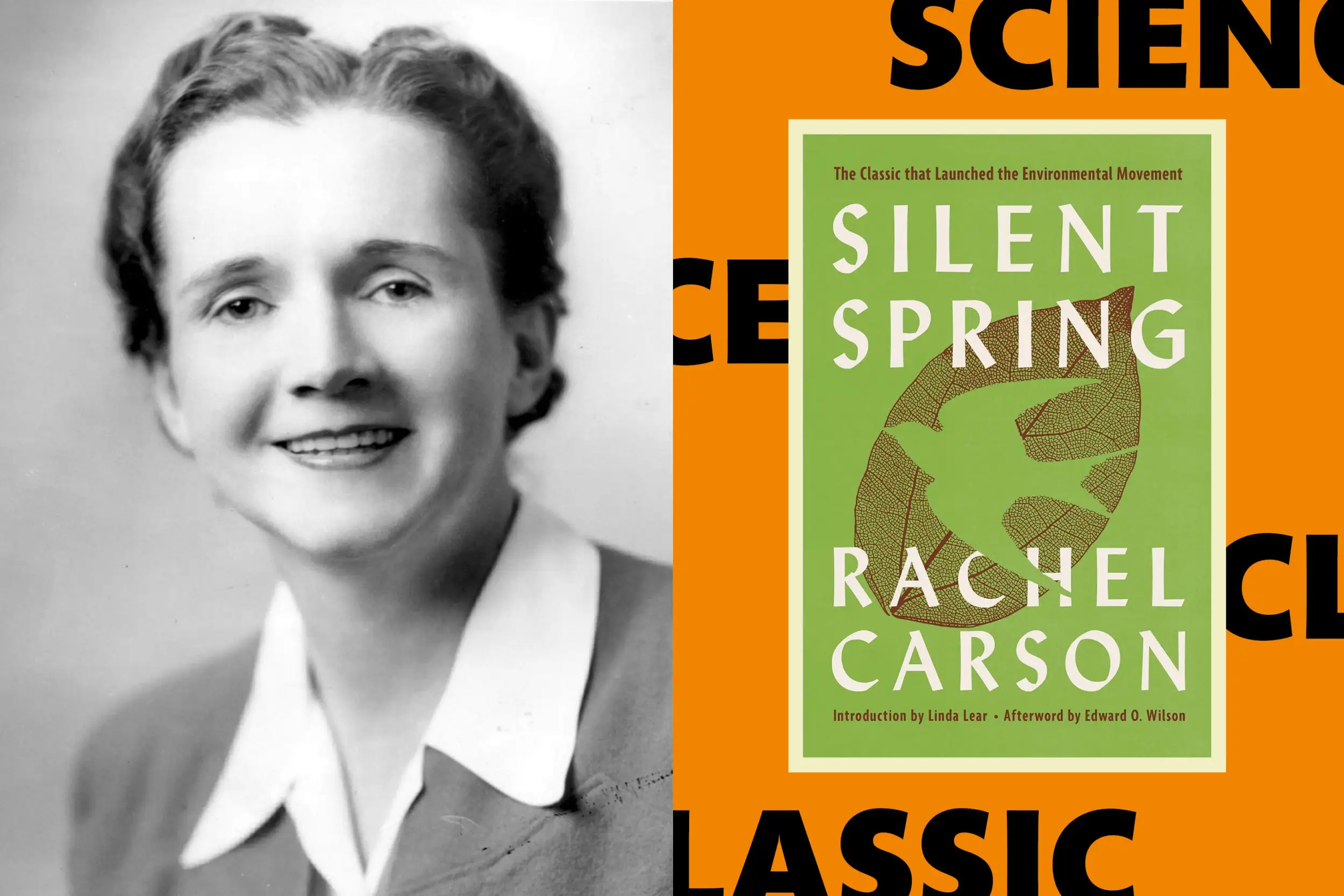
    Rachel Carson, a pioneering marine biologist, authored several influential works on marine life, including a pivotal letter published by the Boston Herald that highlighted the detrimental effects of the pesticide DDT (dichlorodiphenyltrichloroethane) on Massachusetts’ bird populations. This letter sparked Carson’s extensive research into the environmental implications of pesticides, leading to the creation of her seminal work, Silent Spring.

    The choice of the title, initially suggested for a chapter about avian life, proved to be a profound one. Silent Spring ignited the modern environmental movement. Renowned author Margaret Atwood remarked that before Carson’s 1962 publication, societal perspectives on the environment differed drastically from the post-publication mindset. President John F. Kennedy was inspired to initiate studies into DDT’s environmental impacts, which consequently played a role in establishing the Environmental Protection Agency in 1970 and influenced significant legislation such as the Clean Air Act (1963), the Conservation Act (1964), the National Environmental Policy Act (1969), the Environmental Protection Agency (1970), the Clean Water Act (1972), and the Endangered Species Act (1973).

    In Silent Spring, Carson describes a fictional American town once vibrant with greenery and alive with the sounds of wildlife, now rendered silent and desolate. This narrative resonated with readers who witnessed similar tragedies in their own communities, representing the widespread ecological damage caused by industrial and agricultural pollution, which adversely affected human health over just a few decades.

    Initially utilized as an insecticide in 1939, DDT was employed by Allied forces during World War II to combat malaria-carrying mosquitoes and lice in Asia. Following the war, its use proliferated in agricultural practices worldwide, often with devastating consequences. Carson’s Silent Spring documented how pesticides such as DDT contaminating groundwater and air can have repercussions far beyond their intended targets, altering ecosystems and threatening biodiversity.

    Biologist Dave Golson notes in his book, Silent Earth, that while Carson faced a mere 37 chemical pesticides during her time, today there are approximately 900 active pesticide ingredients approved in the United States and 500 in the European Union. Recently, the Trump administration rolled back many environmental protections established post-Silent Spring, allowing the continued use of many harmful pesticides.

    Carson’s holistic understanding of ecology and the interconnectedness of life forms profoundly influenced her writing. She passionately argued against the notion that nature operates in isolated compartments, stating, “When we spray elms, the sounds of robins are silent in the springs that follow.” This cyclical impact of pesticides, affecting the food web from elm to robin, illustrates the delicate balance of ecosystems and the far-reaching consequences of environmental pollution.

    Silent Spring also showcased Carson’s remarkable personal courage as she confronted the chemical industry, which dedicated significant resources to undermine her. Tragically, Carson succumbed to cancer in 1964, just two years after her groundbreaking book was published, with the very carcinogens she documented possibly contributing to her illness.

    Thanks to Carson and subsequent generations of biologists, we have come to understand the indiscriminate effects of pesticides on numerous species within ecosystems. As discussed in my book Sense of Unity, we now recognize that pesticides can also disrupt symbiotic relationships, highlighting the profound impact of environmental contamination.

    Carson’s work was not only a clarion call for environmental awareness but also a plea for sustainable agricultural practices. She understood the critical implications of climate change long before it became a mainstream concern. Carson poignantly asserted, “The history of life on Earth has been a history of interactions between living things and their environments,” emphasizing the necessity for a harmonious coexistence.

    Silent Spring remains an essential read for anyone seeking to understand the intricate history of life on our planet and its uncertain future. Carson profoundly warned, “Man is part of nature, and man’s war against nature is necessarily a war against himself.”

    Topics:

    Source: www.newscientist.com

    Share. Facebook Twitter Pinterest LinkedIn WhatsApp
    Previous ArticleNew Axolotl Fossil Discovered in Mexico: A Significant Paleontological Find
    Next Article Webb Telescope Discovers Methane in Interstellar Comet 3I/ATLAS

    Related Posts

    Science

    Pigeons Utilize Superparamagnetic Immune Cells in Their Livers to Detect Earth’s Magnetic Field

    Science

    Webb Telescope Discovers Methane in Interstellar Comet 3I/ATLAS

    Science

    New Axolotl Fossil Discovered in Mexico: A Significant Paleontological Find

    Science

    When Food is Scarce: This Single-Celled Organism Becomes a Giant Man-Eater for Survival

    Science

    Unlocking Multitasking: How Science Reveals Your Brain’s Potential with Practice

    Science

    Revealing the Truth: Stonehenge’s Altar Stones Likely Not Transported by Glaciers

    Science

    Experts Recommend Ditching AI Prompts to Reduce Energy Consumption

    Science

    Unlocking Stonehenge: A New Breakthrough in Solving Its Greatest Mystery

    Add A Comment
    Leave A Reply Cancel Reply

    Stay In Touch
    • Facebook
    • Twitter
    • Instagram
    • Pinterest
    Top Picks
    Space

    Space Perspective: A Journey to the Edge of Space

    For centuries, humankind has gazed at the stars, longing for the opportunity to explore the cosmos beyond our home planet with space perspective.

    10 Most Advanced Artificial Intelligence Robots in the World

    Experts Recommend Ditching AI Prompts to Reduce Energy Consumption

    “Espace” presented the new lander “Apex 1.0”

    Where is the anti-universe where time flows backwards?

    Most Popular
    Science

    Hurricane Season Kicks Off: Below-Average Forecast Highlights First Time in a Decade

    Science

    Jellyfish that have no brain, but remember what happened in the past

    Categories
    • AI (13)
    • Gadgets (10)
    • Science (46)
    • Space (9)
    • Technology (37)
    • Wheels (9)
    Our Picks
    Technology

    The most powerful X-ray laser in the world has been activated

    Science

    New Axolotl Fossil Discovered in Mexico: A Significant Paleontological Find

    © 2026 Hitechub.
    • Home
    • About Us
    • Privacy Policy
    • Terms & Conditions

    Type above and press Enter to search. Press Esc to cancel.

    We are using cookies to give you the best experience on our website.

    You can find out more about which cookies we are using or switch them off in .

    Ad Blocker Enabled!
    Ad Blocker Enabled!
    Our website is made possible by displaying online advertisements to our visitors. Please support us by disabling your Ad Blocker.
    Go to mobile version
    Hitechub
    Powered by  GDPR Cookie Compliance
    Privacy Overview

    This website uses cookies so that we can provide you with the best user experience possible. Cookie information is stored in your browser and performs functions such as recognising you when you return to our website and helping our team to understand which sections of the website you find most interesting and useful.

    Strictly Necessary Cookies

    Strictly Necessary Cookie should be enabled at all times so that we can save your preferences for cookie settings.