


Close Menu
HitechubHitechub
    What's Hot
    Science

    Alice Roberts: Embracing Our Animalistic Nature – Insights on Human Behavior

    Science

    Breakthrough Pancreatic Cancer Drug Doubles Survival Rates: A Revolutionary Treatment

    Space

    What would happen if you were without a suit in space?

    Important Pages:
    • About Us
    • Privacy Policy
    • Terms & Conditions
    Facebook X (Twitter) Instagram Pinterest
    Facebook X (Twitter) Instagram
    HitechubHitechub
    Tuesday, June 9
    • Technology
      1. AI
      2. Gadgets
      3. View All

      This is the most popular CEO in the world

      Sectors in which “Chat-GPT” is most often used

      AI Pioneer Expresses Concern About Potential for AI to Surpass Humanity

      Artificial intelligence has begun to “swallow” professions

      What’s new in Android 14

      Europeans have about 700 million old mobile phones in their drawers

      Here’s how you can tell if your phone is being tapped

      “Sneaker X” – computer case in the shape of a sneaker

      Russian Gamers Unite to Prevent Nuclear War: Join the Fight Online

      Challenges of Space Travel: Why Journeying to Space is So Difficult

      NASA Astronaut Casts Historic Vote from Space

      Discover the Future of Comfort: What If You Could Wear a Chair?

    • Science
      1. Space
      2. Wheels
      3. View All

      Galaxies in the universe are growing more slowly than they should

      “Espace” presented the new lander “Apex 1.0”

      The largest asteroid sample ever collected has arrived on Earth

      (VIDEO) Incredible flight of the Parker Solar Probe

      Toyota wants to make a new generation battery with a range of up to 1,200 km

      Meet Toyota’s lunar “baby” that could make exploring the Moon easier

      Microlino – Is this the perfect city car?

      Alfa Romeo 4C gets an electric successor

      Why Britain’s Mild Heatwave Feels Hotter Than America’s Most Severe Heatwave

      Rising Frequency and Intensity of Severe Turbulence: What’s Behind the Unpredictable Sky Conditions?

      Achure’s Expert Toolmakers: Selecting Stones with Unmatched Precision

      New Bird Species Discovered by Ornithologist on Remote Indonesian Island

    HitechubHitechub
    Home » Clay Minerals Reveal Evidence of Mars’ Warm, Wet Past – Sciworthy Insights
    Science

    Clay Minerals Reveal Evidence of Mars’ Warm, Wet Past – Sciworthy Insights

    Share Facebook Twitter Pinterest WhatsApp
    Share
    Facebook Twitter LinkedIn Pinterest WhatsApp

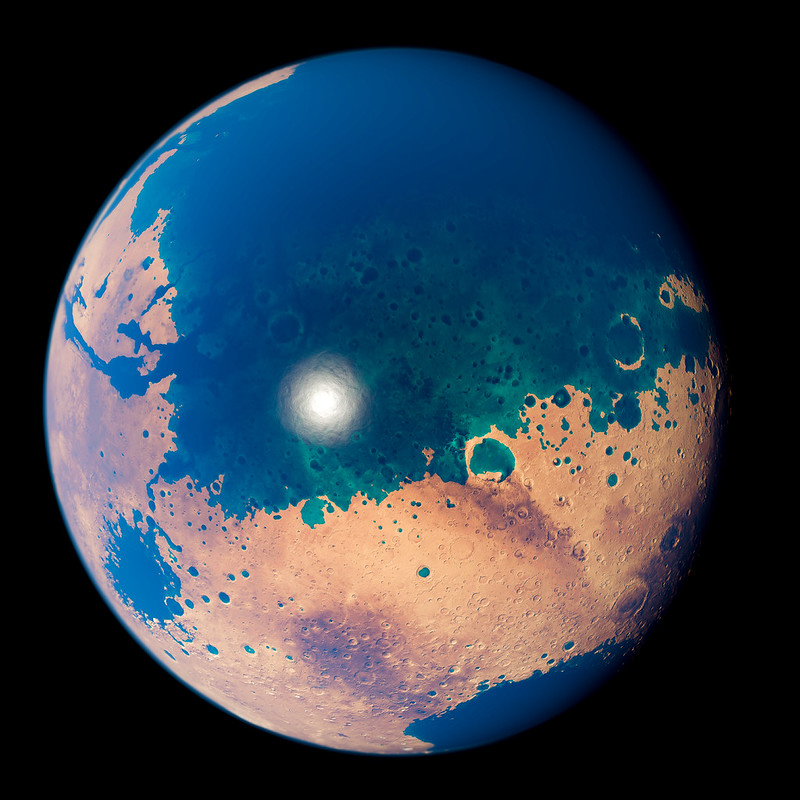
    While many envision Mars as merely a dusty red ball, recent research has unveiled mineral deposits indicating that the planet was once warm and wet. A team utilized the
    Compact Reconnaissance Imaging Spectrometer
    aboard the
    NASA Mars Reconnaissance Orbiter
    to analyze specific wavelengths of visible and near-infrared light emitted by minerals on Mars’ surface, determining its chemical composition from afar.

    Previous studies have identified layered silicate minerals, particularly
    clay
    , on Mars’ surface. Clay forms when water interacts with rock, capturing the amount and chemical composition of the water involved. This interaction allowed mobile elements like magnesium and iron to penetrate deeper into the Martian soil, while less mobile elements like aluminum remained in situ. This phenomenon is known as
    leaching
    , leading to the formation of two distinct clay layers in Martian rocks.

    Scientists have proposed two main hypotheses for the origin of these layered clays on Mars. The first suggests they formed from underwater seepage in a lake or pool. The second posits a humid, widespread environment on the Martian surface that facilitated leaching.

    To test these hypotheses, a team led by researchers at Purdue University estimated the “true” thickness of Mars’ clay layers using methods previously applied only on Earth. Due to the tilting of clay-rich rock layers, they appeared thicker or thinner than they truly are. To rectify this, the researchers conducted a high-resolution imaging science experiment (
    HiRISE
    ) that generated high-resolution elevation maps of Mars using the Mars Reconnaissance Orbiter. These maps were subsequently integrated with compositional data from the Compact Reconnaissance Imaging Spectrometer to create detailed 3D composition maps.

    Using the 3D compositional maps, the researchers pinpointed the locations where each clay layer was exposed on the surface and traced them underground to assess slope angles. Trigonometry was employed to calculate the actual thickness of each clay layer. The team analyzed 46 regions across Mars, revealing a combined thickness of both clay layers ranging from approximately 20 to 680 feet (6 to 200 meters), with an average of about 190 feet (60 meters) — comparable to the height of a 60-story building.

    The researchers also investigated the extent of clay deposits in a significant valley on ancient Mars known as the Great Valley of Mars, specifically the
    Maurus Valley region
    . This area was chosen due to its considerable elevation variability and the availability of previously gathered high-resolution chemical composition and elevation data.

    If the clay layers were confined to the valley’s bottom, where water once existed, and showed variable thickness and boundaries, it would strongly support the “aquatic seepage” hypothesis. Conversely, if the clay layers were more uniformly distributed, this would bolster the “surface seepage” hypothesis indicating a wetter surface environment.

    The findings indicated that the clay layer extended beyond the valley’s lowest areas, maintaining consistent boundaries across over half a mile (approximately 1 kilometer) of elevation. Consequently, the researchers concluded that these clay layers were likely formed through surface leaching in a humid environment.

    These results challenge earlier Martian climate models, which commonly suggested that temperatures rarely exceeded freezing on the Martian surface. To reconcile this discrepancy, the research team hypothesized that these deposits might have formed over an extensive period, indicating a discontinuously warm environment. In this scenario, if Mars’ surface remained frozen most of the time but occasionally surpassed the freezing point, the clay deposits could form over extended durations, aligning Martian climate models with the new findings.

    The researchers acknowledged some limitations in their study, particularly about sparsely sampled areas. They provided compelling evidence for a widespread wet environment on early Mars, but further examination of sites like Maurus Valley could enhance understanding of the precise surface environmental conditions that led to clay formation, potentially linking these findings to Martian climate models.


    Post views:
    981

    Source: sciworthy.com

    Share. Facebook Twitter Pinterest LinkedIn WhatsApp
    Previous ArticleThriving Complex Colonial Life During the Cambrian Explosion: Unveiling Ancient Ecosystems
    Next Article Unlocking Stonehenge: A New Breakthrough in Solving Its Greatest Mystery

    Related Posts

    Science

    Why Britain’s Mild Heatwave Feels Hotter Than America’s Most Severe Heatwave

    Science

    Rising Frequency and Intensity of Severe Turbulence: What’s Behind the Unpredictable Sky Conditions?

    Science

    Achure’s Expert Toolmakers: Selecting Stones with Unmatched Precision

    Science

    New Bird Species Discovered by Ornithologist on Remote Indonesian Island

    Science

    Why You Can Relax: AI’s Recursive Self-Improvement Explained

    Science

    Revealed: New Insights into How the Pyramids Were Constructed

    Science

    Half of Global Reservoirs at Risk of Soil Sedimentation by 2060: Impacts and Solutions

    Science

    Astronomers Discover the Missing Black Hole Wind in the Milky Way Galaxy

    Add A Comment
    Leave A Reply Cancel Reply

    Stay In Touch
    • Facebook
    • Twitter
    • Instagram
    • Pinterest
    Top Picks
    Science

    Newly Discovered Microraptorin Dinosaur Species Unveiled in China

    Jiang Changmensis is the first non-avian dinosaur identified in a paleontological site housing over 100…

    Is the Arctic Ocean Mitigating or Intensifying Global Warming? Insights from Cyworthy

    Massachusetts Shaken by Meteor Impact: Widespread Tremors Felt Across the State

    Now you can talk to ChatGPT – and he will answer you

    Discovering the True Motivation Behind America’s Return to the Moon

    Most Popular
    Technology

    The most powerful X-ray laser in the world has been activated

    Gadgets

    Best Gaming Laptops 2023: Powerful Portables for PC Games

    Categories
    • AI (13)
    • Gadgets (10)
    • Science (139)
    • Space (9)
    • Technology (37)
    • Wheels (9)
    Our Picks
    Science

    Exploring the Health Benefits of Turmeric and Curcumin: Do They Really Deliver?

    Science

    Thriving Complex Colonial Life During the Cambrian Explosion: Unveiling Ancient Ecosystems

    © 2026 Hitechub.
    • Home
    • About Us
    • Privacy Policy
    • Terms & Conditions

    Type above and press Enter to search. Press Esc to cancel.

    We are using cookies to give you the best experience on our website.

    You can find out more about which cookies we are using or switch them off in .

    Ad Blocker Enabled!
    Ad Blocker Enabled!
    Our website is made possible by displaying online advertisements to our visitors. Please support us by disabling your Ad Blocker.
    Go to mobile version
    Hitechub
    Powered by  GDPR Cookie Compliance
    Privacy Overview

    This website uses cookies so that we can provide you with the best user experience possible. Cookie information is stored in your browser and performs functions such as recognising you when you return to our website and helping our team to understand which sections of the website you find most interesting and useful.

    Strictly Necessary Cookies

    Strictly Necessary Cookie should be enabled at all times so that we can save your preferences for cookie settings.