


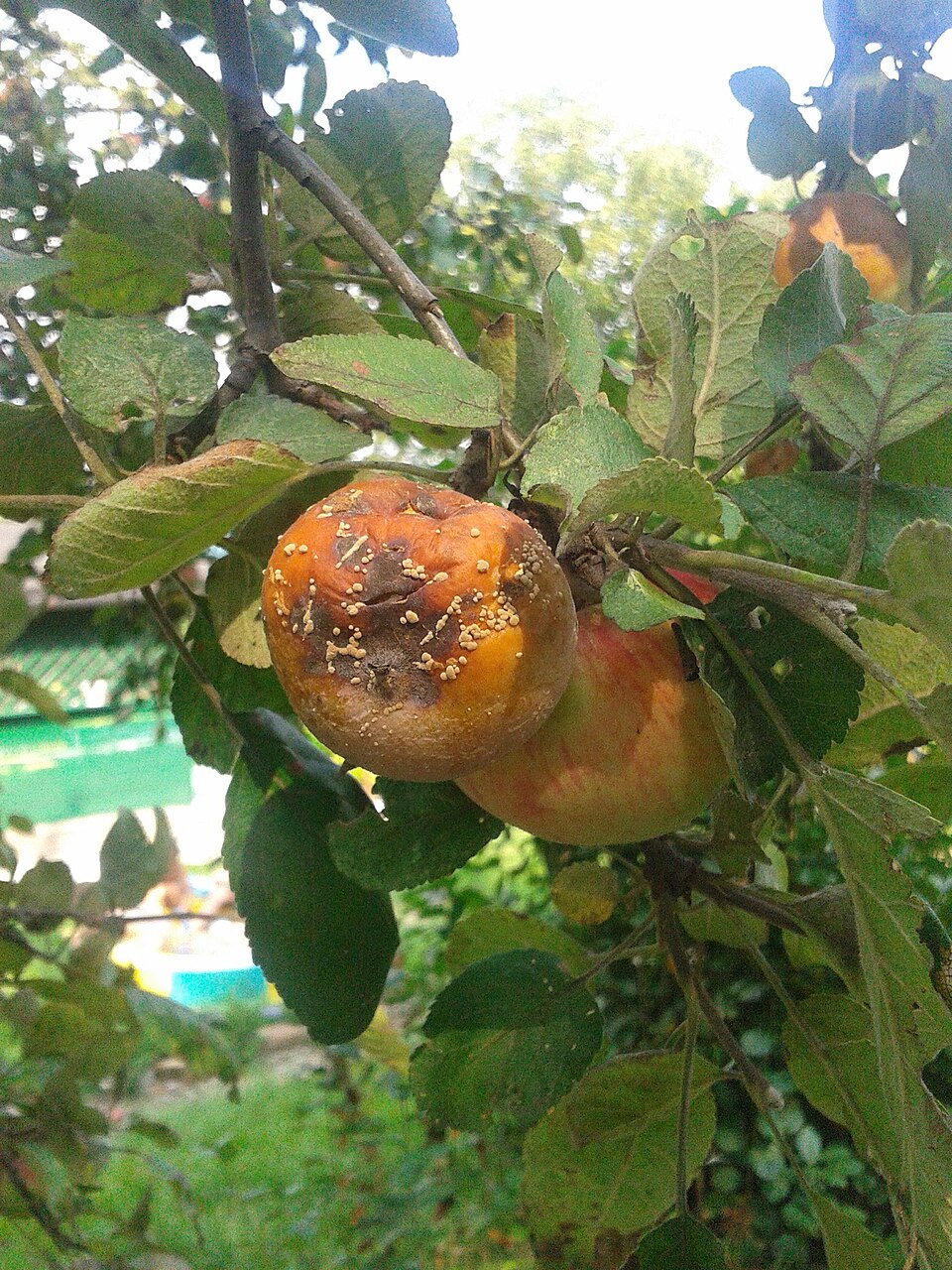
Brown rot is a widespread fungal disease affecting stone fruits in the southeastern United States, notably peaches, cherries, and plums. This disease is primarily caused by the fungus Monilinia fructicola, a fuzzy yellow-brown organism that infests flowers, twigs, and fruit, resulting in severe crop losses for commercial orchards. Once a tree is infected with brown rot, the damage is irreversible. To manage this threat, farmers apply chemical treatments called fungicides during the spring growth season.
The M. fructicola fungus contains a crucial biosynthetic gene, MfCYP51, which encodes a protein vital for its survival. Certain fungicides known as Demethylation Inhibitors (DMI) are designed to inhibit this protein, but over the past two decades, they have become less effective as M. fructicola has developed increased resistance.
An alternative to chemical fungicides is the use of live microorganisms and their metabolites to combat fungal diseases. These biological disinfectants include bacteria that produce harmful compounds, such as hydrogen cyanide and pyrrolnitrin, which can damage fungal cells. However, a commercially viable biofungicide has yet to be identified. A group of researchers from Clemson University and Huazhong Agricultural University is investigating soil bacteria, particularly Pseudomonas chlororaphis and Bacillus subtilis, for their potential effectiveness against brown rot.
In their experiments, researchers analyzed how fungal cells exhibit the expression of the MfCYP51 gene under various fungicide treatments. They utilized three susceptible strains of M. fructicola and three resistant strains, testing against five different treatment types, including DMI fungicide and combinations with bacterial metabolites. A control group was treated with sterile water.
After six hours, the researchers assessed gene expression by extracting RNA from the fungal samples. They observed that both treatments with P. chlororaphis and the combination of DMI fungicide with P. chlororaphis significantly reduced MfCYP51 expression in both susceptible and resistant fungal isolates. Conversely, treatments involving Bacillus subtilis resulted in increased MfCYP51 expression among resistant strains. This led researchers to conclude that P. chlororaphis uniquely reduces gene expression in comparison to other biofungicides.
To further explore the mode of action of these biofungicide treatments, the research team evaluated how P. chlororaphis and Bacillus subtilis produce the antifungal metabolite pyrrolnitrin. They employed a high-performance liquid chromatograph to separate and identify the compounds present in each treatment solution, hypothesizing that pyrrolnitrin contributes to the reduction in gene expression.
Furthermore, researchers conducted tests on five treatments for fruit brown rot. They selected 10 Gala apples, disinfected them, and applied fungicide. After 24 hours, they punctured the apples and introduced M. fructicola cells. The apples were then stored in a humid environment for five days, after which brown rot spots were measured.
Despite the reduced MfCYP51 expression, the results indicated that treatment with P. chlororaphis alone did not effectively reduce brown rot compared to controls. However, the combinations of DMI fungicide with both Bacillus subtilis and P. chlororaphis were observed to reduce brown rot effectively; notably, the DMI fungicide combined with P. chlororaphis treatment proved most effective.
In conclusion, while biofungicides may not yet be fully effective on their own, their commercialization could assist farmers in reducing dependency on DMI fungicides, ultimately slowing the development of resistance in M. fructicola. The researchers recommend future studies to explore biofungicide mixtures containing pyrrolnitrin in field conditions to monitor their real-world impact on stone fruit trees.
Post views:
398
Source: sciworthy.com