


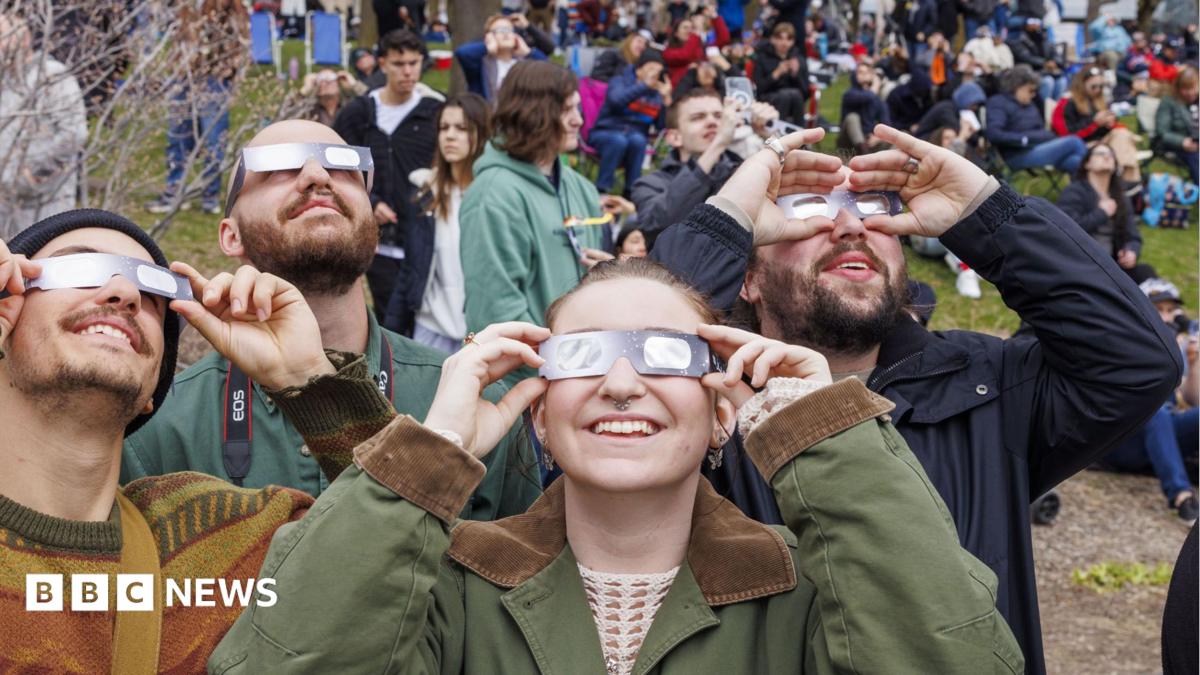
David Jones, a consultant ophthalmologist at Royal Cornwall Hospital, said the safest way to watch a solar eclipse is to use certified eclipse glasses that meet the ISO 12312-2 safety standard or to view the eclipse indirectly.
Looking directly at the sun during an eclipse can cause serious and permanent eye damage. The retina—the light-sensitive layer at the back of the eye—can be burned by the sun’s rays.
Dr Jones explained: “Your eye acts like a very powerful magnifying glass, focusing the sun’s rays directly onto the retina and potentially causing a burn.”
He added: “Although it can be difficult to resist the temptation to look directly at the eclipse, there are several safe ways to enjoy this spectacular event.”
For those unable to find certified eclipse glasses, safe alternatives include using a colander or making a simple pinhole projector to view the eclipse indirectly. Never look at the sun through ordinary sunglasses or homemade filters.
Peter Smith was among 70 people recorded by the Royal College of Ophthalmologists as suffering eye damage during the 1999 solar eclipse.
“Even now, there’s a lasting impact,” he said.
“When I’m tired, a flashing dot sometimes appears, and it’s not pleasant when it does.”
Source: www.bbc.co.uk