


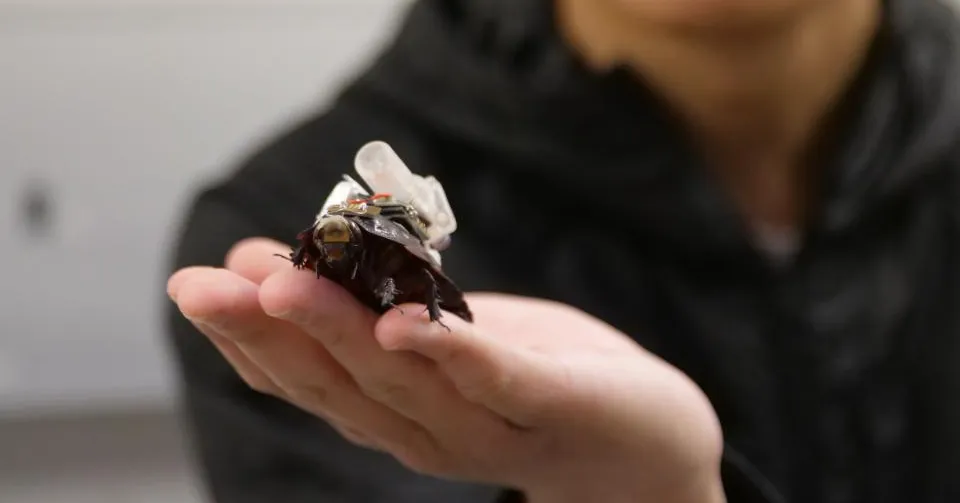
The injection system is a compact device powered by a spring-loaded mechanism that deploys the syringe. When activated, it breaks the seal separating the citric acid and baking soda chambers. The two substances react—much like the familiar baking soda and vinegar volcano experiment—to generate carbon dioxide. The gas creates enough pressure to move the syringe plunger and deliver the drug.
Photo: University of Queensland
In the study, researchers remotely guided cyborg cockroaches from a starting point through three checkpoints before directing them to inject simulated targets.
The cyborg insect drug-delivery system achieved an injection success rate of approximately 95% at close range—within 150 millimeters of the target. From the initial departure point through completion of the injection, the overall success rate was 72%.
The team also demonstrated how cyborg cockroaches could work together. One insect used a camera to identify a mock target, while a second cockroach carried out the syringe-based injection.
The researchers previously developed cyborg beetles capable of climbing vertical walls. However, they say larger cockroaches may be more effective for carrying specialized rescue technology and medical equipment.
Despite these promising results, the experiment did not fully replicate the challenging conditions of real disaster zones. Actual rescue environments may include rubble, uneven surfaces, unstable ground, and constantly shifting terrain.
Bo Doan said that, with sufficient funding to expand the research and conduct field trials, cyborg insect rescue teams could potentially be deployed at real disaster sites within five to 10 years.
“Rather than building one robot that does everything, we can take advantage of the natural strengths of different insects and prepare them for specific tasks,” Vo-Doan says.
This story was originally wired japan Translated from Japanese.
Source: www.wired.com