


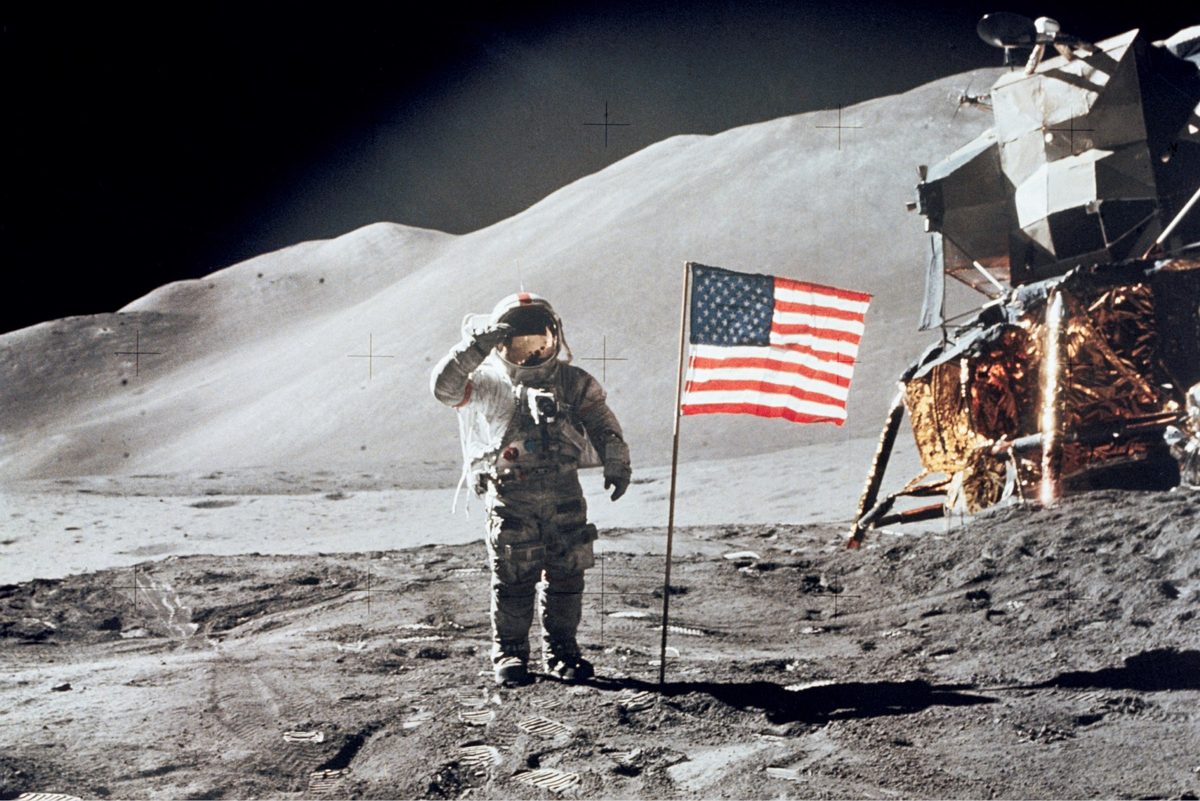
Thanks to NASA’s Artemis II mission in April 2026, global interest in lunar exploration is reignited as four astronauts successfully orbited the Moon and returned to Earth. This mission is a crucial milestone towards NASA’s vision of establishing a lunar base.
However, for those reminiscing about the Apollo missions of the 1960s and ’70s, the question remains: why are we sending humans back to the Moon?
Building the First Moon Base
There are many compelling scientific reasons to return to the Moon, including the collection of samples to study the formation of the solar system. For instance, placing a telescope on the Moon allows for clearer observations of stars, free from Earth’s atmospheric distortions. Yet, in recent decades, geopolitical considerations have overshadowed scientific aims.
The U.S. decision to return humans to the Moon responds directly to geopolitical tensions with China, which has openly aimed to establish its own scientific research base on the lunar surface, significantly advancing its robotic and human lunar exploration initiatives in the past two decades.
Initiated in 2017, the Artemis program can be viewed as a counter-response, with the United States seeking to establish a permanent Moon base ahead of China. U.S. Senator Ted Cruz has labeled this endeavor as the “space race of the 21st century.”
While uplifting images and videos from Artemis II have captured public interest, the underlying motivations remain largely in the background.
According to Dr. Priyanka Dopade, a researcher in sustainable space engineering at the University of Auckland, “Space and geopolitics have always gone hand in hand. The distinction now is a growing push for a long-term human presence on the Moon, backed by companies like SpaceX and Blue Origin.”
“The scientific rationale here is weaker compared to robotic exploration or establishing something like the Lunar Gateway (with significant European contributions),” she notes. “However, establishing a manned base could potentially catalyze more scientific advancement.”
“In exchange for this, funding for U.S. scientific missions may be cut, including the potential cancellation of the Gateway program.” Thus, geopolitics and economics appear to overshadow scientific curiosity.
Despite being promoted for its scientific benefits, the Artemis program’s primary motives revolve around claims of lunar territory and resources such as water ice.
Dr. Becky Smethurst, an astrophysicist at Oxford, recently noted the conflicting motivations behind the Artemis mission and remarked on the breathtaking images of Earth returned during Artemis II.
“While these images are beautiful, they lean more towards art than scientific clarity,” she explains. “The mission’s driving force has never been purely scientific; it has always been political and economic. The U.S. is keen to secure a lunar foothold before China.”
Chris Lee, a former chief scientist at the British Space Agency, further described the Artemis program as “an iron geopolitical hand in a velvet glove.”
Even Neil deGrasse Tyson, a prominent astrophysicist and staunch advocate for U.S. space initiatives, acknowledged during a recent interview with CBC (Canadian Broadcasting Corporation) that the core impetus behind this mission is the United States’ need to surpass China in lunar endeavors.
While he applauded the significance of Artemis II’s achievements—including sending humans farther into space than ever before and including Canadian astronauts, as well as various underrepresented groups—he emphasized that there are substantial Earthly concerns underpinning these efforts.
“Geopolitical forces are at play here,” he said. “Yet, not enough people recognize this.”

Who Owns the Moon?
Funding for space exploration hinges on sustaining public support, and the Artemis II mission has certainly garnered enthusiasm. However, this excitement has obscured the ongoing debate regarding lunar ownership and usage.
The Outer Space Treaty prohibits any nation from claiming sovereignty over the Moon or establishing military bases there. Recently, the U.S. led over 60 nations in signing the non-binding Artemis Accords, which outlines a commitment to the peaceful use of the Moon and the sharing of scientific information, while permitting resource extraction and the creation of “safe zones” for operational areas.
This could effectively allow nations to claim sections of the Moon. The availability of water ice on the Moon is critical for human exploration and establishing long-term bases, as it serves both drinking and fuel production needs.
While the presence of water ice may be valued for astronaut use, it raises significant questions about how other resources could be extracted and regulated.
The Moon is also known to contain rare earth elements, as well as helium-3, a potential fuel source. However, the exact quantities of these resources are yet to be determined. Currently, there are no barriers preventing private companies from landing on the Moon, extracting these resources, returning them to Earth, and profiting from their sale.
The only impediment is the technical challenges related to lunar landings, which have hindered private endeavors by companies like Intuitive Machines, ispace, and SpaceIL.
“No entity—whether NASA, the Chinese space agency, or a commercial firm—faces restrictions against landing on specific lunar locations and laying claim to their resources,” Smethurst states.
Beyond the resources, the Moon holds strategic importance as a base for further deep space exploration, including future Mars missions, and it offers potential for Earth observation. Additionally, the far side of the Moon represents an optimal space for technology development free from scrutiny.
The financial value of the Moon cannot be estimated without further insights into its resource availability and strategic applications. Consequently, the current lunar race is fundamentally about claiming rights to valuable resources.
“The real question is: who benefits from all this?” Dr. Dopade notes. “Historically, government-led space exploration, even with geopolitical motivations, has yielded societal benefits through innovations like GPS from the Cold War era. But now, with profit-driven commercial entities taking a larger role, concerns arise about whether innovations will be shared broadly or increasingly monetized, potentially exacerbating existing inequalities.”
Read More:
Source: www.sciencefocus.com