


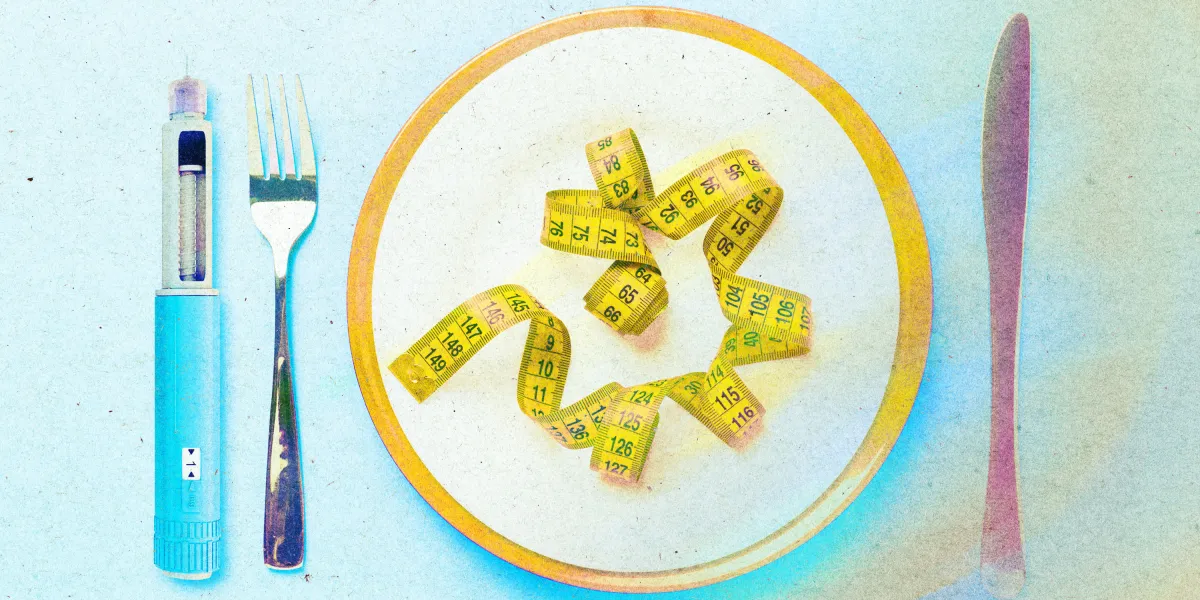
GLP-1 weight-loss drugs are among the most significant biotechnology advances of the past decade, but clinicians warn that they could worsen the growing global burden of eating disorders. This edition also explores PFAS cleanup, self-aware cities, a major cryptocurrency hack, AI’s effects on markets and science, cybersecurity concerns at military bases, and emerging debates over AI and animal rights.
This is today’s edition of The Download, a weekday newsletter covering what is happening in technology.
GLP-1 drugs and the rising risk of eating disorders
Eating disorders are on the rise, and GLP-1 drugs may make the situation worse for some people.
A new report suggests that the global incidence of anorexia nervosa and bulimia nervosa increased by 71% between 1990 and 2023. Clinicians are already reporting cases in which GLP-1 drugs appear to exacerbate the problem.
Here is how these medications could intensify an already growing public health challenge.
—Jessica Hamzelou
This story is from “The Checkup,” a weekly biotech newsletter. Sign up to receive it every Thursday.
“Love is Infrastructure” imagines self-aware cities
“Love is Infrastructure” is a short story by Charlie Jane Anders, author of the novel Good Things Will Come to You.
Mainspring and St. Barnabas are neighboring cities with distinct personalities. They have never particularly liked each other, but that changes when each city develops its own mind, formed through a vote by its people.
As the cities begin to gravitate toward one another, a third city emerges. Turnbull promises Mainspring a more efficient future, but his vision for urban life comes at an alarming price.
Read the full short story about self-aware cities, direct democracy, and romance.
This story is from the latest edition of the print magazine. Subscribe now to receive each issue as soon as it is released.
PFAS cleanup: how close are we to removing “forever chemicals”?
PFAS, or “forever chemicals,” have been used for decades in products and materials ranging from nonstick cookware to firefighting foam. They are associated with increased risks of fertility problems, developmental delays, cancer, and a weakened immune response.
Cleaning PFAS-contaminated soil could prevent significant harm to people and the planet. The technology remains in its infancy, but removing these chemicals from water systems could limit their buildup.
See how close researchers are to eliminating PFAS contamination from the environment.
—Sarah Kiley Watson
This story is part of “Have You Arrived Yet?”, a series examining six technologies that have long promised to change the world and assessing how far they have progressed. Subscribe to read the rest of the series.
Must-read technology and science news
We searched the internet for the most entertaining, important, alarming, and fascinating stories about technology today.
1. Binance suffered the biggest cryptocurrency hack in history
The exchange said $6.3 billion in assets were affected. (BBC)
+ Analysts blamed North Korea for the hack. (The Guardian)
+ Stolen bitcoins will probably never be recovered. (Bloomberg $)
+ Binance has suspended all deposits and withdrawals. (NBC News)
+ A pastor’s cryptocurrency scheme cost investors millions of dollars. (MIT Technology Review)
2. Nvidia’s Jensen Huang was targeted by a Chinese spy suspect
The suspect is an executive at a data-center company in Singapore. (The New York Times $)
+ US intelligence agencies believe she developed a relationship with Mr. Huang. (The Guardian)
+ Her company was investigated over suspected diversion of tips. (CNBC)
+ Nvidia said the transaction was “normal.” (Bloomberg $)
3. Alphabet lost $500 billion in market value
The record loss followed concerns that AI could reduce search profits. (CNBC)
+ Amazon and Intel pushed technology stocks lower. (Bloomberg $)
+ Hyperscalers are gambling with trillions of dollars. (MIT Technology Review)
4. The Pentagon suspects military-base freezers were hacked
Food spoiled after the freezers malfunctioned. (Reuters $)
+ The incident may be related to a similar hack at a French supermarket. (Gizmodo)
5. US midterm elections could reshape the future of US science
A Democratic Congress could curb President Trump’s cuts to the science sector. (Nature)
+ Trump has already dealt a major blow to science. (MIT Technology Review)
6. Data centers could sharply increase US climate pollution
Gas plants could increase power-sector emissions by 42% by 2030. (The Verge)
+ Data-center workers in Europe face dangerous conditions. (The Guardian)
7. SpaceX withdraws from NASA
The company is prioritizing Starlink and AI. (Ars Technica)
+ Cape Canaveral is busier than it was during the space race. (Axios)
8. Battery makers are finding new US markets
Manufacturers are shifting from electric vehicles to grid storage. (The Wall Street Journal $)
+ Batteries set a new record in the US. (MIT Technology Review)
9. A humanist received a religious exemption from using AI at work
He argued that using AI would undermine human flourishing. (Gizmodo)
10. Psychics are fighting back against computerized clairvoyance
Human practitioners argue that chatbots lack a sacred quality. (The Guardian)
Quote of the day
“Liz is something that only people have, so it’s becoming more and more in demand.”
—Stephen Strogatz, professor of mathematics at Cornell University, speaking to Business Insider
As AI increasingly takes over intellectual tasks, personal appeal will become more valuable.
One more thing: AI and the animal-rights movement
Bay Area animal-rights activists want to embrace AI
In early February, animal-rights activists and AI researchers gathered at Mox, a shoe-free coworking space in San Francisco, wearing socks and discussing provocative ideas. If artificial general intelligence is on the horizon, they asked, can technology help prevent animal suffering?
Some participants are considering custom AI agents for advocacy, while others are proposing AI tools to grow meat. But the event’s central topic was the large amount of money expected to flow into animal-rights charities—not from individual mega-donors, but from employees at AI institutes.
Participants also considered more controversial possibilities. If AI develops the capacity to suffer, that could create a moral catastrophe. We investigated why these ideas are gaining traction and provoking debate.
—Michelle Kim and Grace Huckins
We still have good things
A place for comfort, fun, and distraction to brighten your day. Today is a Halloween special. Any ideas? Please contact me.
+ Meet “Picasso the Pumpkin Sculptor”, who brings artistry to Halloween traditions.
+ Bill McClintock’s “Ghostmashers” is the perfect soundtrack for an All Hallows’ Eve party.
+ Want to give someone a proper scare this year? The professionals behind America’s haunted attractions have a few ideas.
+ This Halloween light show combines 210 drones, fire, lasers, projections, fountains, and the Beastie Boys.
Source: www.technologyreview.com