


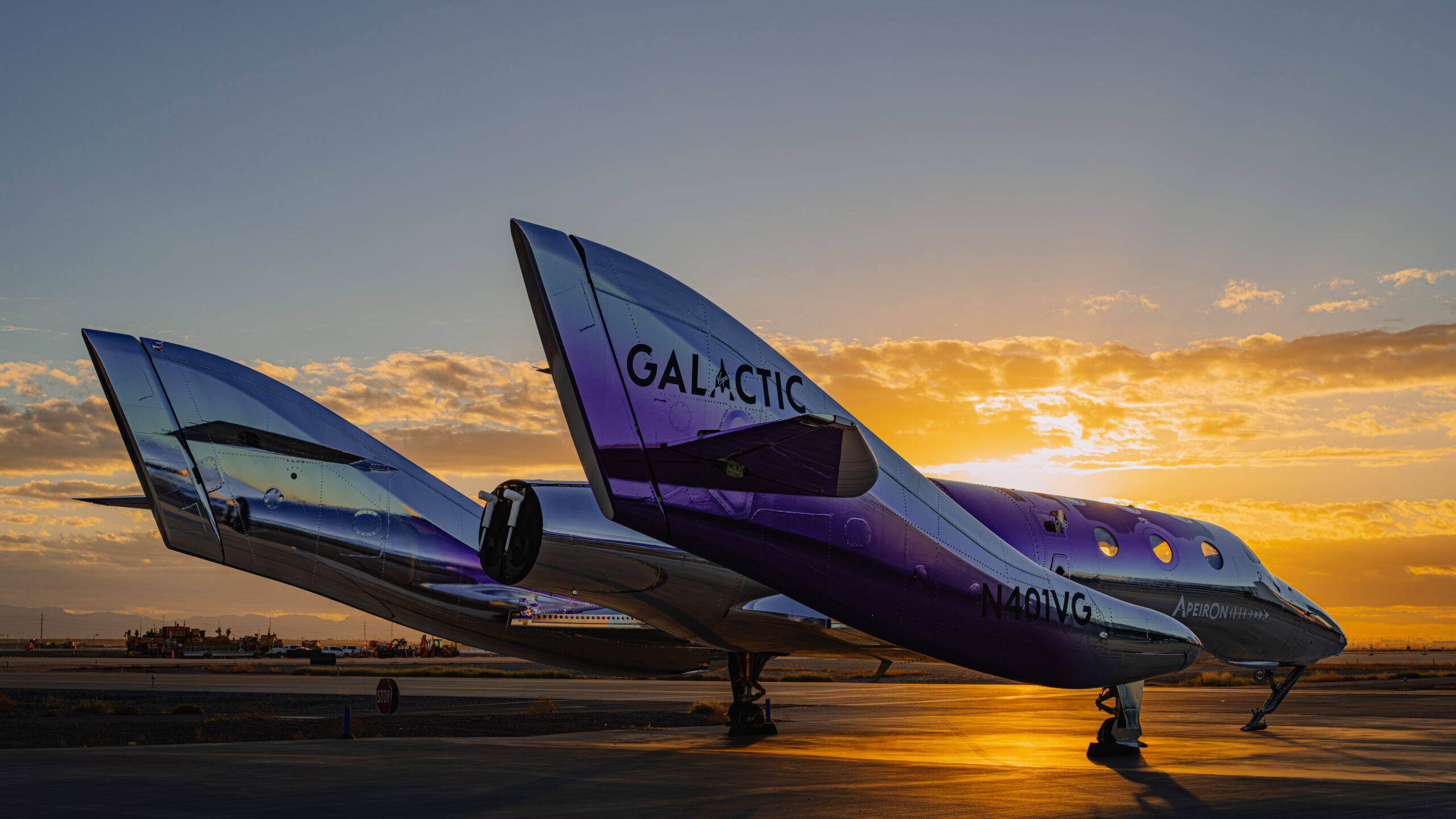
Virgin Galactic is preparing to move Apeiron, the first ship in its new fleet, from the company’s spacecraft factory in Mesa, Arizona, to Spaceport America in New Mexico. The spacecraft will undergo avionics and flight-software work, ground testing, and a series of increasingly demanding flight tests before it can carry paying passengers. Virgin Galactic currently expects its first commercial flight with Apeiron to take place “as early as” the second quarter of 2027, although that schedule remains uncertain.
“We are proud that the first ship in Virgin Galactic’s fleet will be named after a group of people who share our excitement for what’s next,” Virgin Galactic CEO Michael Colglazier said.
Apeiron is scheduled to leave the spacecraft factory later Wednesday. After being transported to New Mexico aboard VMS Eve, the spacecraft will receive additional work on its avionics equipment and flight software from engineers and technicians at Spaceport America.
Following further ground tests, Apeiron will be mated with VMS Eve again for a captive-carry test. That test will be followed by a drop test and, finally, a powered test flight reaching more than 80 kilometers.
Is this the future of space travel?
Virgin Galactic says it expects Apeiron‘s first commercial spaceflight to take place “as early as” the second quarter of 2027. As with most aerospace schedules, that date should be treated cautiously. Even so, Apeiron could begin flying paying customers on suborbital space-tourism missions within the next 12 to 18 months.
Virgin Galactic’s commercial ambitions remain the subject of considerable skepticism. To succeed, the spacecraft will need to fly almost flawlessly while achieving the durability required to carry hundreds of people into space for short periods each year. Investors have recognized the difficulty of that challenge. In 2021, at the height of the space-tourism boom, Virgin Galactic’s stock briefly reached $1,118 per share. More recently, it has traded near $2.50 per share.
Whatever the outlook for Virgin Galactic itself, the company’s progress with Apeiron will help shape expectations for the expansion of commercial space tourism over the next decade.
Source: arstechnica.com