


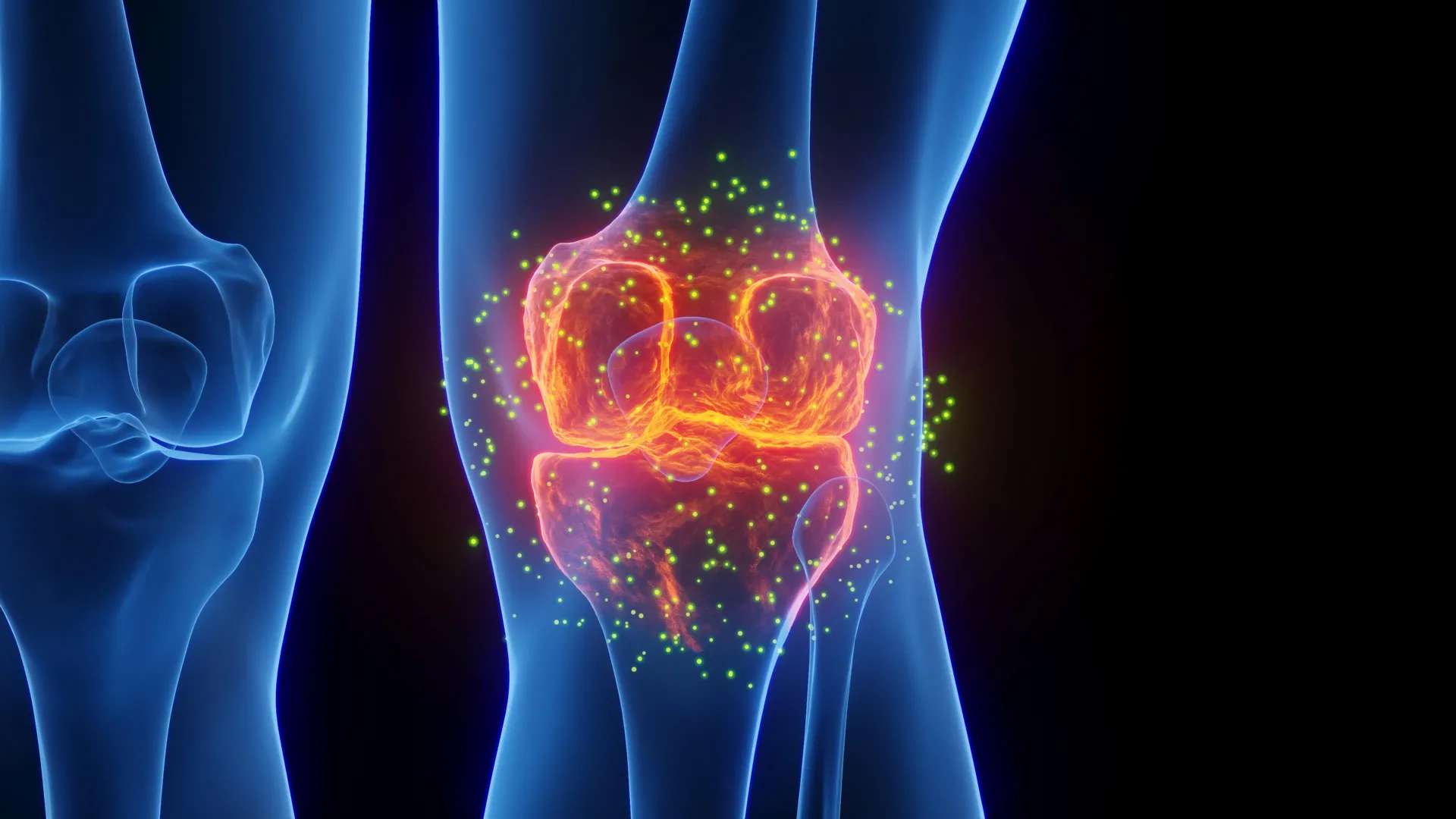
Epilepsy Drug and Smart Hydrogel Show Potential to Treat Osteoarthritis Pain and Cartilage Damage
For millions of people with osteoarthritis, pain and stiffness can make daily activities increasingly difficult. Common treatments, including over-the-counter medications and steroid injections, may temporarily relieve symptoms but do not prevent underlying joint damage from progressing.
New research from Yale University suggests a possible dual-action approach. In a study published in Physiologically active substances, scientists found that the drug lacosamide may reduce osteoarthritis-related joint pain while also helping repair cartilage damage in preclinical studies. The effect was particularly strong when researchers used a special hydrogel to deliver the drug directly into the joint.
Why osteoarthritis damages cartilage
Osteoarthritis is often described as a “wear-and-tear” condition, but that explanation leaves out much of the biology involved.
In healthy joints, cells called chondrocytes maintain cartilage by balancing the production of new tissue with the removal of old material. Osteoarthritis disrupts this balance. Cartilage begins to break down faster than it can be replaced, and the bones may eventually rub against each other. As the disease progresses, some patients require joint reconstruction procedures, including total knee replacement.
“There is a huge unmet need in osteoarthritis,” says Chuan-Ju Liu, Ph.D., the study’s principal investigator and the Charles W. Ors Professor of Orthopedics and Rehabilitation. “We need treatments that don’t just mask the pain, but actually change the course of the disease.”
Currently, no drugs approved by the U.S. Food and Drug Administration can stop osteoarthritis pain or prevent the structural destruction of cartilage. Research led by Liu suggests that one treatment strategy could potentially address both problems.
The researchers repurposed an existing drug and combined it with an advanced gel designed to keep the medication inside the joint. The approach may help preserve joint tissue while providing sustained pain relief without relying on addictive opioids.
Nav1.7 links osteoarthritis pain with cartilage loss
The study focuses on Nav1.7, a protein that functions as a sodium channel. Sodium channels act as microscopic gates in cell membranes and play an important role in transmitting electrical signals.
Nav1.7 was long thought to work primarily in specialized nerve cells that send pain signals to the brain. However, recent research by Liu and his team found that the protein is also highly active in chondrocytes, the cells responsible for maintaining cartilage.
Nav1.7 is relatively quiet in healthy joints. In osteoarthritis, however, its activity increases significantly. The researchers found that this increased activity can intensify pain signaling and contribute to the destruction of cartilage cells that would otherwise help preserve joint tissue.
This makes Nav1.7 an unusual potential treatment target because it appears to influence both pain perception and the physical deterioration of joint tissue.
“When Nav1.7 is dysregulated, it contributes to both joint degeneration and pain,” Liu says. “Our findings suggest that Nav1.7 is a dual-action target. By blocking this single protein, we may be able to quiet the pain nerves and instruct cartilage cells to not only stop destruction but also start repair.”
Lacosamide shows potential for cartilage repair
Rather than developing an entirely new medication, Liu’s team tested existing drugs that block sodium channels. Among them, lacosamide produced potent biological effects at considerably lower concentrations and showed a better safety profile than older drugs in the same class.
Lacosamide is already used to treat epilepsy, but researchers found that its effects on cartilage depend heavily on the dose.
More is not necessarily better. An ideal low concentration of lacosamide may encourage cells to produce proteins involved in cartilage formation while inhibiting processes that destroy tissue. If the concentration is too high or too low, those benefits begin to fade.
“This shows that the system is finely tuned,” Liu says. “This drug has an optimal range to help restore balance without overcorrecting. What was remarkable was not only its effectiveness, but also how small doses were required.”
Further research showed that lacosamide also changes how cells communicate. The drug stimulated the release of two beneficial signaling proteins: HSP70 and midkine.
HSP70 helps cells respond to stress and supports tissue repair. Midkine helps regulate inflammation and protect joint tissue from degeneration. Together, these proteins appear to create conditions that are more favorable to cartilage maintenance.
“These proteins create an environment that supports cartilage maintenance,” Liu explains. “This allows the drug’s effects to go beyond individual cells and affect the entire tissue.”
How the smart hydrogel delivers lacosamide
Although oral lacosamide treatment produced positive results in preclinical studies, medication taken by mouth circulates throughout the body and may be more likely to cause unwanted effects elsewhere.
To target the affected joint directly, the researchers investigated intra-articular injections. However, delivering medication into a joint presents a challenge.
“The knee joint, which is also the most common site for osteoarthritis, is naturally a leaky bucket,” Liu says. “The body’s drainage system can drain fluid injected into the knee within a few hours.”
To keep the drug in the joint longer, the team created a hydrogel made from collagen II. The material responds to temperature: it remains liquid in a cold syringe but becomes a firm, jelly-like substance when it reaches body temperature.
Once injected into the joint, the hydrogel acts as a reservoir for lacosamide. It keeps the drug concentrated in the affected area and gradually releases it over several weeks.
“The hydrogel acts as a local reservoir,” Liu says. “It keeps the drug where it’s needed most and releases it slowly over time, turning a daily pill into a long-acting topical treatment that lasts for more than a month.”
In the same preclinical study, injections of the lacosamide-containing hydrogel once every four weeks prevented cartilage loss more effectively than daily oral administration.
Could an existing epilepsy drug speed osteoarthritis trials?
One potential advantage of lacosamide is that it is already approved for use in humans. This could allow the medication to move into clinical studies for osteoarthritis more quickly than a completely new drug.
Lacosamide is also being tested in people with certain nerve-related pain conditions caused by Nav1.7 mutations. Those results give researchers confidence that the effects observed in laboratory studies could eventually translate into meaningful pain relief for patients.
However, the findings described here are preclinical. Additional research and clinical trials in people are needed to determine whether lacosamide and the collagen II hydrogel are safe and effective for osteoarthritis treatment.
The research reflects a broader trend in medicine: combining drugs with advanced biomaterials to control where and how treatments are delivered. If the approach proves successful in humans, it could eventually reduce the number of procedures patients need, limit unwanted side effects, and provide longer-term protection against structural joint damage.
“We’re not just developing treatments,” Liu concluded. “We are developing systems that make drugs work more effectively where they matter most. Our goal is to move beyond symptom control and toward true disease amelioration. This work brings us closer to that reality.”
Source: www.sciencedaily.com