


Close Menu
HitechubHitechub
    What's Hot
    Science

    Understanding the Relationship Recession: Why It’s a Major Concern for Gen Z

    Science

    Unlock Youthful Skin with a Red Light Mask: Two Key Considerations You Should Know

    AI

    The unusual robot conductor of a concert in Seoul

    Important Pages:
    • About Us
    • Privacy Policy
    • Terms & Conditions
    Facebook X (Twitter) Instagram Pinterest
    Facebook X (Twitter) Instagram
    HitechubHitechub
    Tuesday, June 23
    • Technology
      1. AI
      2. Gadgets
      3. View All

      This is the most popular CEO in the world

      Sectors in which “Chat-GPT” is most often used

      AI Pioneer Expresses Concern About Potential for AI to Surpass Humanity

      Artificial intelligence has begun to “swallow” professions

      What’s new in Android 14

      Europeans have about 700 million old mobile phones in their drawers

      Here’s how you can tell if your phone is being tapped

      “Sneaker X” – computer case in the shape of a sneaker

      Russian Gamers Unite to Prevent Nuclear War: Join the Fight Online

      Challenges of Space Travel: Why Journeying to Space is So Difficult

      NASA Astronaut Casts Historic Vote from Space

      Discover the Future of Comfort: What If You Could Wear a Chair?

    • Science
      1. Space
      2. Wheels
      3. View All

      Galaxies in the universe are growing more slowly than they should

      “Espace” presented the new lander “Apex 1.0”

      The largest asteroid sample ever collected has arrived on Earth

      (VIDEO) Incredible flight of the Parker Solar Probe

      Toyota wants to make a new generation battery with a range of up to 1,200 km

      Meet Toyota’s lunar “baby” that could make exploring the Moon easier

      Microlino – Is this the perfect city car?

      Alfa Romeo 4C gets an electric successor

      Discover How Pollen Could Unlock the Longevity Secrets of Heliconius Butterflies

      Revolutionary New Spider Species Develops Unique Trap Launching Ants Into the Air

      Asteroid Donald Johansson: Wobbly, Peanut-Shaped Object with a Watery Past, Scientists Discover

      Webb Captures Stunning Moment of Jupiter-Sized Exoplanet Being Devoured by Its Star

    HitechubHitechub
    Home » Fecal Transplants Improve Brain Function in Aging Mice: A Promising Research Breakthrough
    Science

    Fecal Transplants Improve Brain Function in Aging Mice: A Promising Research Breakthrough

    Share Facebook Twitter Pinterest WhatsApp
    Share
    Facebook Twitter LinkedIn Pinterest WhatsApp
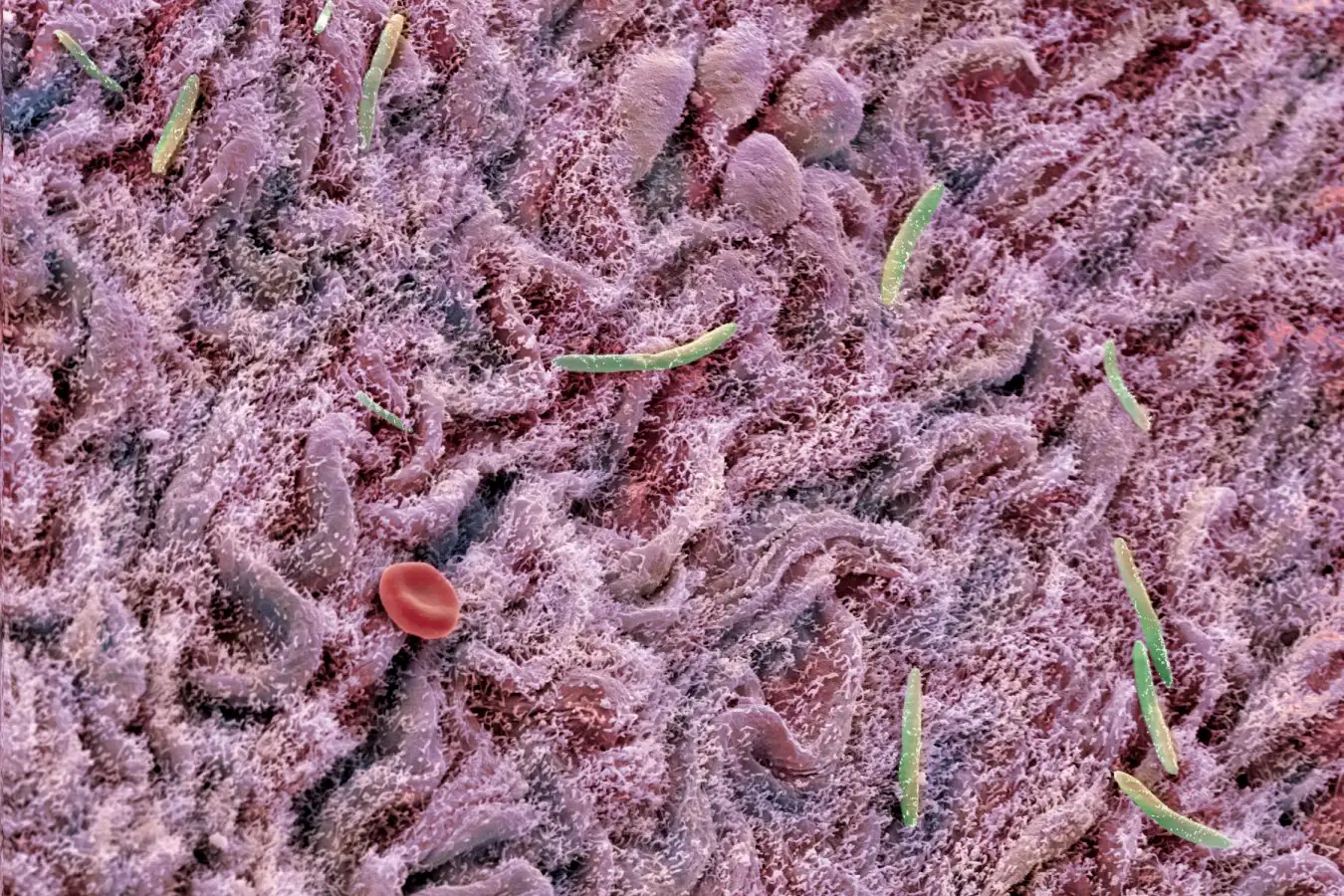
    Scanning electron micrograph of the intestinal lining of a mouse. Several bacteria (green) and one red blood cell (red) are visible.

    Scanning electron micrograph of the intestinal lining of a mouse. Several bacteria (green) and one red blood cell (red) are present.

    CJC Copyright: IKELOS GmbH/Dr. Christopher B. Jackson/Science Photo Library

    Fecal Microbiome Transplantation (FMT) has shown promising potential in enhancing brain adaptability in aging organisms, similar to the plasticity observed in younger brains. The gut microbiome is increasingly recognized as a significant factor influencing mental health, including depression risk, and might play a role in shaping personality traits.

    A groundbreaking study indicates that older mice receiving gut microbiome transplants from younger mice exhibited enhanced brain plasticity. This discovery suggests that FMT may enable older mice to overcome visual conditions typically treatable only during childhood, such as amblyopia (lazy eye).

    “This study suggests that microbial communities may help regulate critical periods of brain development by defining when developmental windows of increased plasticity open and close.” says Parisa Gazelani, a professor at Oslo Metropolitan University in Norway, who was not involved in the study. “This implies that the gut microbiome could play an active role in shaping neural circuit maturation alongside sensory experience, immune activity, and genetic programming.”

    Neuroplasticity, the brain’s capacity to reform itself, typically allows conditions like amblyopia in children to be addressed by temporarily covering the stronger eye, compelling the brain to forge new connections with the weaker eye. However, neuroplasticity peaks during youth and diminishes during adolescence due to the brain’s natural pruning of unused connections.

    Researchers, including Paola Tonini from the Sant’Anna School of Advanced Studies in Pisa, Italy, explored the potential of manipulating the gut microbiome to boost brain plasticity in adulthood.

    In their trials, 21-day-old mice were administered high doses of a broad-spectrum antibiotic for 10 days. This treatment led to significant alterations in their gut microbiota compared to control mice that received untreated water, specifically a decrease in bacterial families such as Lachnospiraceae, which are linked to the production of neuroprotective short-chain fatty acids.

    After sealing one eye of each mouse for three days, imaging revealed that only control mice displayed signs of neuroplasticity, with heightened brain responsiveness to the open eye’s stimulation.

    To further explore underlying mechanisms, the researchers conducted RNA sequencing to analyze gene expression in the visual cortex. “We observed significant changes in the antibiotic-treated animals,” noted Tonini, with over 1,000 genes expressed differently in these mice compared to controls. These genes were linked to myelination processes and blood-brain barrier permeability.

    Ultimately, fecal microbiota from 30-day-old mice were transplanted into 4-month-old adult mice, while a control group received transplants from other adults. Notably, only the mice receiving the young microbiota exhibited neuroplasticity in response to the eye-closure experiment.

    If these findings translate to humans, the implications could be transformative. Says Harriet Scherekens from University College Cork in Ireland, “This indicates that the microbiome is crucial not only for early brain development but may also be targeted later to enhance learning, recovery from injury, and resilience against aging and neurological disorders.” She emphasizes the need to pinpoint specific microbial metabolites or strains instead of relying on raw microbiota transplants.

    However, Gazelani cautions that it is premature to apply these results directly to humans, given the complexity of our brains and diet and lifestyle’s significant influence on our microbiomes.

    The research raises additional concerns regarding the long-term consequences of childhood exposure to high doses of antibiotics. Gazelani states, “While antibiotics are essential and should not be withheld when needed, these findings underscore the importance of using antibiotics judiciously during critical developmental periods.”

    Topics:

    Source: www.newscientist.com

    Share. Facebook Twitter Pinterest LinkedIn WhatsApp
    Previous ArticleAI Model Training: How People Are Relying on Chatbots for Development
    Next Article Webb Captures Stunning Moment of Jupiter-Sized Exoplanet Being Devoured by Its Star

    Related Posts

    Science

    Discover How Pollen Could Unlock the Longevity Secrets of Heliconius Butterflies

    Science

    Revolutionary New Spider Species Develops Unique Trap Launching Ants Into the Air

    Science

    Asteroid Donald Johansson: Wobbly, Peanut-Shaped Object with a Watery Past, Scientists Discover

    Science

    Webb Captures Stunning Moment of Jupiter-Sized Exoplanet Being Devoured by Its Star

    Science

    AI Model Training: How People Are Relying on Chatbots for Development

    Science

    Generate Sustainable Electricity from Used Coffee Grounds: A Sciworthy Exploration

    Science

    Two Key Signals That Might Indicate Contact with Aliens

    Science

    Why Am I Farting So Much? Discover the Surprising Science Behind Flatulence

    Add A Comment
    Leave A Reply Cancel Reply

    Stay In Touch
    • Facebook
    • Twitter
    • Instagram
    • Pinterest
    Top Picks
    Science

    Is the Arctic Ocean Mitigating or Intensifying Global Warming? Insights from Cyworthy

    Greenhouse gases are vital in trapping heat within our atmosphere. One significant contributor found beneath…

    BBC Science Focus Crossword Solution #434: Complete Guide and Answers

    Humans came to America 7,000 years earlier than previously thought !?

    Experts Warn: California Faces Historic Risk of Major Earthquake

    What will the first “Xiaomi” on four wheels be called?

    Most Popular
    Science

    Last Man on the Moon Shares Insights on Artemis II Mission Experience

    Science

    Red Stripes in Welsh Caves: Britain’s Oldest Art Finally Recognized After Natural Phenomenon Dismissal

    Categories
    • AI (13)
    • Gadgets (10)
    • Science (314)
    • Space (9)
    • Technology (37)
    • Wheels (9)
    Our Picks
    Wheels

    BMW XM surprises in a moose avoidance test

    Science

    How Early Do Our Brains Start Forming Thoughts? Discover the Surprising Timeline!

    © 2026 Hitechub.
    • Home
    • About Us
    • Privacy Policy
    • Terms & Conditions

    Type above and press Enter to search. Press Esc to cancel.

    We are using cookies to give you the best experience on our website.

    You can find out more about which cookies we are using or switch them off in .

    Ad Blocker Enabled!
    Ad Blocker Enabled!
    Our website is made possible by displaying online advertisements to our visitors. Please support us by disabling your Ad Blocker.
    Hitechub
    Powered by  GDPR Cookie Compliance
    Privacy Overview

    This website uses cookies so that we can provide you with the best user experience possible. Cookie information is stored in your browser and performs functions such as recognising you when you return to our website and helping our team to understand which sections of the website you find most interesting and useful.

    Strictly Necessary Cookies

    Strictly Necessary Cookie should be enabled at all times so that we can save your preferences for cookie settings.