


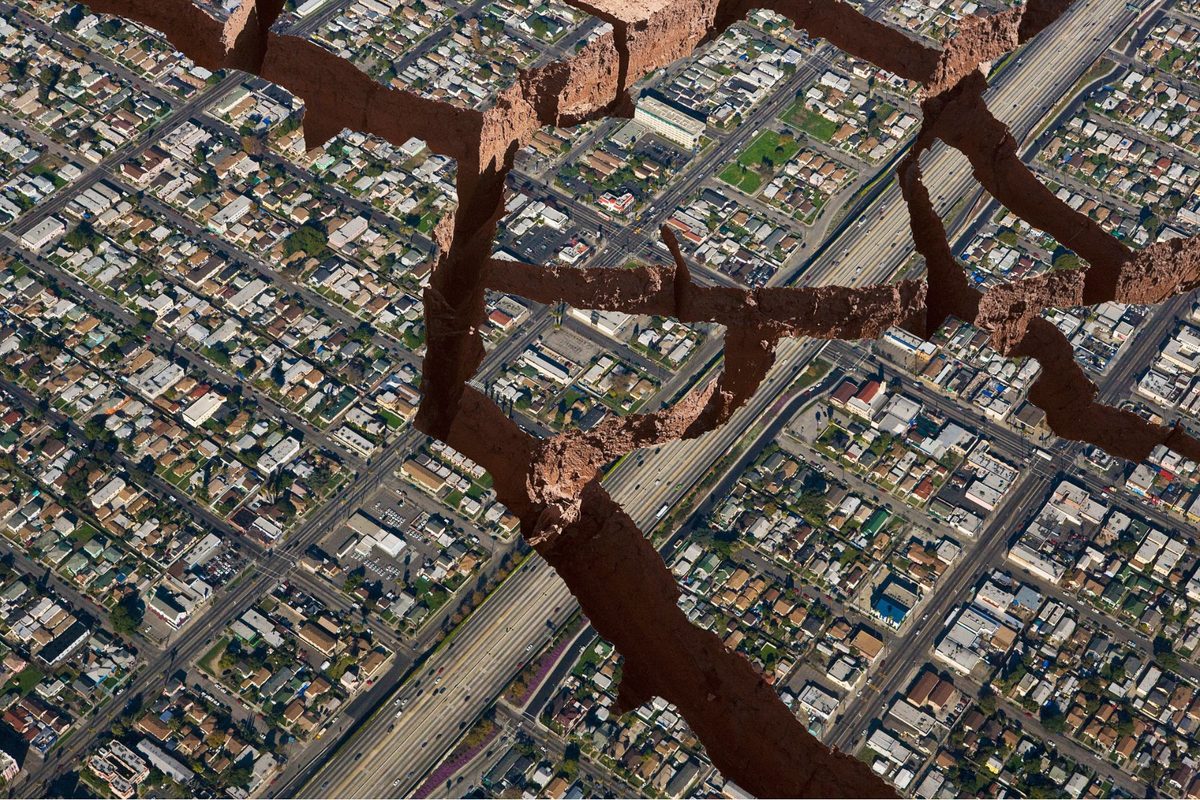
Scientists are raising alarms about the potential for a major earthquake in California, akin to the recent quake. A recent study indicates that seismic pressures on California’s two principal fault lines are currently at their highest levels in the past 1,000 years.
This new paper, published in the Geophysical Research Journal, states that while it remains impossible to predict the exact timing of earthquakes, the Southern San Andreas and San Jacinto faults are under unprecedented stress, a condition termed as “critical load.”
The last earthquake of similar magnitude in California was the 7.9-magnitude San Francisco earthquake on April 18, 1906, which resulted in approximately 3,000 fatalities and extensive destruction across the Bay Area.
This catastrophic event released significant energy along the northern San Andreas fault; however, the southern fault system analyzed in the latest study remained unaffected.
Researchers underscore that seismic activity in one section of a fault network does not alleviate stress in other areas, allowing strain to accumulate in these southern segments over decades or even centuries.
Insights from the Experts
Geologists, led by Lillian Burkhardt from the University of Hawaii at Manoa, utilized advanced computer simulations to analyze major seismic events over the past millennium and assess the interactions between adjacent parts of the Earth.
Their findings reveal that stress levels in California are at an all-time high, heightening the probability of an earthquake. Both fault systems are under comparable pressures, increasing their chances of interacting.
A critical junction known as Cajon Pass, located near San Bernardino and northeast of Los Angeles, has been designated an “earthquake gate.” This juncture determines whether a rupture stays confined to one fault or extends across both.
The model illustrates that the proximity of stresses on these two faults plays a crucial role, with both experiencing similar load levels currently.
A simultaneous rupture of both faults would result in a significantly more destructive event than a rupture localized to a single fault, posing a considerable threat to densely populated regions such as Los Angeles, San Bernardino, Riverside, and the Coachella Valley.
Modern building codes now require cities to withstand much stronger seismic activity than was necessary in 1906. Nevertheless, structural failures can still lead to catastrophic outcomes.
Expert Opinions
Bill McGuire, Emeritus Professor of Geophysics and Climate Hazards at University College London, who was not part of the research team, stated in a BBC Science Focus article, “Significant earthquakes are possible in both northern California (San Francisco and the Bay Area) and southern California (Los Angeles).” He welcomes these new insights into seismic risks.
“The concept of ‘earthquake gates’ at junctions like Cajon Pass is highly relevant and has significant implications for formulating future earthquake scenarios,” he continued. “Additionally, the finding that stress levels on these faults are at historic highs is crucial for predicting the timing of future major seismic events in the Los Angeles area.”
Read more:
Source: www.sciencefocus.com