


2023 World Cup Final: Argentina vs. Spain The highly anticipated soccer final is set for this Sunday, as Argentina takes on Spain in the World Cup showdown just outside New York City. However, a significant concern looms—wildfire smoke is currently affecting the matches, and FIFA, the sport’s governing body, appears to lack a strategy to ensure the safety of players and fans during this critical event.
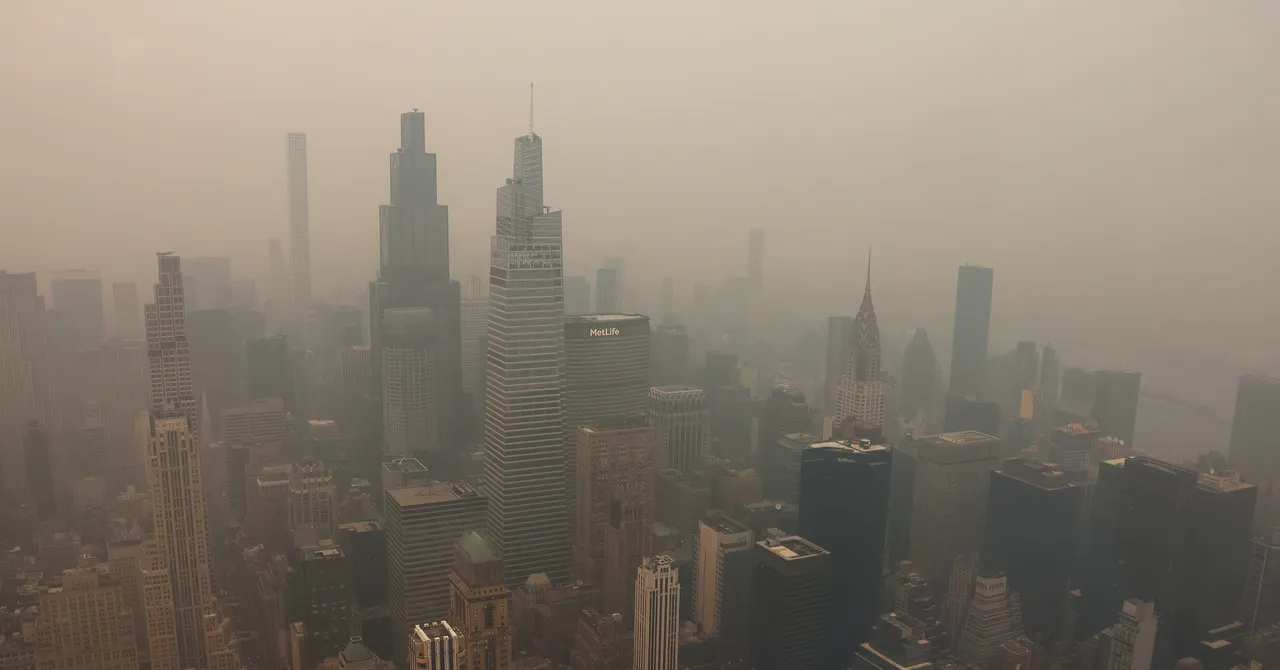
Recent days have seen wildfire smoke from Canada engulfing large areas of the Midwest and East Coast, impacting over a dozen states. Some cities hardest hit are experiencing dangerously poor air quality, with New Yorkers reporting hazy, orange skies. On Thursday, officials warned that the air quality index (AQI) had escalated to “unhealthy” and “very unhealthy” levels, advising residents to limit outdoor activities.
As of Friday morning, the air quality near the stadium remained in the unhealthy range. While the forecast may shift to “moderate” by Sunday, players and fans will still be at risk. Experts warn that exposure to smoke can lead to symptoms like throat irritation, coughing, and headaches, particularly affecting vulnerable groups including children, the elderly, and individuals with respiratory conditions such as asthma. Check current air quality here.
In preparation for the final, players have trained outdoors despite ongoing air quality issues. The Spanish team, for instance, practiced in New Jersey on Thursday. Emergency room physician Courtney Howard of the Global Climate Health Alliance cautioned, “Athletes are exerting themselves and inhaling a lot of air; practicing outdoors is inadvisable when air quality is hazardous.” Howard told the Associated Press.
Currently, FIFA has not established a contingency plan for addressing wildfire smoke during the tournament. Neither FIFA nor the New York City Department of Health responded to inquiries from Grist regarding their plans. In a previous statement to Grist, FIFA mentioned its protocols for handling extreme heat but failed to address air quality concerns.
The organization stated, “Climate risks will be assessed as part of the tournament planning and managed in collaboration with host cities and national authorities,” signifying potential oversight in addressing air quality.
In contrast to FIFA, other leagues have protocols for responding to air quality warnings. For example, during Thursday’s women’s soccer match at Citi Field in New York, an additional hydration break was implemented due to safety concerns, which aligns with National Women’s Soccer League policy where games are adjusted based on the AQI. Major League Soccer also canceled a game due to poor air quality this week.
Despite the current circumstances, FIFA’s strategy seems hopeful regarding air quality. Nicholas Watanabe, a professor at the University of South Carolina, pointed out that while FIFA may luck out this weekend, the organization is still unprepared for the realities of climate change.
Watanabe remarked, “FIFA seems unready for wildfires, yet they might proceed with the match as conditions improve.” However, experts question whether FIFA and other outdoor sports leagues are adequately prioritizing climate-related risks, especially after criticism surrounding FIFA’s approaches to climate preparedness.
Source: www.wired.com