


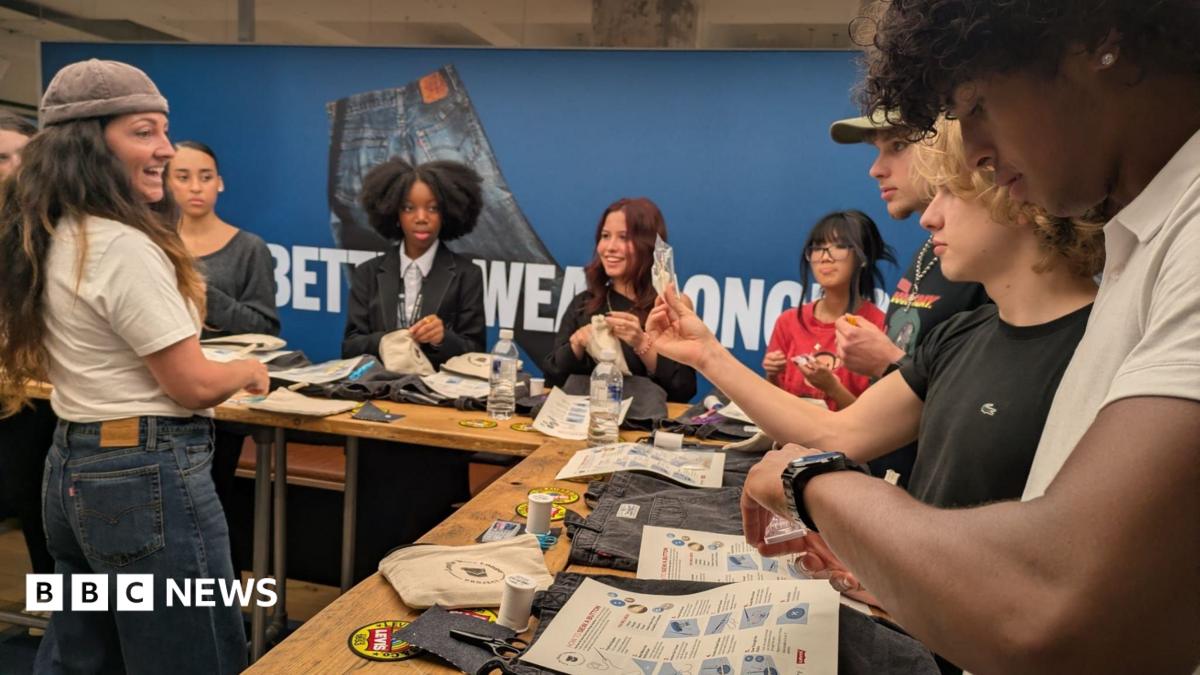
Repair is becoming a more visible part of fashion and consumer culture. Toast offers free repairs, while its genuine “refurbished” products can cost more than the originals because of their unique characteristics. Levi’s, meanwhile, is expanding its long-running fan repair tradition with workshops designed to teach customers practical repair skills.
Levi’s expands its repair workshops
Levi’s, which has perhaps the longest tradition of fan repairs using everything from rhinestones to cuff fringe, is rolling out a workshop programme this year.
The company says its research shows that customers—especially younger ones—want more repairs but do not know how to carry them out.
For now, the Levi’s workshops focus on traditional techniques such as sewing on buttons and hemming, rather than visible repairs. At a recent launch event in London, that appeared to be what Gen Z attendees were looking for.
“I’m from East London, and when I see holes in my clothes, people say, ‘Ha ha! You’re poor!’” says Bianca, a 16-year-old student.
Theo, 19, said he wanted to learn how to repair clothing without making the work noticeable.
“I want [the jeans] just to see how they bought it in the first place,” he says.
Theo has a side job selling clothing at car boot sales and thinks he could make more money by using traditional repair techniques.
His friend Nicholas, also 19, said that most people want to look “fresh”.
“Nobody wants to look like they came out of a dumpster,” he says.
Repair as self-expression
Still, Paul Dellinger, Levi’s head of global design innovation, believes that more creative repairs will appeal to customers as they develop their skills.
“No one has time to buy the perfect ‘fresh out of the store’ thing. That’s not cool,” he says.
“People want agency. Repairing is a sign of humanity. It’s not a mustard stain. It’s a memory of a great day at the ballpark.”
Source: www.bbc.co.uk