


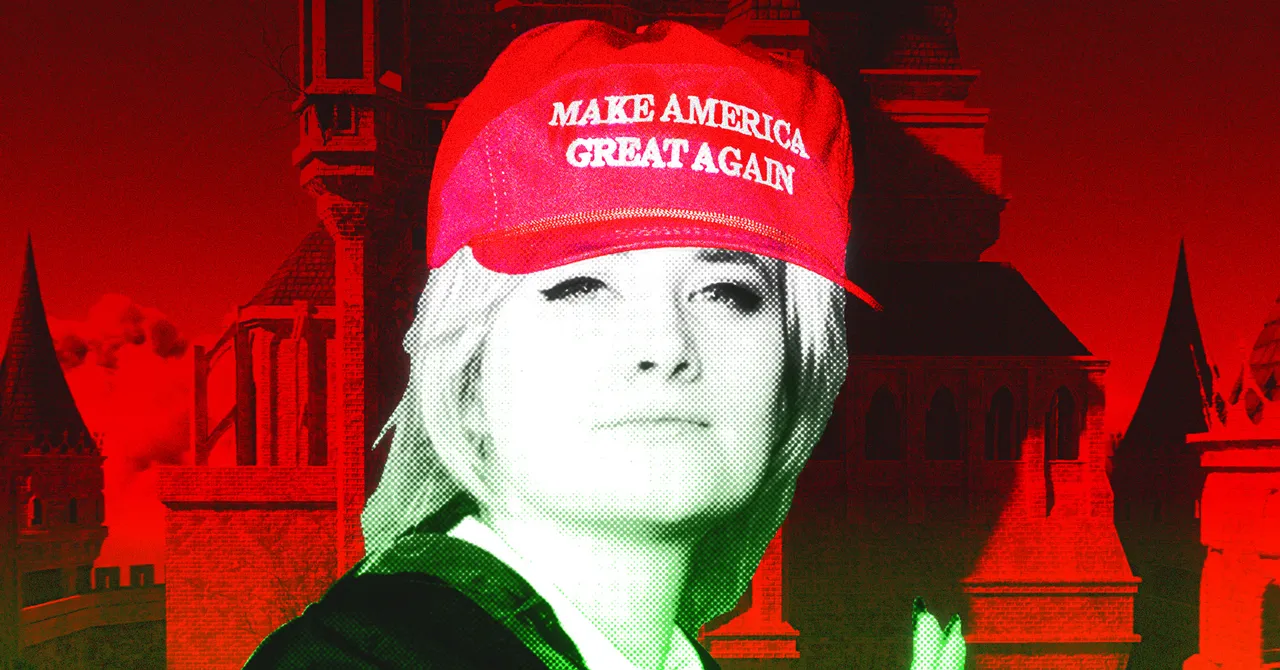
Malfoid, a meme character associated with radicalized online subcultures, has become a case study in how pop-culture imagery can package ethnic nationalism, white supremacy and conservative ideas about purity into an appealing internet aesthetic. The controversy also highlights the growing overlap between online fringe communities, political messaging and government communications, where symbols once confined to niche spaces can reach mainstream audiences without their implications being clearly addressed.
How Malfoid became a political symbol
For young internet users drawn to extremist politics, Malfoid offers a ready-made mascot shaped by familiar pop-culture references. The character is presented as an updated “boy girl” archetype for the digital age, with a darker visual style that may make it more attractive to online fringe communities than conventional political propaganda.
That combination of recognizable fiction and provocative imagery can turn political identity into a shared online aesthetic. Rather than relying only on policy arguments or traditional campaign language, the meme uses visual signals and communal references to communicate ideas about ethnicity, gender and cultural belonging.
Fantasy, memes and right-wing messaging
The use of fantasy and fiction by prominent right-wing figures is not new. For years, J.R.R. Tolkien’s Lord of the Rings has been used by figures on the political right, including Peter Thiel and Elon Musk. The Trump administration has also normalized communicating with the public through memes.
President Trump’s feed on Truth Social regularly features AI-generated meme images, while government agencies including the Department of Homeland Security have previously used memes and Tolkien’s works to downplay serious issues such as Immigration and Customs Enforcement raids.
After removing the Malfoid meme, the Department of Education continued posting on X with the message, “There’s magic in learning,” alongside an image referencing Lord of the Rings and Avatar: The Last Airbender:
Lord of the Rings and Avatar: The Last Airbender.
Experts question the use of extremist imagery
Leslie Harner, a communications professor at Baylor University, said modern politics is marked by “the collapse of boundaries between Internet subcultures and mainstream organizations.”
“Symbols that once circulated in niche online communities now appear regularly in political campaigns, government communications, and mainstream media coverage,” Harner told WIRED. She said memes may have increasing influence, but adopting a toxic internet culture can make this strategy dangerous.
Harner said the use of “incel imagery” raises difficult questions about whether agencies understand the cultural meaning of the symbols they share or believe those associations could help attract engagement from particular audiences.
“Both possibilities are important,” she said. “If officials are unaware of the implications, it suggests a lack of cultural literacy or an inability to protect learners from harmful symbols. If they are, it begs the question why federal agencies would choose to amplify images tied to dehumanizing online discourse.”
The Department of Education’s response
In response to WIRED’s request for comment, the Department of Education quoted Albus Dumbledore from Harry Potter and the Deathly Hallows: “Of course it’s happening in your head, Harry. What makes you mean it’s not real?”
Critics argue that by using Malfoid’s visual markers, the agency may be signaling cultural alignment with a radicalized online audience while avoiding the scrutiny that more explicit political language would attract. In this interpretation, the image functions as an algorithmic wink: a subtle message intended to reassure the most extreme parts of the electorate that the institution shares their worldview.
Politics shaped by internet culture
The episode reflects a broader shift in political persuasion. Policy documents, legislative agendas and traditional campaign speeches may not engage younger audiences as effectively as visual identities and familiar online metaphors. Platforms such as TikTok and Wattpad have helped shape how many users consume information, often emphasizing highly specific narratives and symbols over a single coherent ideology.
In this environment, internet culture does more than reflect political reality. Political institutions increasingly reproduce the language and imagery of the internet, allowing memes and fictional references to become part of how public agencies communicate with the nation.
Source: www.wired.com