


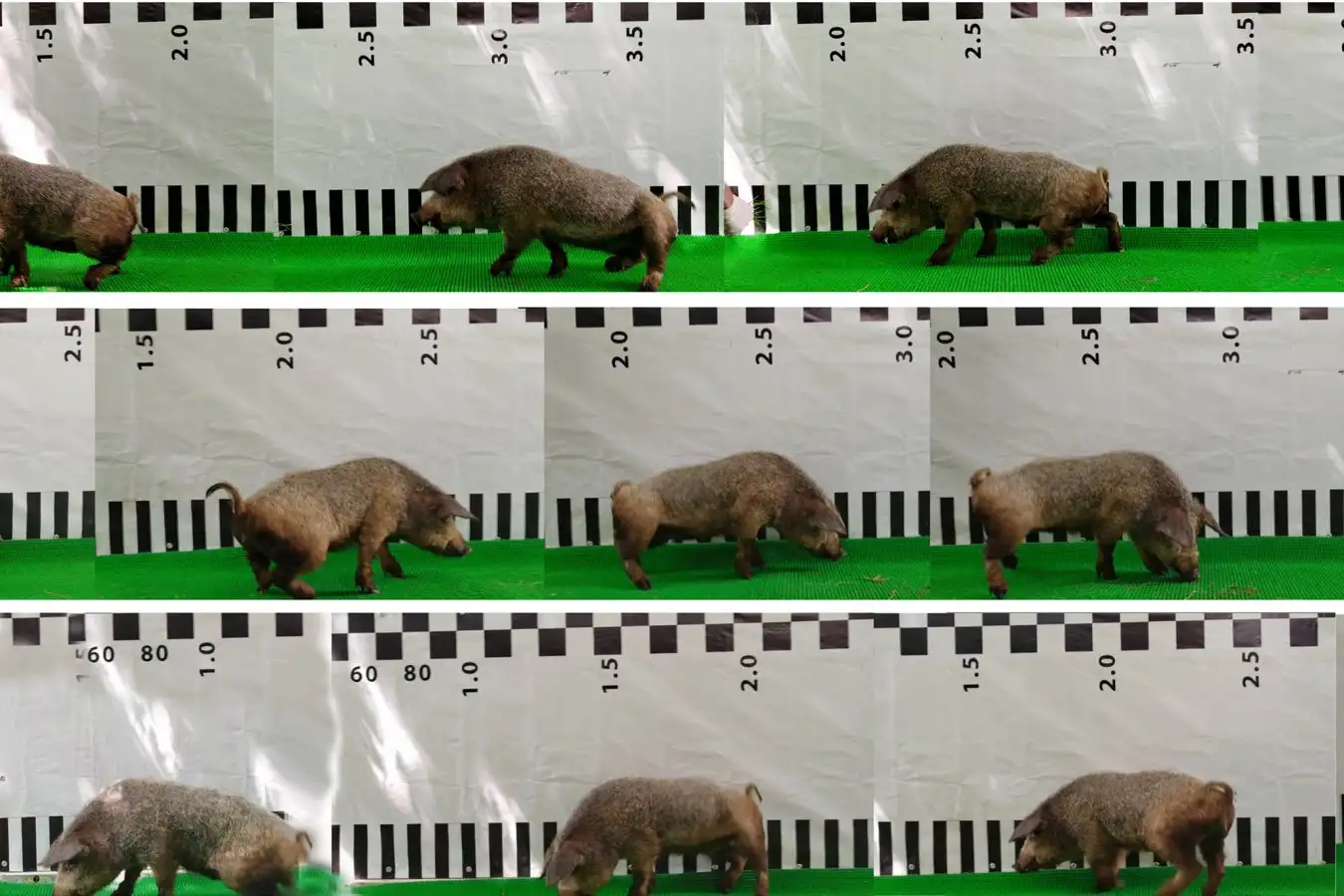

Pig with Spinal Cord Injury Regains Mobility Post-Fusion Therapy
Michael Lebenstein-Gumovski et al. 2026
Over 15 million individuals worldwide suffer from spinal cord injuries, and treatment options are typically limited. A groundbreaking intervention showcased in recent studies has successfully enabled pigs with complete spinal cord severance to regain the ability to walk.
This remarkable achievement was led by Michael Levenstein-Gumovski from the Skrifosovsky Institute of Emergency Medicine in Russia, with editorial input from noted neurosurgeon Sergio Canavero, who speculated in 2015 that human head transplants would be achievable within two years. The collaboration raises intriguing possibilities, particularly as Russia plans to include spinal cord tissues in its list of permissible transplants this year.
So, how did Levenstein-Gumovski and his team achieve this? Initially, they anesthetized the pigs, removed the bony arch surrounding the spinal cord, cooled the area, and severed the spinal cord with precision. This procedure mimicked one of the most severe types of spinal cord injuries, effectively disconnecting brain signals from the body below the abdomen.
Following the injury, they stabilized the spine and aligned the severed ends of the spinal cord. The experimental pigs were administered fusogen—a compound of polyethylene glycol, often utilized in cosmetics and medical applications, including a biopolymer called chitosan derived from crustacean shells. This solution was injected into the affected area and the pigs’ bloodstream, while two control animals received no treatment.
The animals were also given medication to reduce inflammation and prevent intestinal obstruction, along with electrical stimulation of their limbs for 20 minutes twice daily. A week post-surgery, the treated animals received an additional injection of the fusion agent.
Following the surgery, all animals exhibited motor and sensory paralysis in their lower limbs, a condition that persisted in the control subjects. Remarkably, the treatment group saw one pig begin to move its hind limbs by day two, with all three responding to pinpricks in specific areas of their hind limbs. By day seven, one pig attempted to stand.
At the conclusion of a 60-day observation period, all three treated animals were able to walk, albeit unsteadily, and regained pelvic control along with some sensitivity to touch. Subsequent examinations of the injury site revealed reduced degeneration and significant numbers of axons forming what researchers termed an “axonal bridge” across the injury.
Researchers hypothesize that polyethylene glycol aids in sealing damaged nerves, preventing degeneration while promoting axon fusion across the injury. Chitosan may further assist by protecting the neural membrane and providing structural support.
This fusion mechanism theoretically maintains electrical conduction across the lesion, analogous to connecting two wire bundles to facilitate signal transmission.

Highlighted Axons at Spinal Injury Site in Pigs
Michael Lebenstein-Gumovski et al. 2026
The challenge lies in the fact that the spinal cord is not merely an electrical cable but a complex network comprising axons, immune cells, blood vessels, and supportive tissues. Injuries immediately trigger damage, inflammation, and scarring, complicating potential recovery. Previous studies conducted on mice have suggested that successful recovery relies on restoring axons to their natural targets; spontaneous regrowth is often ineffective. This has made some researchers skeptical about the efficacy of fusion agents.
It’s also possible that some fibers may remain unsevered during the procedure. Without immediate electrophysiological assessments post-injury, eliminating this uncertainty is challenging.
Levenstein-Gumovski and his team provided New Scientist with a video detailing their technique and expressed confidence in the surgery’s controlled execution; the fact that control animals did not regain mobility supported their assertion that the severance was complete. Nevertheless, they plan to incorporate electrophysiological evaluations into future studies.
“These findings were unexpected, with treated animals recovering some sensory and motor functions,” states Melissa Andrews from the University of Southampton. “This translates to the ability to stand and detect pinpricks in previously affected limbs, functions commonly lost in humans with spinal cord injuries.”
However, she notes that the spinal cords were cooled prior to severance, a condition that might not reflect typical injury scenarios. Despite that, she acknowledges that the results appear promising.
The Future of Head Transplants

Could Fusion Neurosurgery Enable Head Transplants?
Sally Anderson/Alamy
When questioned about the research’s ultimate goal, Levenstein-Gumovski indicated a focus on developing innovative strategies for repairing spinal cord structure and function in humans. However, with Canavero’s involvement, the potential for applications in head or brain transplants is impossible to overlook.
While no immediate link to head transplants was suggested within the pig study, Levenstein-Gumovski acknowledged that their research fits into a broader initiative known as fusion neurosurgery, merging bioengineering, membrane fusion, and neuroplasticity. Concurrently, they are exploring how this methodology can be applied to “transplant neurosurgery.”
Next steps include repeating the experiment with larger animal cohorts, ideally collaborating with independent teams in multiple countries. “My goal is to avoid making unfounded claims and to systematically and critically validate this approach before advancing to clinical applications,” he stressed.
The plan involves transitioning to clinical trials with humans. While similar techniques have been executed on cadavers, their safety and efficacy on living subjects have yet to be established.
Practical challenges persist; real-world spinal injuries often lead to immediate inflammation, degeneration, and scarring, complicating repair efforts. Levenstein-Gumovski recognizes this challenge, stating, “Introducing a powerful fusion agent into an unprepared spinal cord is akin to placing a quantum computer in a remote cabin— the technology exists, but the necessary systems are not yet in place.”
The team aims to enhance preoperative care access for individuals with new injuries, although this remains ineffective for long-term injury cases. For these individuals, they are developing techniques that involve transplanting sections of donor spinal cords to address damaged areas.
Legal considerations also arise. Effective September 1, new legislation in Russia will classify “nerves, spinal cords, and their fragments” as approved transplant materials. While no other country appears to recognize spinal cords in such a manner, certain nations, including the United States and Israel, permit stem cell harvesting from patients for potential spinal cord applications.
All indications suggest that advancements in head and brain transplants may be on the horizon. According to Canavero, this progression is noteworthy. He states that the first trial of the spinal fusion protocol on paraplegic patients is scheduled for later this year, although specifics remain undisclosed.
Clearly, there is a rich narrative to unfold in this arena—ranging from Robert White’s monkey head transplant experiments in the 1970s, which did not connect the spinal cord, to modern life extension enthusiasts who aspire to preserve consciousness through brain transplants into younger bodies. For the millions already paralyzed, such advancements can feel delayed.
This area of research often faces skepticism, where unusual claims may trump supporting evidence. Upon application to humans, fusion neurosurgery will necessitate independent verification, thorough monitoring, transparent data reporting, and stringent regulations. This will help delineate spinal cord repair as a legitimate treatment for paralysis, differentiating it from the ethically complex aspirations tied to brain transplants. Without these safeguards, promising paralysis treatments could encounter unnecessary obstacles.
Topic:
Source: www.newscientist.com