


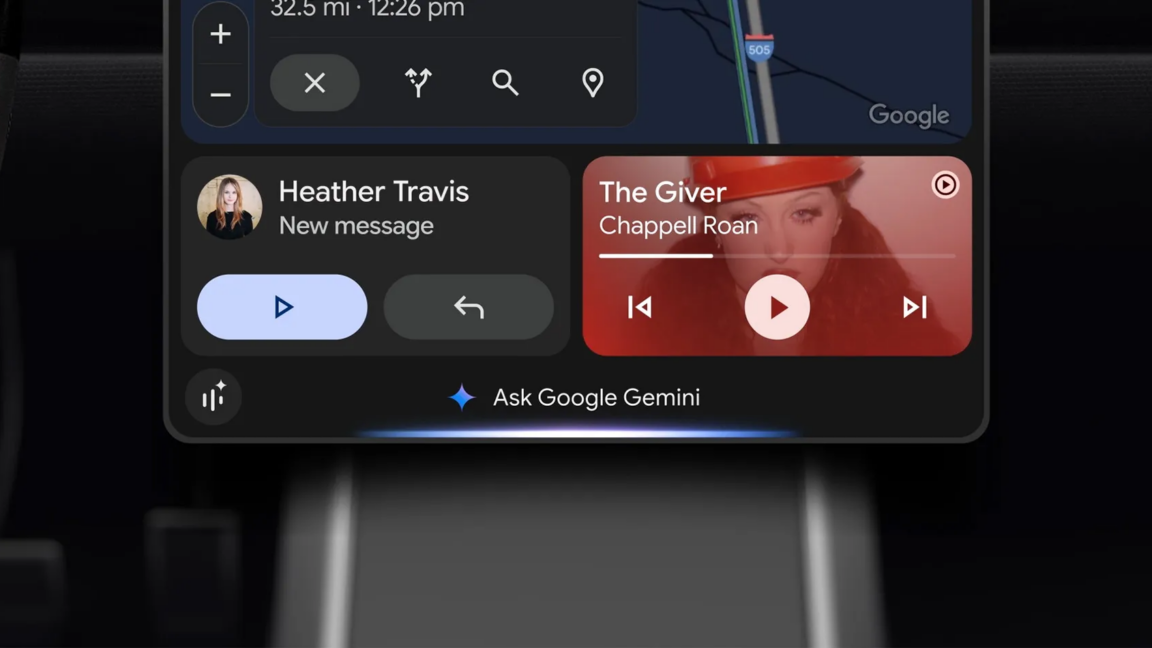
Google Gemini Personal Intelligence Is Coming to Android Auto
Google is rolling out Personal Intelligence to Gemini on Android Auto, giving the AI access to more personal context while you drive. The feature is optional, and Google says it will also arrive in vehicles with Google Built-in in the coming months.
What Gemini Personal Intelligence Does in the Car
Google added Personal Intelligence to Gemini in 2026. The feature allows the AI to use more data to generate answers that are tailored to each user. It originally launched as a paid feature before becoming available to all Gemini users, but it had not previously been available in cars.
According to Google, generative AI works better when it “knows the world and knows you.” Gemini can already draw context from apps such as Gmail and Calendar, meaning users do not necessarily need to provide every detail in a request.
For example, you could say, “Take me to the doctor’s appointment,” and Gemini could use the appointment information in your connected calendar to help with navigation. Google also says you can use visual analysis to identify locations in photos and begin navigating to them.
Personal Intelligence Remains Optional
Google says Personal Intelligence is a natural fit for driving because it can reduce the need to give your digital assistant detailed instructions. However, the feature remains optional, allowing Android Auto users to choose whether they want Gemini to use this additional personal context.
Android Auto Gets the Feature Before Google Built-in Cars
Personal Intelligence begins rolling out to Android Auto today and will come to Google-powered vehicles in the coming months. Google Built-in refers to cars that run Google software directly in their infotainment systems, rather than displaying a smartphone interface through projection.
Although relatively few vehicles currently include Google Built-in, Google is often among the first to bring new features to those cars. In this case, Android Auto users will get access to Gemini Personal Intelligence first.
Source: arstechnica.com