


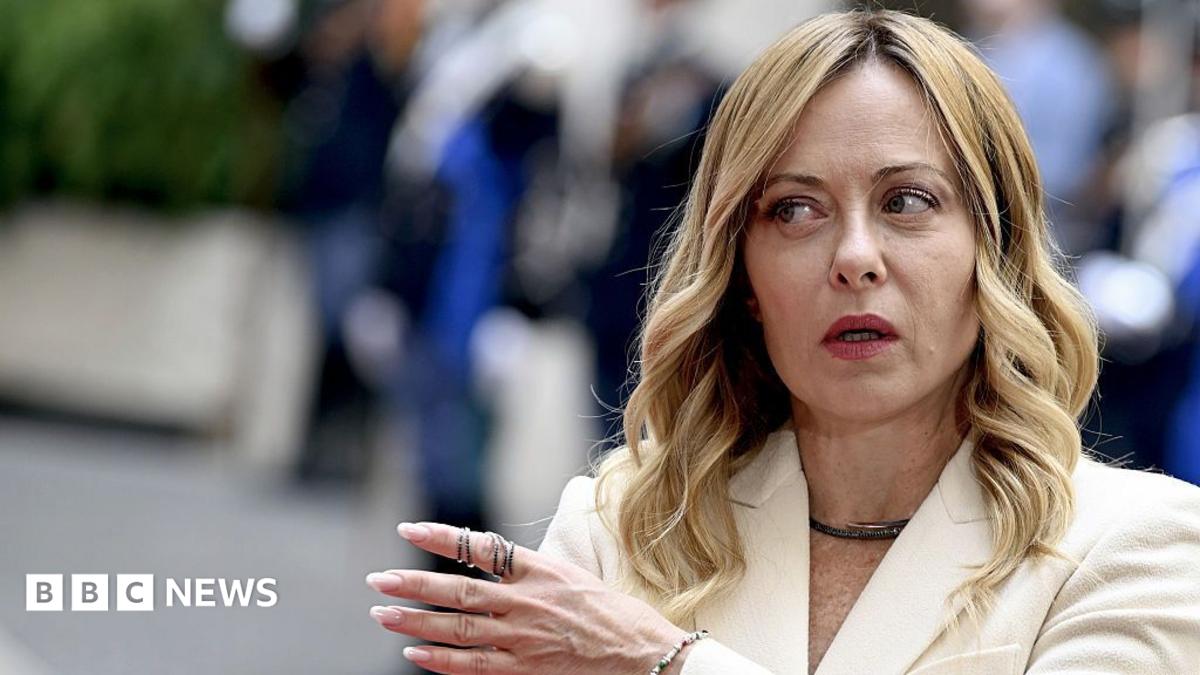
Giorgia Meloni Seeks to Trademark Her Voice to Fight AI Deepfakes
Italian Prime Minister Giorgia Meloni has applied to trademark her voice in an effort to protect her identity from artificial intelligence (AI) deepfakes.
The application was filed with the European Union Intellectual Property Office (EUIPO) on Monday. The application is available on the EUIPO website, external, and the Prime Minister’s Office has confirmed the filing.
As part of the application, Meloni recorded two four-second audio clips in Italian saying, “Io sono Giorgia” (“I am Giorgia Meloni”).
Meloni’s voice trademark comes ahead of Italian elections
The decision to seek protection for Meloni’s voice was made ahead of next year’s Italian general elections. The phrase “Io sono Giorgia” is also the title of Meloni’s 2021 autobiography and is associated with her political activities.
In 2024, Meloni sought €100,000 (£84,920) in damages after a deepfake porn video featuring her was uploaded online.
More recently, in May, she warned about the dangers of deepfakes after an AI-generated image of her in lingerie appeared online.
“But the point is beyond me. Deepfakes are a dangerous tool because they can trick, manipulate, and attack anyone. I can protect myself, and many others cannot,” Meloni wrote in a social media post.
Other celebrities seek protection from AI voice clones
Meloni is not alone in seeking legal protection from the misuse of personal images and voices by AI platforms. In January, American actor Matthew McConaughey led the way by trademarking his image and voice.
Singer Taylor Swift took similar steps in April, filing three trademark applications in the United States. One application used a photograph of her performing during the Eras Tour, while the other two used audio clips of her introducing herself while promoting her previous album.
In August, more than 80 performers called on British Prime Minister Andy Burnham to introduce legislation giving everyone in the UK the legal right to own their own voice.
Actors including Matt Lucas, Hugh Bonneville and Nicola Coughlan were among those calling for stronger protections against the use of people’s voices by AI.
How AI voice cloning works
Voice clones are created by training AI systems on recordings of real people. Basic versions can be produced from just a few seconds of audio, while high-quality copies generally require hours of recordings.
A deepfake image digitally places one person’s face onto another person’s body. Deepfake pornography has become increasingly common online in recent years, with victims describing the trauma it has caused.
Source: www.bbc.co.uk