


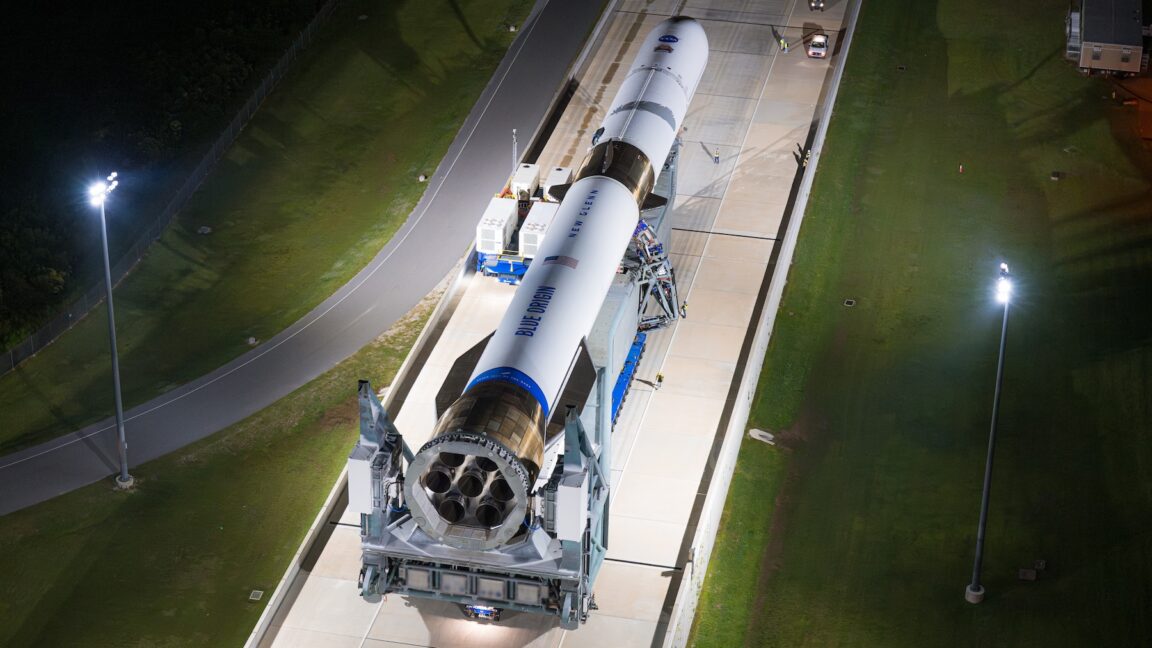
Google’s Project Suncatcher could depend on access to extremely low-cost heavy-lift rockets in the 2030s, but the company may face limited choices. SpaceX’s Starship is the only vehicle currently likely to approach the target launch price of $200 per kilogram, yet SpaceX is expected to prioritize its own orbital computing projects. Google’s new partnership with Blue Origin may provide an alternative, although Blue Origin is also developing orbital data centers and its rockets could remain more expensive than a fully reusable, high-cadence Starship.
Google’s launch challenge
When Google announced Project Suncatcher a year ago, it said the project was being planned for the mid-2030s. By then, launch costs were expected to fall to about $200 per kilogram.
Over the next decade, SpaceX’s Starship appears to be the only rocket likely to reach that price. However, recent developments suggest that SpaceX will prioritize its own payloads, including the Starmind data center, for Starship missions.
Google may therefore need access to a fully optimized Starship Version 4. SpaceX currently flies a Version 3 Starship, while the future vehicle could reach approximately 200 tons of payload capacity in orbit.
SpaceX has strong incentives to prioritize its own orbital computing infrastructure. That could leave Google dependent on the launch capacity and pricing that SpaceX chooses to make available to outside customers.
Blue Origin could offer an alternative
Google’s new partnership with Blue Origin may help address that uncertainty. The agreement currently covers one launch, but it could expand in the future.
By the 2030s, Blue Origin is expected to be flying a larger 9×4 version of its New Glenn rocket. That vehicle could face a substantial cost disadvantage compared with a fully reusable Starship operating at a high launch cadence.
Blue Origin is also planning Project Sunrise, its own network of orbital data centers. As a result, Google could once again find itself helping to fund a competitor while paying the higher initial costs associated with an emerging launch system.
Could another company provide the required launch capacity?
Other companies, including Rocket Lab, Relativity Space, and Stoke Space, could potentially develop larger rockets by the 2030s.
Building super-heavy-lift launch vehicles, however, requires enormous financial resources. SpaceX spent more than $15 billion developing Starship. Blue Origin has likewise invested billions in developing New Glenn, according to its 2026 financial filing.
The development timelines are also lengthy. Both companies have spent more than 10 years working on heavy-lift vehicles. Meanwhile, other US launch providers are still dealing with the development challenges associated with medium-sized rockets.
Google’s remaining options
For now, Google has few straightforward choices. One emerging US launch company could eventually decide to operate commercial satellites rather than develop its own satellite systems, potentially creating a more suitable partner.
Google could also try to acquire one of the newer launch companies. Another option would be to hire rocket engineers and begin developing powerful engines and launch vehicles of its own.
That strategy would put Google in direct competition with SpaceX and Blue Origin, both of which have a 25-year head start in launch development.
Source: arstechnica.com