



Google Rolls Out AI Scam Protection for Android Messages and Calls
Google has announced new AI-powered protections for Android users, including enhanced fraud detection for suspicious messages, unknown links, call forwarding, and bank impersonation calls. The features are now rolling out to targeted devices.
The new Android security measures are designed to combat increasingly sophisticated mobile scams, including fraudulent bank alerts, spoofed phone numbers, phishing messages, and AI-generated voice-cloning attacks.
“Mobile fraud has evolved far beyond basic robocalls and phishing texts, turning into sophisticated operations that use spoofed numbers, fake bank alerts, and AI voice clones,” Google says.
“Scams are becoming increasingly difficult to spot, making it nearly impossible for users to catch all the red flags themselves,” the company added.
Google says Android’s existing call and message fraud detection identifies more than 5 million suspected fraudulent calls and text messages every month. The newly announced protections are intended to detect additional threats and give users clearer warnings before they interact with scammers.
Google Messages gets cloud-based AI scam analysis
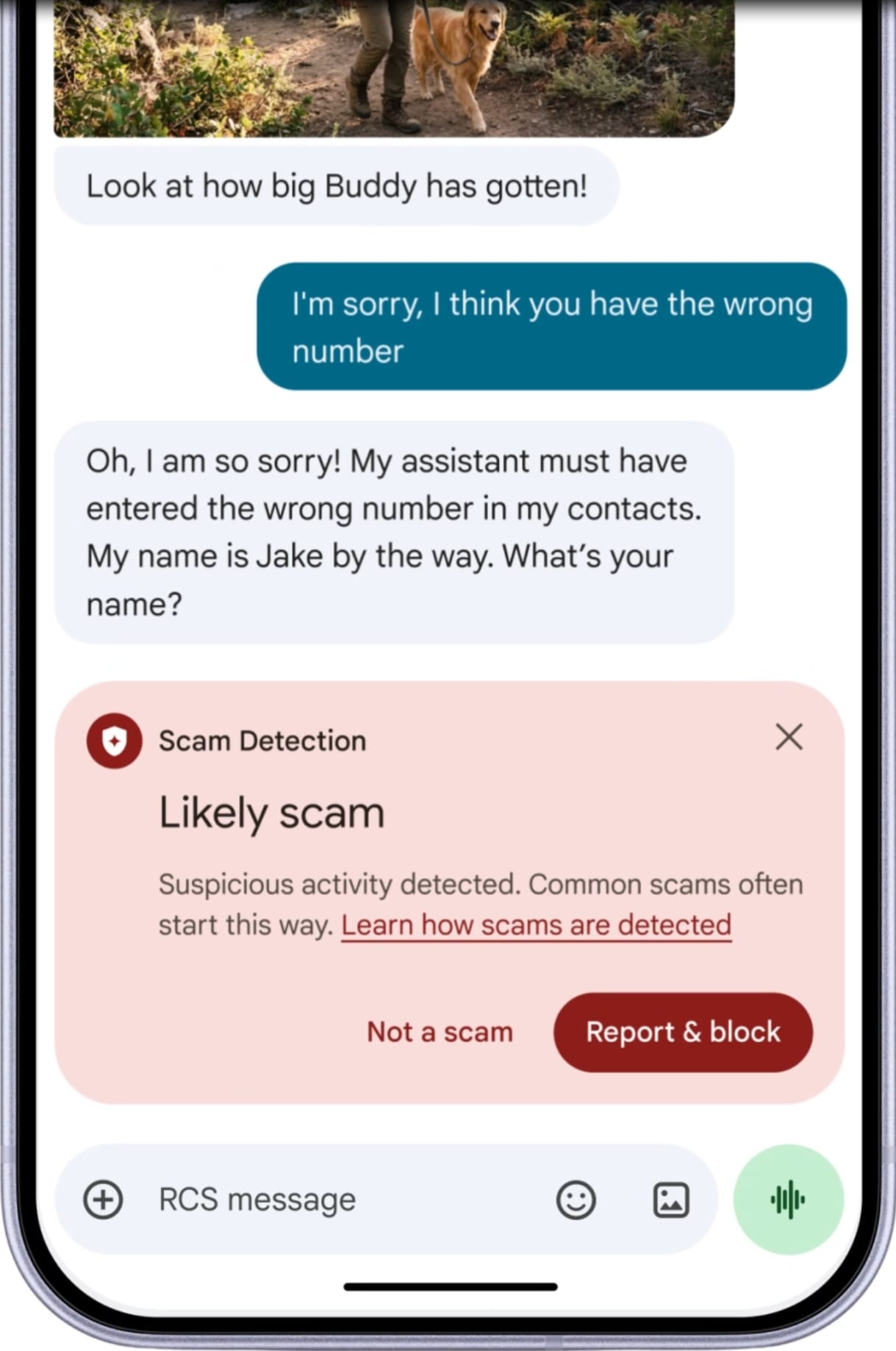
The new protections focus on Google Messages and use cloud-based, Gemini-powered analysis to examine complex conversations for potential signs of fraud.
The system analyzes conversations with unknown senders inside an encrypted, private AI computing environment. Google says this approach is designed to protect user privacy while checking messages for scam indicators.
Google Messages is also gaining enhanced link protection. On-device Gemini Nano, Google’s local AI model, can check unknown links against real-time web signals and provide clearer warnings before users open links from unsaved numbers.
Cloud-based fraud protection is disabled by default, but users can enable it.
Source: Google
Android adds more protection against scams and call forwarding fraud
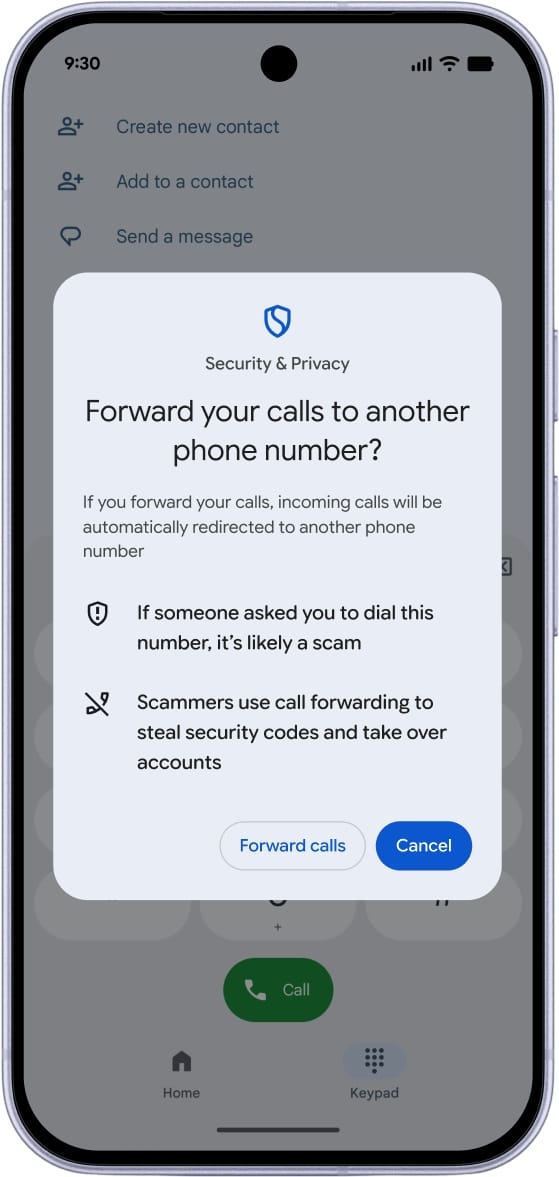
Google is also expanding fraud protection across other parts of Android. The improvements include notification-based scam detection, screen-sharing protections, and safeguards against unauthorized call forwarding.
- On-device fraud detection for chat notifications, which first launched on Pixel devices, will roll out to hundreds of millions of additional users through Android device partners later this year.
- Android’s existing sensitive-information masking is expanding to Chrome and Android WebView. It can hide login fields and payment screens during live screen sharing.
- Android now blocks apps from silently enabling call forwarding in the background and warns users before manually entered MMI forwarding codes take effect.
Source: Google
Verified bank calls help block financial impersonation scams
Google is also expanding its verified bank calling system, which was introduced earlier this year, to support more financial institutions.
The system checks whether an incoming call originates from a legitimate bank call center or is an impersonation attempt. If the call cannot be validated, Android automatically ends it.
Since June, Google says it has blocked more than 3 million fraudulent calls targeting customers of Banco do Brasil and Itaú Unibanco. Revolut and other global financial institutions are also supported.
How Android users can avoid mobile scams
Android users should install the latest Android releases, keep their apps updated, and independently verify the identity of callers and senders before taking account-related actions or sharing sensitive information.

Join Mikko Hypponen and security leaders from the NFL, Chanel, and Atlassian for a 2-hour digital summit about what will change with AI speed attacks, what defenders should stop doing, and how to verify, decide, correct, and revalidate at machine speed.
Source: www.bleepingcomputer.com