


5,000-Year-Old Evidence Reveals New Details About Ancient Egypt’s Powerful Female Ruler
New analysis of decades-old photographs has revealed fresh details about Meletnes, a powerful woman who ruled Egypt roughly 5,000 years ago.
Also spelled Merneis or Meret-Nice, Meletnes rose to power during Egypt’s First Dynasty, shortly after the country was unified under a single ruler. Researchers from Egyptology studies in Prague enhanced old photographs of artifacts that have since been lost. Their analysis suggests that Meletnes’ name was written in a form reserved for Egyptian rulers.
Lost seals may identify an early female ruler
The discovery took more than 70 years to confirm. In the 1940s, archaeologist William B. Emery found 13 mud seals around the entrance shaft of a tomb at Saqqara. The seals appeared to identify the tomb’s owner.
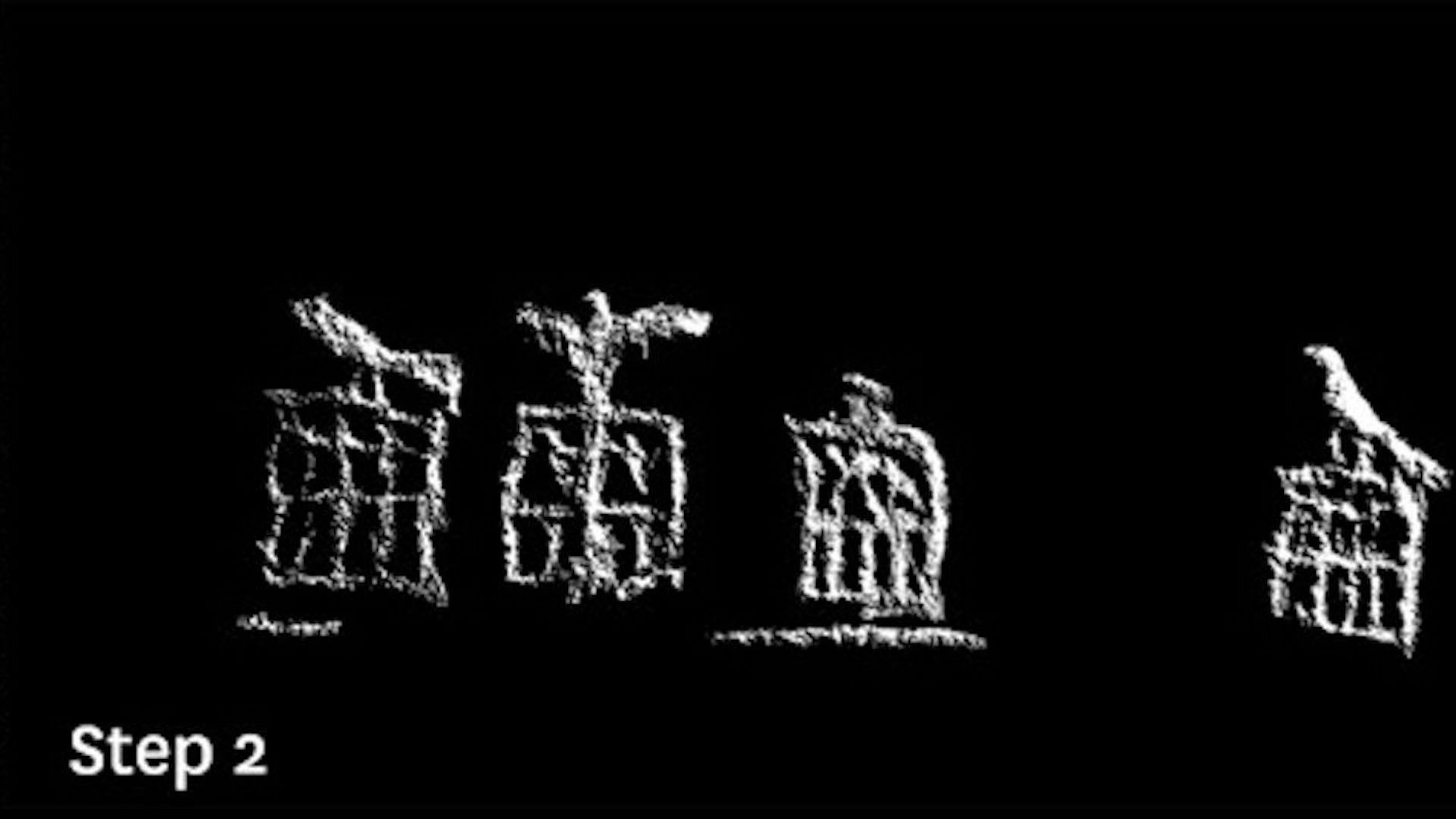
Each seal contained four serekh symbols, designs used to record the names of Egyptian rulers. Emery identified two of the serekhs as belonging to a king named Jer and suggested that the other two belonged to Meletnes.
In a 1954 magazine article, Emery published a black-and-white photograph of one of the seals. However, many scholars remained unconvinced because of the photograph’s poor quality.
The investigation was further complicated by the disappearance of all 13 seals and the original glass plate used to create the image. Their current whereabouts remain unknown.
“We’re trying to figure out what’s going on,” Egyptologist Susan Kelly of Australia’s Macquarie University, a co-author of the new study, told Live Science by email.
Only the black-and-white photograph remains. In the new study, Kelly and Crystal Miller, a technician at the same university who is completing a master’s degree in bioarchaeology, used complex digital techniques to enhance the image and reveal details about the inscription.
“Our techniques reveal that in the second and third serekhs, symbols in the name section match the main symbols used to write the name of Meletnes,” Kelly wrote in The Conversation.
Image credit: Author provided
Was Meletnes a female king?
The role Meletnes held may not have been identical to that of a male ruler. Inscriptions found at other sites do not use the word Selek, but they give her titles such as “Mother of the King.” They also identify her as the head of an important department, including the treasury, according to Kelly and Miller.
“Meretonis may have had the advantage of jumping on and off the platform of rule as the political environment demanded, unlike male rulers who succeed, reign, die and are buried by their successors,” the researchers wrote.
They suggested that Meletnes could have become ruler when circumstances required it, then returned to the role of a powerful royal family member once a male relative was able to govern. Her son, King Deng, may have arranged her burial.
Evidence also suggests that she may have ruled alongside a man named Gel. Researchers are uncertain who Jay was, although he may have been Meletnes’ father. She may also have served as regent for her son Deng, who was too young to rule independently.
After her death, Meletnes received a tomb similar in size and structure to those built for rulers, according to excavations reported in 2023.
Researchers dispute the inscription’s interpretation
Not all historians agree that the enhanced photograph proves Meletnes’ name appears on the seal.
Eva Maria Engel, a historian at Humboldt University of Berlin who was not involved in the new study, examined an improved version of the photograph published in the research paper. She told Live Science that she believes the seal mentions only King Gel and does not include Meletnes’ name.
However, Engel said this interpretation does not mean Meletnes lacked political power. She noted that Meletnes had tombs comparable to those of earlier and later kings. Inscriptions from other sites also suggest that she acted on behalf of her son, King Den, who was too young to rule effectively.
The new research therefore adds to evidence that Meletnes was one of the most influential women in early Egyptian history, while leaving the precise meaning of the lost seal open to debate.
Are you a fan of mummies and hieroglyphs? Test your knowledge with our Ancient Egypt quiz!
Source: www.livescience.com