


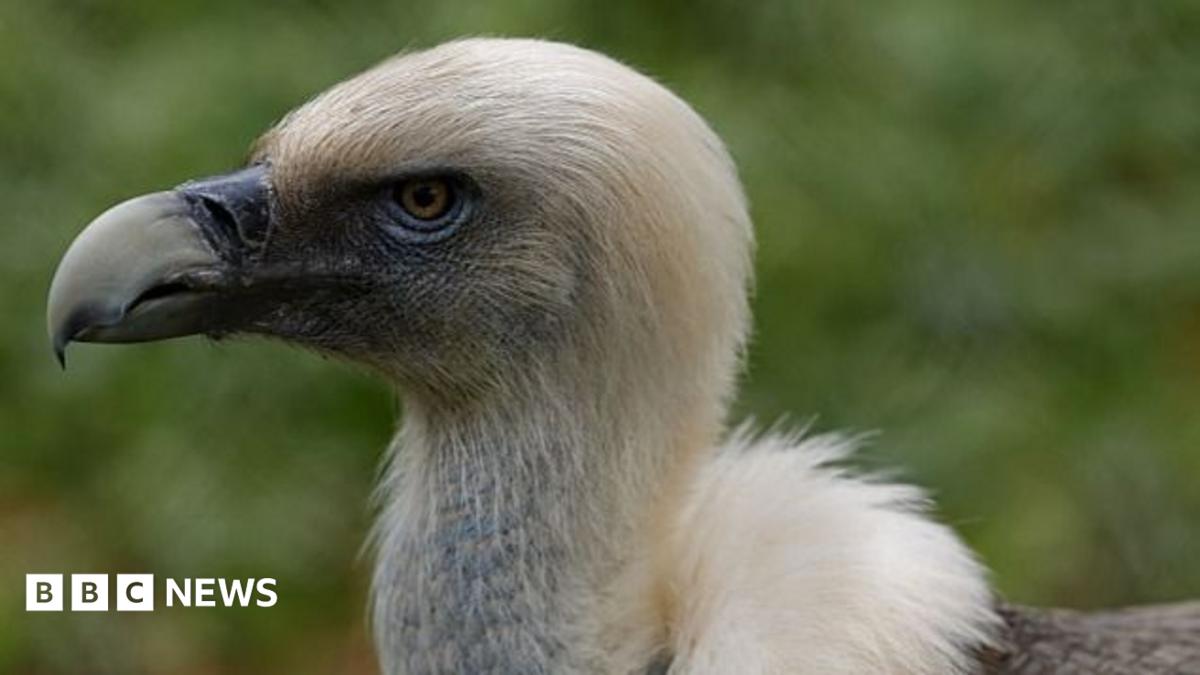
Conservationists say Nigeria has become a major hub for the illegal vulture trade, driven by its rich biodiversity and porous borders.
Abdullahi Maiwada, spokesperson for the Nigeria Customs Service, said authorities were taking action to stop vultures and other protected species, including donkeys, from being smuggled out of the country.
He said customs officials had seized protected wildlife and supported prosecutions linked to the illegal wildlife trade.
The efforts form part of Nigeria’s commitments under the Convention on International Trade in Endangered Species (Cites), which prohibits the cross-border trade of endangered species without the required authorization.
However, Maiwada told the BBC that law enforcement alone cannot stop vulture trafficking and that public education is also essential.
“We may not be able to do that without the cooperation and understanding of community members,” he said. “If people understand why we need to conserve these species, our enforcement efforts will complement the work of communities rather than confront those who have taken a rebellious attitude.”
Community education and local participation have become central to vulture conservation efforts in Awka Etiti and other parts of Nigeria.
Although reliable data on vulture populations remains limited, conservationists report encouraging signs in Awka Etiti, where community involvement has made residents more alert to outside hunters.
“The missing vultures will be back soon. If you go to the market now, you’ll see vultures. At one point they disappeared, but now they’re back,” Igwe said.
Egbe believes the southeastern Nigerian town demonstrates what can be achieved when local communities take the lead in protecting wildlife.
“What we have done at Awka Etiti is a very good example of people taking responsibility for what is happening in their environment. That makes us happy.”
For Igwe, every returning vulture is a symbol of hope.
But with vulture populations continuing to decline across Africa, he knows that protecting these birds will require coordinated action from communities across the continent.
Additional reporting by Abayomi Adisa, Ifiokabasi Ettang, Natasha Booty
Source: www.bbc.co.uk