


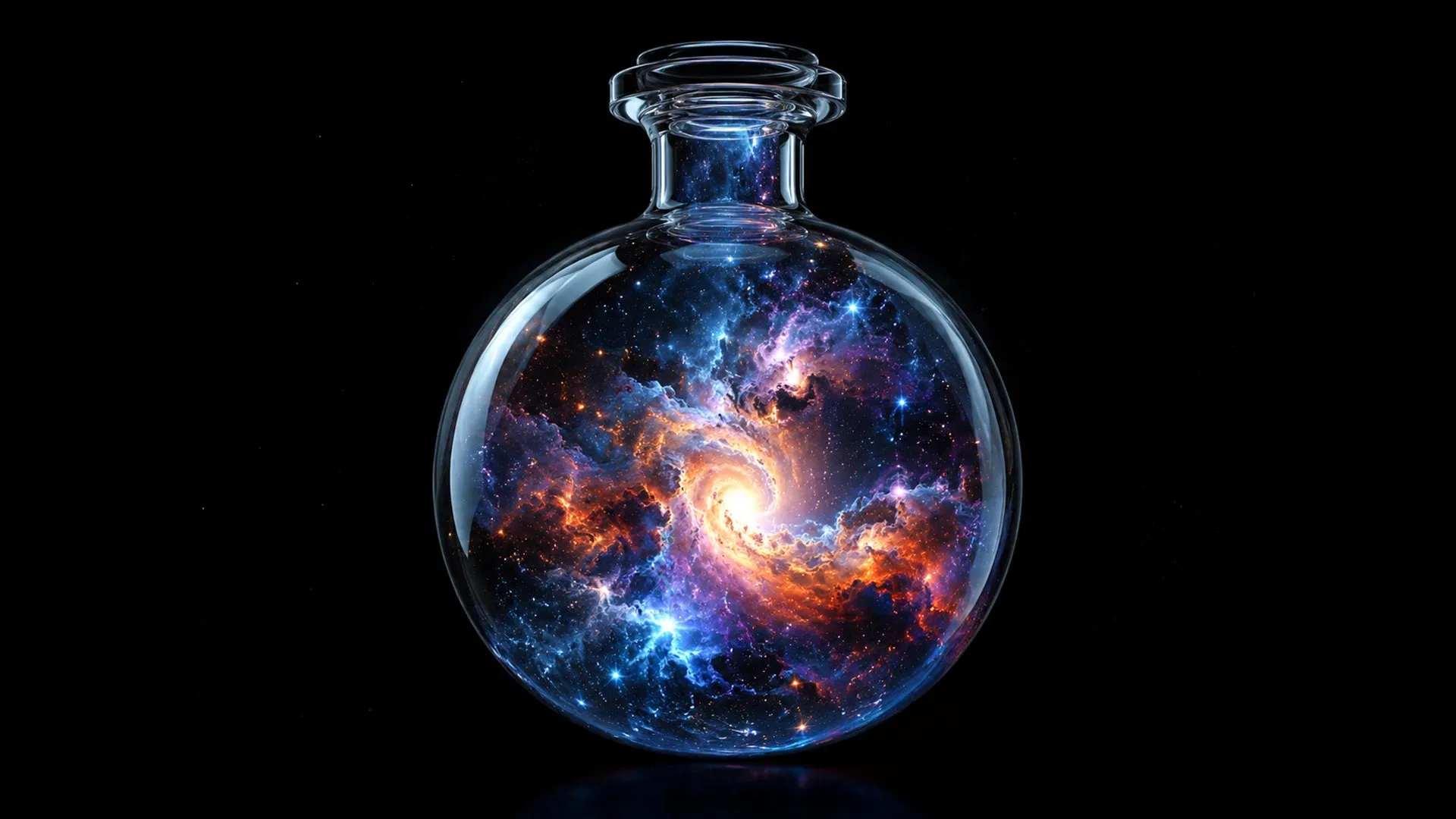
A Sydney-based PhD student has successfully synthesized cosmic dust in the lab by recreating a miniature version of the universe. This groundbreaking experiment sheds new light on the formation of essential chemical components associated with life prior to Earth’s development.
Linda Rosrud, a PhD candidate specializing in materials physics and plasma physics at the School of Physics, merged nitrogen, carbon dioxide, and acetylene to replicate the energy states found near stars and supernova remnants.
She subsequently subjected the gas to a strong electric charge, generating carbon-rich dust that mirrors the materials present in interstellar space, as well as in comets, asteroids, and meteorites.
The findings are published in the Astrophysical Journal of the American Astronomical Society.
Discovering Cosmic Dust and Life’s Essential Elements
The laboratory-produced dust showcases a complex mixture of carbon, hydrogen, oxygen, and nitrogen, collectively known as CHON molecules. These elements are crucial components found in many organic substances pivotal to the existence of life.
“We no longer have to wait for asteroids and comets to arrive on Earth to uncover their histories,” Rosrud explained. “We can create an analogous environment in the lab and reverse-engineer its structure using infrared signatures.
This could provide remarkable insights into how ‘carbonaceous cosmic dust’ forms within the plasma of ancient stars and in cosmic nurseries of emerging stars, distributing these intriguing molecules that may be vital for life.”
“It’s akin to crafting a piece of the universe within a bottle in our lab.”
In the vastness of space, cosmic dust forms under extreme conditions where molecules face repeated bombardment from ions and electrons. These interactions induce chemical reactions that lead to increasingly intricate materials.
Astronomers classify different types of space dust by analyzing the infrared light they emit, which acts like molecular fingerprints, allowing researchers to decipher the chemical structures of the materials.
Rosrud’s laboratory samples exhibited the same distinctive infrared signatures observed in space, confirming that the experiment closely mimicked the processes anticipated to occur in actual space environments.
Unraveling the Origins of Life’s Building Blocks
The origins of life on Earth remain among science’s greatest mysteries. Researchers continue to explore whether early organic molecules formed on young planets, were delivered via comets or meteorites, developed while the solar system was still forming, or a combination of these scenarios.
From approximately 4.56 billion to 3.5 billion years ago, meteorites, micrometeorites, and interplanetary dust particles from asteroids and comets frequently impacted the Earth, thought to have transported substantial organic materials to the planet’s surface.
However, the origins of these substances and the processes behind their formation remain enigmatic.
“Covalently bonded carbon and hydrogen found in cometary and asteroidal materials are believed to have originated in the outer shells of stars, high-energy events like supernovae, and interstellar environments,” Rosrud noted.
“Our goal is to unveil the specific chemical pathways and conditions that integrate all the CHON elements into the complex organic structures found in cosmic dust and meteorites.”
Recreating Celestial Conditions in a Glass Tube
Rosrud conducted the experiment alongside her supervisor, Professor David McKenzie. They first employed a vacuum pump to eliminate air from a glass tube, achieving a near-vacuum environment.
The tube was then filled with nitrogen, carbon dioxide, and acetylene gases. For about an hour, this gas mixture was exposed to a potential of roughly 10,000 volts, creating a kind of plasma known as glow discharge.
The energy generated fragmented the original molecules, which then recombined into larger, more intricate chemical structures.
Over time, the newly formed materials settled on a silicon chip placed inside the tube, yielding a fine coating of dust. In certain samples, the particles collected resembled glowing remnants of cosmic matter.
Professor McKenzie, a co-author of the study, explained that laboratory-derived dust offers scientists a unique opportunity to investigate conditions that are challenging to observe directly in space.
“By generating cosmic dust in the lab, we can analyze ion bombardment strength and the temperatures at which dust forms in space,” he stated. “This is crucial for understanding the environments within cosmic dust clouds, where life-related chemistry is believed to occur.”
“Additionally, this research allows us to decode the processes meteorites and asteroid fragments have undergone across their lifetimes as their chemical signatures preserve records of those experiences.”
Creating a Fingerprint Library for Astronomers
This pioneering research may not only unveil how life’s molecules first emerged but also aims to establish a comprehensive database of infrared signatures created by diverse types of cosmic dust in the laboratory.
Astronomers can compare these signatures with observations from star-forming regions and the remnants of dying stars. If the signals align, it could indicate the origins of specific dust types and help reconstruct the physical and chemical processes at play.
This database could further enhance scientists’ ability to interpret the historical records encoded in meteorite and asteroid debris, providing insights into the effects of temperature, radiation, and particles experienced during their journey through space.
This study introduces a novel approach for exploring processes occurring deep within stellar environments by simulating cosmochemistry in the lab. It could also illuminate some of the ancient chemical processes that contributed to the emergence of life on Earth.
Rosrud received the best presentation award for this research at the International Annual Meeting of the Meteorite Society last year.
The authors declare no competing interests and acknowledge support from the University of Sydney Node of Microscopy Australia. This research was funded by the Australian Research Council.
Source: www.sciencedaily.com