


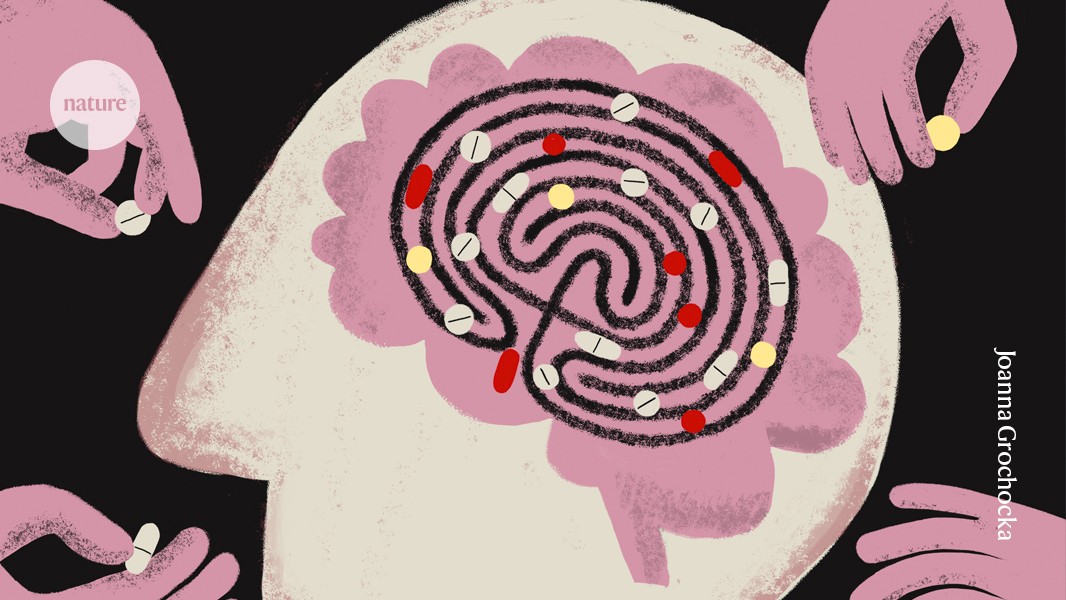
Every year, millions of people begin taking medications whose therapeutic effects cannot yet be fully explained to treat symptoms that cannot be confirmed through standard laboratory tests. Selective serotonin reuptake inhibitors (SSRIs) are among the most widely prescribed medications in the world. Yet after decades of use, researchers are still uncovering the biological changes SSRIs produce in the brain and body.
3 Mental Health Claims from RFK’s Wellness Movement: A Scientist’s Opinion
“We don’t fundamentally understand how they work,” said Maurizio Fava, a psychiatrist at Massachusetts General Hospital in Boston.
That uncertainty became part of a political debate earlier this year, when U.S. Health Secretary Robert F. Kennedy Jr. argued at a mental-health summit that antidepressants are overprescribed and may carry withdrawal risks comparable to heroin. His comments prompted criticism from scientists and clinicians, who said they exaggerated the risks and could discourage people from seeking potentially life-saving treatment. Others argued that Kennedy had highlighted a genuine public-health concern, even if his message was poorly delivered. “This is a major public-health issue,” said Mark Horowitz, a psychiatrist at the University of Adelaide in Australia. “I hope the message is not lost because of the messenger controversy.”
The disagreement reflects how many unanswered questions remain about SSRIs. Researchers are still assembling a complex picture of how these drugs may work, involving neural circuits and synapses, gene expression, inflammation, stress hormones, psychological expectations and other biological processes. None of these factors provides a complete explanation, and the chain of changes that ultimately reduces symptoms may differ considerably from one person to another. “There is more than one route to depression,” said cognitive neuroscientist Catherine Harmer of the University of Oxford in the UK.
However, many scientists believe the field is entering a more informative period as new technologies help connect symptoms with underlying biological processes. “We’re at a tipping point,” said Mark Rapaport, a psychiatrist at Stanford University in California and president of the American Psychiatric Association. He compared the current moment with cancer research in the 1990s, when advances in molecular biology and basic science helped pave the way for targeted treatments.
Even researchers who criticize Kennedy’s claims acknowledge that SSRI withdrawal can be a serious problem for some patients. An estimated one in six adults in the United States takes antidepressants. Although only a minority may experience severe symptoms when stopping treatment, the potential scale of the issue makes it an important public-health concern. “This is a real phenomenon,” Fava said.
Before scientists can fully explain why SSRI withdrawal occurs—or determine the best ways to prevent and treat it—they must answer a more fundamental question: What happens in the brain during depression, and how do SSRIs change it?
Why Depression Is Difficult to Diagnose
There is no standard blood test for depression. Genetic tests and brain scans cannot confirm the diagnosis. Instead, clinicians rely on what patients report and how they function in areas such as sleep, appetite, mood and interest in everyday activities. “It’s completely subjective,” said Manish Jha, a neuroscientist at the University of Texas Southwestern Medical Center in Dallas.
“The diagnosis of depression is the number-one problem,” said Eric Nestler, a neuroscientist and psychiatrist at the Icahn School of Medicine at Mount Sinai in New York City. This uncertainty makes it difficult to identify the most appropriate treatment for each person.

Large-scale genetic study reveals hidden links between mental illnesses
The first modern antidepressants were discovered largely by accident. In the 1950s, doctors noticed that medications developed to treat tuberculosis appeared to make some patients feel unusually energized or euphoric. Researchers later found that these drugs increased the availability of monoamine neurotransmitters, including serotonin and norepinephrine—chemical messengers involved in mood regulation.
This discovery led to monoamine oxidase inhibitors, early antidepressants that prevent the breakdown of these neurotransmitters. Around the same time, scientists identified tricyclic antidepressants, which increase monoamine signaling by blocking the reuptake of serotonin and noradrenaline. Both drug classes could be effective, but they also affected multiple systems throughout the body and caused significant side effects.
Drug developers therefore began searching for safer medications that would target the serotonin system more selectively. Fluoxetine, commonly known by the brand name Prozac, was approved in the United States in 1987.
Fluoxetine’s success helped establish the idea that depression results from insufficient serotonin and that SSRIs correct this imbalance. However, scientific evidence has never fit neatly into that explanation. In experiments that reduced serotonin production by depleting tryptophan—the raw material the body uses to make serotonin—most healthy participants did not develop depression.1 Yet many people who had responded positively to antidepressants, including SSRIs, experienced a return of symptoms under similar conditions.2
These findings suggest that serotonin is unlikely to be the sole or primary cause of depression, even though it remains central to the way SSRIs act.
Over the following decades, additional SSRIs and related medications expanded the range of antidepressant treatments available to clinicians. As these drugs lost patent protection and became less expensive—and as health-care systems grew increasingly stretched—the threshold for prescribing them declined. SSRIs are now among the most commonly prescribed treatments for depression and anxiety. In the United States, more than 100 million prescriptions for sertraline, escitalopram and fluoxetine were issued in 2024.
“Doctors are trying to find the easiest and probably the fastest solution,” said Giovanni Ostuzzi, a psychiatrist at the University of Verona in Italy. “This increases their propensity to prescribe SSRIs.”
Looking Beyond the Serotonin Hypothesis
At a basic level, SSRIs do exactly what their name suggests. When neurons release serotonin, transporter proteins normally carry much of it back into the cell. SSRIs block these transporters, leaving more serotonin available in the synapses between neurons. This increase in serotonin signaling occurs quickly, but meaningful symptom relief may take several weeks or even months.
Scientists’ understanding of what happens during that delay remains incomplete. Chronic stress has long been linked to depression. Ostuzzi said stress-response systems—including cortisol and noradrenaline—as well as the balance between pro-inflammatory and anti-inflammatory factors may become dysregulated. These changes can weaken neural connections and contribute to structural changes in brain regions such as the hippocampus and amygdala.

How to avoid dementia — what the science actually says
One way antidepressants may counter these effects is by promoting neuroplasticity—the brain’s ability to create, strengthen and reorganize connections. By influencing gene expression and increasing growth-promoting and protective factors, “antidepressants have the potential to reverse the effects of long-term stress,” Ostuzzi said.
One of the most studied biological factors in depression is brain-derived neurotrophic factor, or BDNF. This molecule helps support the growth and remodeling of neural connections. On average, people with major depressive disorder have lower levels of BDNF in their blood than people without depression. Over time, some antidepressants appear to increase BDNF production and signaling.
“It’s those downstream changes that actually improve depressed mood,” said Anita Clayton, a psychiatrist at the University of Virginia in Charlottesville. “It’s not serotonin scarcity itself. It’s the changes in circuits and connections.”
The timing of changes after SSRI treatment provides another clue. “People start showing improvement before they even realize it,” Nestler said. “Family and friends often notice that their functioning is improving first.”
Harmer has investigated why this might happen. Depression often involves a tendency to interpret information negatively. Her research suggests that antidepressants may quickly and subtly change the way people process emotional information, long before they consciously feel better. For example, people may become more likely to notice a stranger’s smile or remember praise, even when it is accompanied by criticism.
SSRIs appear to reduce this negative bias by altering activity in the amygdala and related brain circuits, gradually shifting emotional processing in a more positive direction. Over time, these small changes in perception may influence how a person interacts with the world. “Your mood is determined by how you process that information,” Harmer said.

How students and grandparents can solve the global mental health crisis
Gerald Sanacora, a psychiatrist at Yale University in New Haven, Connecticut, points to another factor: expectations. A 2022 meta-analysis of more than 200 randomized, placebo-controlled trials found that people taking SSRIs experienced a median improvement of about 10 points on a standard depression scale, compared with 7 points among those taking a placebo.3
The medication’s effect was measurable, but placebo responses and indirect effects likely contributed to the overall improvement as well. Sanacora compared this process with taking blood-pressure medication every morning: the routine may also encourage people to make other health changes, such as walking more, taking the stairs or managing stress.
Physical and psychological pathways may also reinforce one another. “If you start noticing more positive experiences and becoming more engaged with your environment, that in itself can stimulate plasticity in the brain,” Harmer said.
The relatively modest average difference between SSRIs and placebo has led some people to question whether the medications are effective. However, averages can conceal important individual differences: some patients experience substantial improvement, while others receive little or no benefit. “Every meta-analysis shows a difference from placebo,” said Samir Jauhar, a psychiatrist at Imperial College London. “But they are not a panacea.”
Understanding the Risks and Side Effects of SSRIs
Although SSRIs are generally considered safe for long-term use, they are not free from risks. Potential side effects include emotional blunting, digestive problems and sexual dysfunction. Withdrawal symptoms can also occur when treatment is stopped, particularly if the medication is discontinued suddenly. Anyone considering a change to their antidepressant treatment should speak with a qualified health-care professional about the safest approach.
Source: www.nature.com