


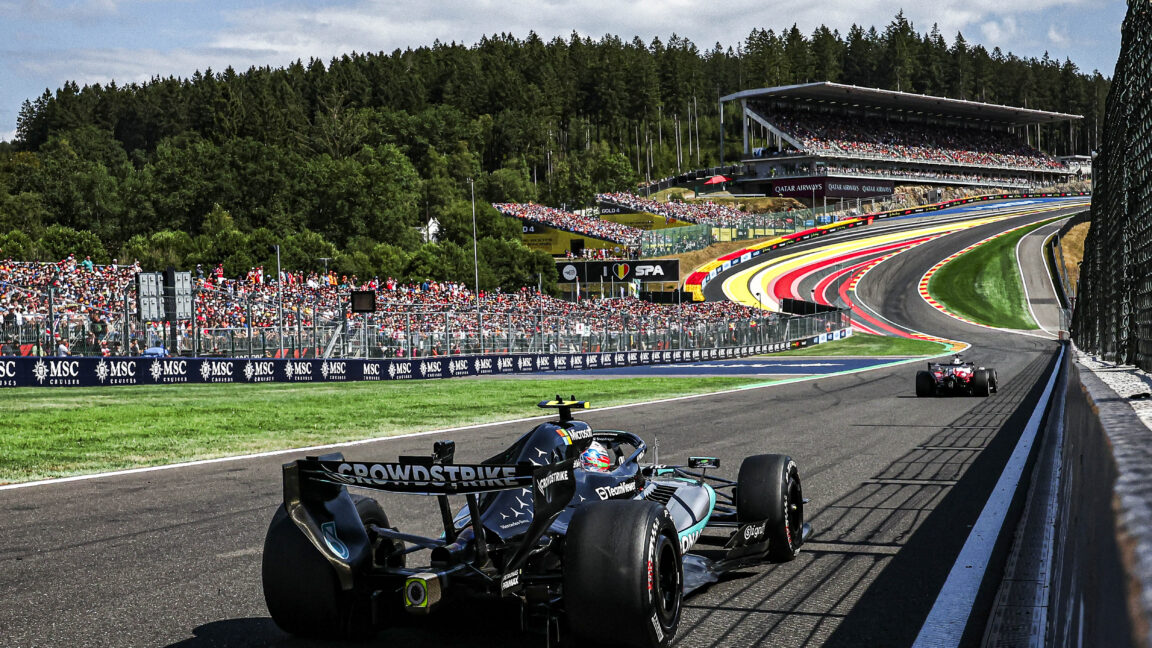
This weekend, F1 returns to the legendary Spa-Francorchamps circuit for the much-anticipated Belgian Grand Prix. Nestled in the picturesque Ardennes region, this historic track has been a staple of Formula 1 since the inaugural season in 1950. However, yesterday’s race highlighted the challenges current F1 cars face on such a demanding circuit.
As demonstrated earlier this year at Suzuka, Japan, the 2026 F1 battery can only power a race car’s electric motor for a few crucial seconds per lap. Throughout the remaining laps, energy-depleted cars receive less power to the rear wheels than those in the Junior F2 feeder series, significantly impacting their performance.
The World’s Best Racetrack
To many, including a vast majority of the current F1 grid, Spa-Francorchamps is recognized as perhaps the best racetrack globally. Notably, both Spa and the Belgian Grand Prix predate the F1 World Championship, with their first race occurring in 1922. Back then, the circuit stretched over a 19-mile public road loop through the towns of Malmédy and Stavelot before returning to Francorchamps. Post-war, the layout was slightly modified to 8.7 miles (14.1 km), allowing average lap speeds to soar to 150 miles (240 km/h), a perilously high speed considering the vehicles’ immense power and minimal safety measures.
Read the full article
Comment
Source: arstechnica.com