


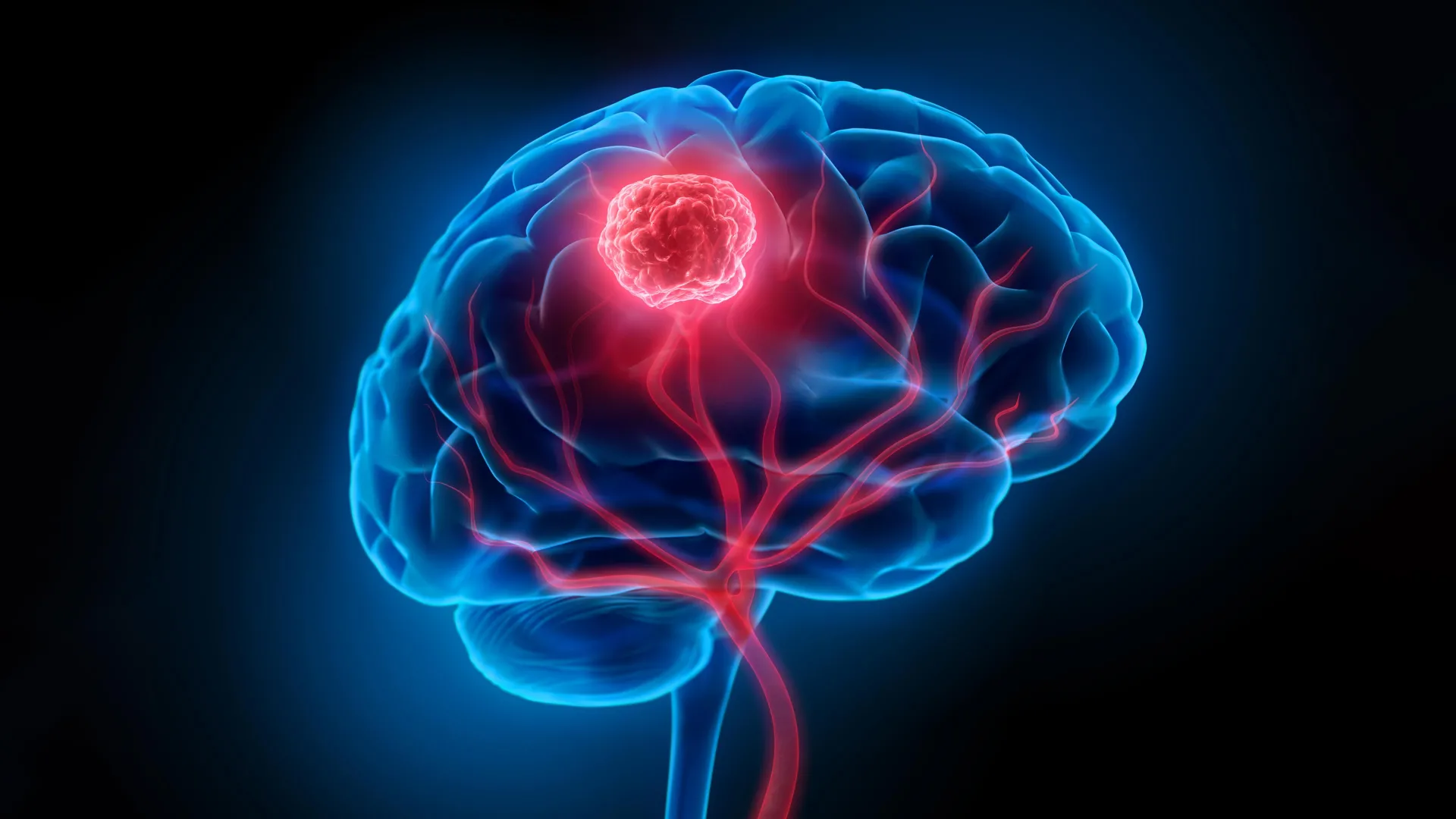
Glioblastoma is the most aggressive and difficult-to-treat type of brain cancer.
Glioblastoma is challenging to treat because cancer cells can infiltrate surrounding brain tissue. This makes complete surgical removal extremely difficult, as surgeons must protect healthy areas responsible for essential functions. The blood-brain barrier creates an additional obstacle by limiting the delivery of chemotherapy, targeted drugs and other treatments to brain tumors. Together, these challenges contribute to a 5-year survival rate of approximately 7%.
Dual-purpose nanoparticle platform for glioblastoma treatment
Researchers from the University of Technology Sydney (UTS), Harvard University and Henan University have developed a “double-whammy” nanozyme platform designed to address both challenges with one system of smart nanoparticles. The study was published in Science Translational Medicine.
“We have developed a single material that performs two jobs in sequence,” said Dr. Bingyang Shi, chair professor of nanomedicine in the Department of Electromechanical and Biomedical Engineering at UTS. “It can guide surgeons during an operation and provide targeted treatment to destroy remaining cancer cells afterward.”
The platform is based on an ultrathin, two-dimensional sheet containing individually positioned atoms. The atoms are deposited using techniques adapted from semiconductor manufacturing. This unique structure allows the material to perform two functions: imaging glioblastoma cells during surgery and delivering phototherapy after surgery. Both functions are activated using near-infrared light.
Imaging small clusters of brain tumor cells
“During surgery, the material acts as a highly sensitive contrast agent,” Professor Shi said. “Fluorescent dyes attached to the sheets emit near-infrared light that is invisible to the naked eye, enabling surgeons to detect individual tumor clusters as small as 44 micrometers. This resolution is greater than that of current clinical imaging tools. Targeting molecules attached to the nanoparticles also help them cross the blood-brain barrier and accumulate in glioma cells.”
After the surgeon removes the visible tumor, the same nanoparticle platform can be applied to the surgical cavity and activated with the same wavelength of near-infrared light.
“Once the visible tumor has been removed, the same material is administered into the surgical cavity and reactivated for postoperative phototherapy,” he said. “The platinum atoms convert hydrogen peroxide naturally produced by the tumor into oxygen, helping overcome the low-oxygen environment that can protect cancer cells from treatment. At the same time, near-infrared light generates heat and reactive molecules that can destroy microscopic cancer cells left behind after surgery.”
Targeting glioblastoma cells left behind after surgery
The treatment is designed to address one of the central challenges of glioblastoma: microscopic cancer cells may remain in the brain even after the visible tumor is removed. These surviving cells can contribute to tumor recurrence.
In a mouse model of glioblastoma, the nanoparticle treatment reduced tumor recurrence following surgery. All treated mice remained alive after 60 days, compared with 42 days for mice that underwent surgery alone. Follow-up evaluations also found no treatment-related neurological or motor deficits.
Promising findings, but human trials are still needed
Although the results are promising, the researchers emphasize that the nanozyme technology has only been tested in animals and is not yet available as a human treatment.
“While the results are very encouraging, this remains early-stage research conducted in a mouse model rather than in humans, and that distinction is important,” Professor Shi said. “The imaging and treatment performance must also be validated at the scale and complexity of the human brain.”
“If this research continues successfully, we hope surgeons may one day be able to see more of a glioblastoma during surgery and treat more of the tumor cells left behind. This could represent a meaningful step toward reducing recurrence, which remains one of the greatest challenges for people with glioblastoma.”
Source: www.sciencedaily.com