


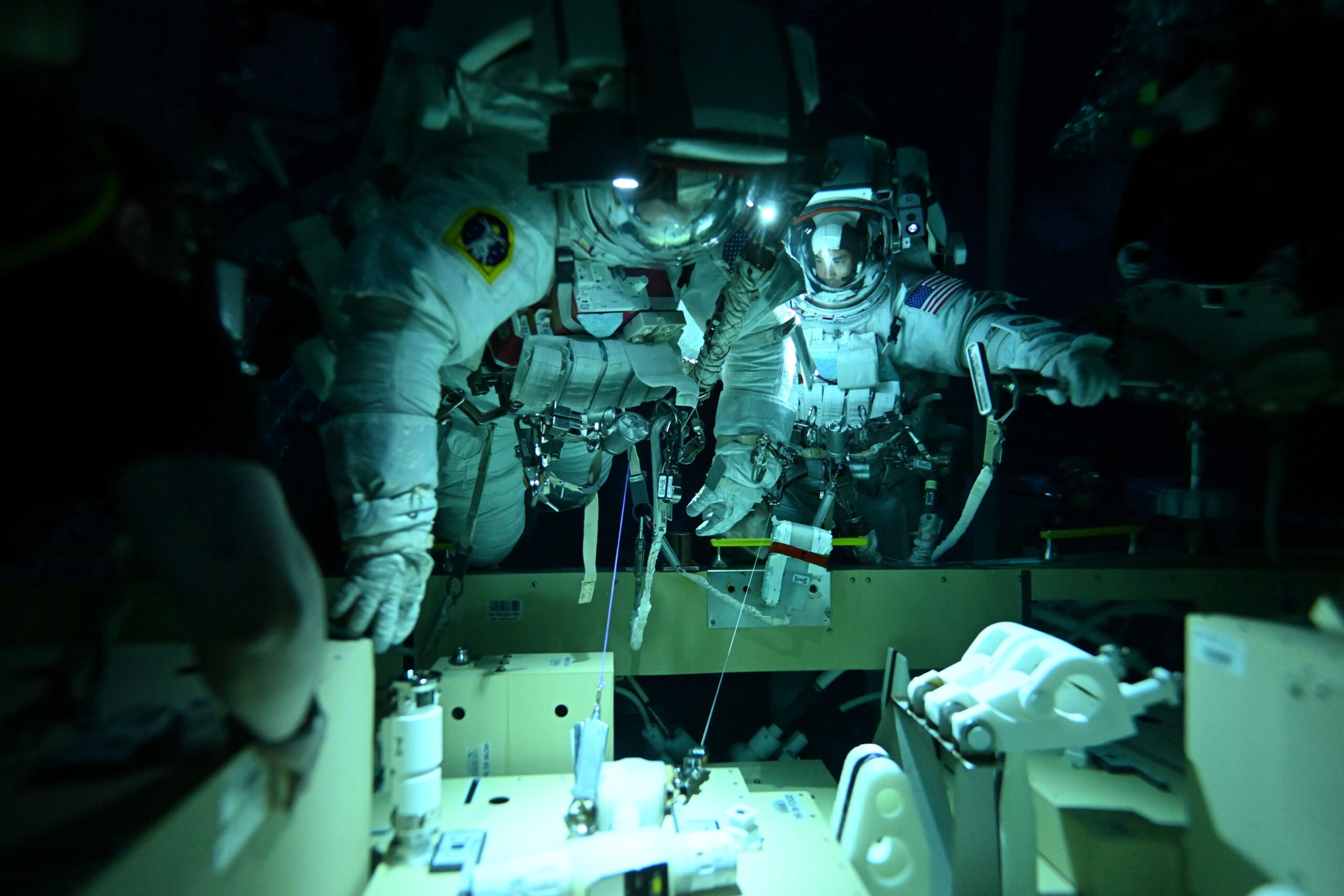
From serving in the U.S. Army to preparing astronauts for lunar exploration, Ike Theriot has built his NASA career through discipline, technical expertise, and determination.
Theriot is the Flight Operations Surface Testing lead in the Exploration Extravehicular Activity Operations Branch within the EVA, Robotics, and Crew Operations Division at NASA’s Johnson Space Center in Houston. In this role, he coordinates flight operations testing across NASA’s Artemis program, helping ensure teams have the data, procedures, and hands-on experience needed to prepare astronauts to live and work on the Moon. He is transitioning to a new role focused on lunar mission development, astronaut training, and mission execution for the next Artemis landing.
Ike Theriot
Flight Operations Surface Testing Lead
Theriot develops and conducts simulated moonwalks at Johnson Space Center and field locations throughout the United States and internationally. He also helped lead the development of the Lunar Grid Reference System, a navigation system designed for human operations on the Moon that is now incorporated into flight control systems.
His responsibilities include planning and executing tests at facilities such as NASA’s Neutral Buoyancy Laboratory and Space Vehicle Mockup Facility. Theriot frequently serves as a suited test subject and trains other team members to become test conductors and test leads, helping build the next generation of lunar surface operations experts.
NASA’s 40-foot-deep Neutral Buoyancy Laboratory uses a large pool to simulate microgravity. There, Theriot has supported International Space Station spacewalk rehearsals and lunar surface testing, helping refine the procedures astronauts will use in orbit and during future Artemis missions to the Moon.
Theriot has supported testing of NASA’s government reference exploration spacesuit design and Axiom Space’s lunar spacesuit, the Axiom Extravehicular Mobility Unit, or AxEMU. Using the Active Response Gravity Offload System, known as ARGOS, he practiced geological sampling operations in the AxEMU. The system reduces the effects of body weight to simulate lunar gravity, allowing engineers and astronauts to evaluate surface procedures, equipment, and spacesuit performance before crews explore the lunar terrain.
He has also evaluated new lighting configurations during suited test runs supporting the development of Artemis crew training. These tests examined how visibility can affect astronaut safety, mobility, and task performance in a simulated lunar environment.
In addition to his lunar surface testing responsibilities, Theriot supports International Space Station spacewalks as a certified flight controller. He was recently selected as a capsule communicator, or capcom, and has begun simulation training for the position. As capcom, he will serve as the primary voice between Mission Control and astronauts in low Earth orbit.
Theriot’s work also takes him beyond NASA facilities and into remote environments that reflect the challenges of lunar exploration. During a field campaign at Kamestastin Crater in Labrador, Canada, he trained alongside members of the Artemis II crew. Formed approximately 36 million years ago, the impact crater features terrain similar to areas astronauts may encounter on the Moon. Because the site is accessible only by boat, it provides valuable geology and field training in a remote setting.
Ike Theriot
Flight Operations Surface Testing Lead
Theriot’s interest in space began during an overseas deployment with the Army. While serving in Iraq, he was assigned to set up a satellite transceiver that failed during its first power-up. After watching technicians make field repairs, he began taking online engineering courses in his spare time. His studies included orbital mechanics, circuit design, cryptography, and space power systems.
During a later deployment to Afghanistan, Theriot spent evenings stargazing and tracking the International Space Station as it passed overhead. Those experiences strengthened his interest in spaceflight and helped guide his transition from military service to a career in aerospace engineering and NASA mission operations.
After leaving the Army, Theriot earned a mechanical engineering degree from the University of Houston. In 2016, he joined NASA’s Johnson Space Center as an intern, rotating among engineering and flight operations teams. He accepted a full-time position in 2019, shortly after NASA announced plans to return astronauts to the Moon through the Artemis program.
Some of Theriot’s most meaningful accomplishments involve helping others develop their skills. Several years ago, he created a Field Navigation Exercise at Challenger 7 Memorial Park in Houston to strengthen lunar surface navigation abilities. As NASA’s surface operations planning accelerated, he recognized that many team members had limited field experience. He designed the exercise and mentored others so they could eventually lead it themselves.
More recently, Theriot served as the test conductor for a major lunar spacesuit test series at the Neutral Buoyancy Laboratory. He spent months refining procedures and coordinating teams. On one occasion, the 19th Field Navigation Exercise and a Neutral Buoyancy Laboratory test occurred on the same day. Both activities were led by people he had trained, allowing Theriot to take the day off.
For Theriot, that was the definition of success.
His view of leadership has evolved throughout his NASA career. Early on, he believed the most difficult challenges were technical. Today, he believes the greater challenge is providing the leadership, communication, and guidance that allow technical work to succeed.
As NASA prepares for human missions to the Moon and future destinations, Theriot hopes the Artemis program demonstrates more than the achievement of exploration alone.
“Each day presents a new and interesting challenge, and I can feel myself growing to meet those challenges,” he said. “Through the Artemis missions, like the Apollo missions, I hope we can all show the world that impossible things can happen.”
Source: www.nasa.gov