


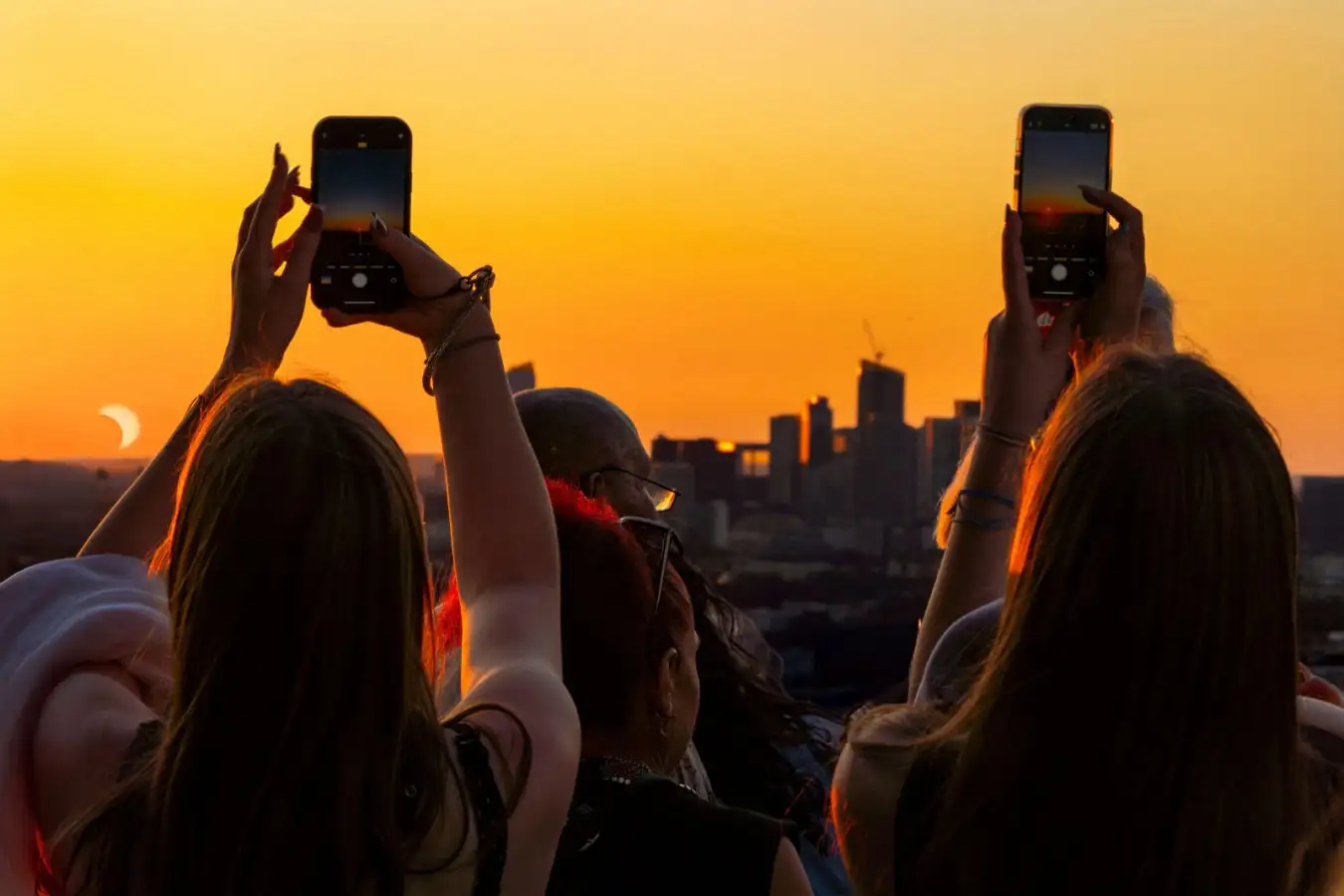

Help Scientists Study This Year’s Solar Eclipse
Sirbouman/Alamy
On August 12, a total solar eclipse will take place, offering a unique opportunity for citizens to contribute to scientific research alongside professionals. While scientists focus on the sun and their instruments, you can play a vital role in collecting data during this celestial event and throughout the year.
A total solar eclipse occurs when the moon entirely covers the sun’s disk from Earth’s perspective. This mesmerizing event is a rarity, happening approximately every 18 months at various locations on Earth.
This year’s total solar eclipse will be visible in parts of Europe, the Arctic Ocean, and the Atlantic Ocean. A partial eclipse can be seen in much of Europe, Canada, northwestern Africa, and parts of the United States. Here are some impactful ways you can assist with this scientific phenomenon:
1. Observe and Record Shadow Bands
Just before and after totality, unique shadow bands can be seen dancing on the ground. To observe them, place a white sheet or cardboard perpendicular to the sun’s direction. Join our Citizen Science Project to document how shadow bands vary based on location.
2. Photograph the Sun Using Your Smartphone
Utilize the Sun Sketcher App to capture the eclipse and measure the sun’s irregular shape. Take pictures at precise intervals, allowing for detailed analysis of Bailey’s Beads—a phenomenon that provides insights into the lunar landscape during the eclipse.
3. Measure Sky Darkness During the Eclipse
Participate in the Gaia4Sustainability project by using a small sensor device to monitor sky brightness and other atmospheric conditions. This data is invaluable for understanding light pollution and atmospheric dynamics during the eclipse. For more details, visit Gaia4Sustainability.
4. Search for Grazing Comets
Join the Sungrazer Project to analyze satellite images of the sun and look for comets in motion. Your observations could uncover new comets as they approach the sun, adding to our astronomical knowledge.
5. Join the DEB Observation Team
If you’re interested in a more involved role, consider joining the Dynamic Eclipse Broadcast (DEB) Initiative for future eclipses. Teams receive training and equipment to observe and collect valuable data on the sun’s corona.
Important: Always use solar filters or eclipse glasses to protect your eyes when viewing a solar eclipse.

Eclipse Discovery Tours
Explore curated tours and cruises tailored to maximize your solar eclipse experience at prime locations around the globe.
Topics:
- Solar Eclipse /
- Solar Eclipse 2026
Source: www.newscientist.com