


Hurricane Katrina and New Orleans Universities: Lessons in Unequal Recovery
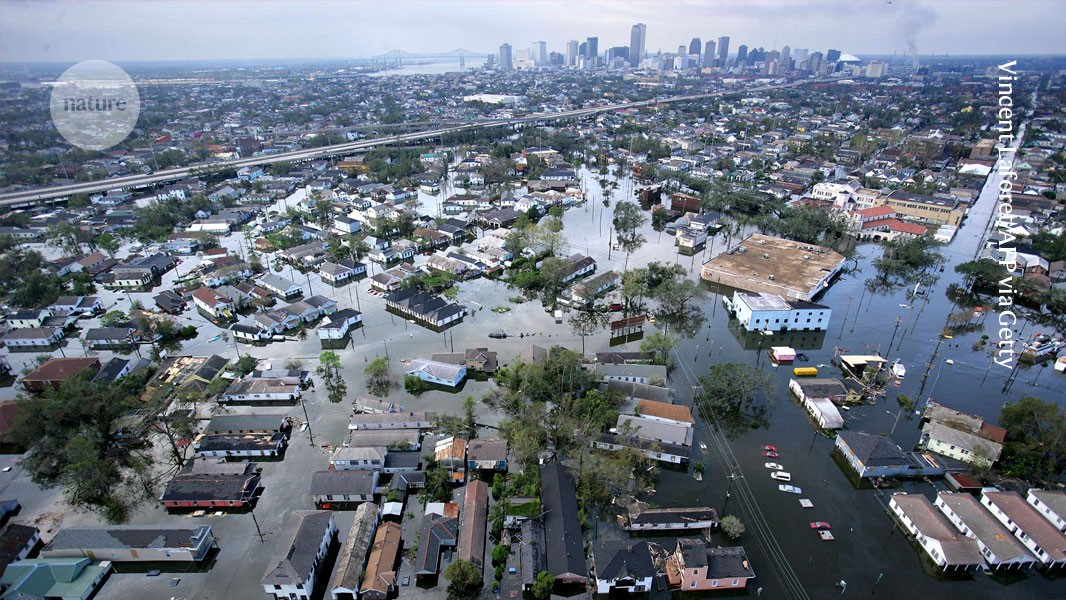
On August 29, 2005, Hurricane Katrina made landfall in southeastern Louisiana as a Category 3 storm, bringing sustained winds of 205 kilometers per hour and a storm surge of 15 to 20 feet (4.6 to 5.8 meters) east of New Orleans. The hurricane remains one of the deadliest to hit the United States. Millions of people were displaced, and more than 1,800 died during the storm and the flooding that followed. By August 31, approximately 80% of New Orleans, the hardest-hit city, was underwater.
Katrina affected the entire city, causing $17 billion in damage in Orleans Parish alone. Yet the damage and recovery burden were distributed unevenly. Environmental justice scholars such as Robert Bullard of Texas Southern University in Houston argue that disasters often follow lines of inequality already embedded in cities rather than creating a “great leveling.”
New Orleans’ academic sector suffered alongside the wider community. All 10 major universities in the metropolitan area were affected, while approximately 84,000 students and 15,000 faculty and staff were evacuated. Louisiana’s public universities sustained between $500 million and $600 million in physical damage, lost more than $150 million in tuition and revenue, and faced immediate budget cuts of $75 million.
More than two decades later, the academic sector’s recovery mirrors New Orleans’ broader recovery: uneven, but remarkable. The reasons for those differences offer lessons for institutions around the world rebuilding after disasters.
Why Hurricane Katrina hit New Orleans universities so unevenly
Physical damage to New Orleans laboratories and university facilities was shaped in part by geography. Much of the city lies in a natural basin below sea level, while higher ground follows the riverbanks.
Facilities on higher ground remained structurally intact, including the uptown campuses of Tulane University and Loyola University New Orleans. Facilities in low-lying areas, however, suffered extensive flooding. These included the Louisiana State University Health Sciences Center (LSUHSC), Dillard University, Southern University New Orleans (SUNO) and Xavier University of Louisiana (XULA).
HBCUs are historically Black colleges and universities. Approximately 100 American institutions were established before 1964 to educate Black students at a time when other universities excluded them.
The eye of the storm passed east of the city, but flooding followed the failure of federal levees and seawalls in the Lower 9th Ward, New Orleans East, Gentilly and Lakeview. “The first disaster was that communities were protected differently by levees,” Bullard said. “These preconditions have disparate impacts on every aspect of Black life in New Orleans, including HBCUs.”
Books submerged in water at the Dillard University library in New Orleans. The university was one of the historically Black colleges and universities hardest hit by Hurricane Katrina.Credit: Adam Nadel/Polaris/eyevine
The first floors of every building on the XULA campus were submerged in approximately 2 meters of water. SUNO was hit by up to 4 feet of water, while Dillard was under more than 8 feet of water. The basements of all LSUHSC buildings were severely damaged, forcing two of the city’s teaching hospitals to close. One briefly reopened before closing permanently in 2015.
“Located in a lowland is one variable, one factor,” Bullard said, but he pointed to other contributing conditions, including redlined areas. Redlining was a federal practice that began in the 1930s of marking areas as too risky for mortgage lending based on their racial and ethnic composition. These communities were among the hardest hit and were also more likely to be denied loans. Such conditions affected schools, universities and education during the recovery.
How universities responded before the floodwaters receded
Efforts to limit damage began before the waters receded. At Tulane, staff worked for more than two months to rescue a nuclear magnetic resonance spectrometer on the fifth floor. A generator-powered freight elevator allowed liquid nitrogen to be transported manually, preventing the superconducting magnets from losing their magnetism.
“There were heroic acts in terms of some researchers preserving cell cultures, refilling nitrogen tanks and making sure all their work was intact,” recalls Tulane University Medical Director Lee Hamm, who remained at the facility throughout the recovery.
All major educational institutions in New Orleans canceled the fall 2005 semester. Universities across the country offered to accept evacuees. Princeton University in New Jersey partnered with Brown University in Providence, Rhode Island, to host Dillard students. Loyola students received housing through the Society of Jesuit Colleges and Universities across its 27 member institutions. Tulane medical students transferred to Baylor College of Medicine in Houston. The tuition paid by those students went back to Tulane, providing what Hamm described as “an incredible gift.”
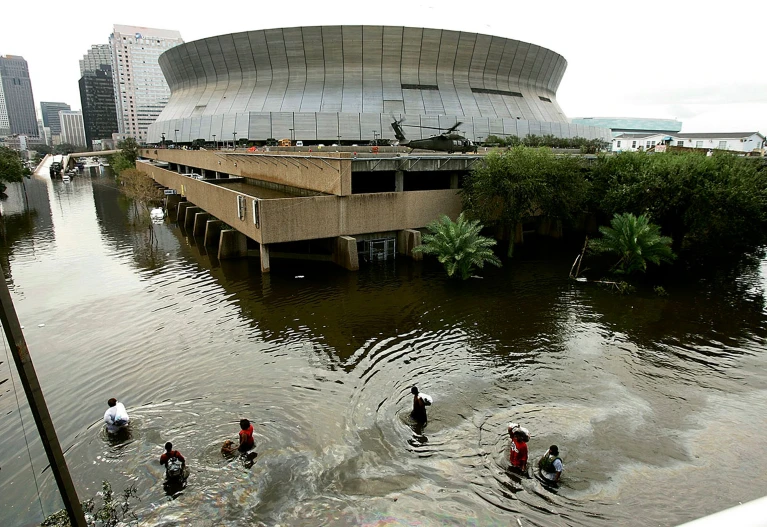
Failure of federal levees and seawalls is believed to be the cause of the devastating floods that hit New Orleans in 2005.Credit: Mark Wilson/Getty
Marguerite Giguette, president of XULA, described the depth of collaboration among educational institutions and local communities. XULA registrars evacuated to Dallas, Texas, where they continued university business. A downtown New Orleans hotel housed students and faculty from Dillard, one of the institutions most severely affected. When XULA reopened in January 2006, it provided laboratory space for Dillard students to complete science courses while Dillard’s campus remained unavailable.
XULA, Tulane, Loyola and Dillard later formalized and expanded agreements allowing students to take courses at nearby institutions while paying their home tuition rates. “It was a way we could help each other out with the staffing and equipment we have,” Giguette said. The consortium remains active.
Why financial resources shaped the recovery
As private universities, Tulane and Loyola had insurance and large endowments to cushion the immediate impact. Many other institutions did not. A 2025 analysis by the Brookings Institution, a Washington, DC-based think tank, found that New Orleans’ three HBCUs had a much smaller financial safety net.
Federal aid also reinforced existing inequalities. When Congress allocated $200 million in federal disaster-relief funds to higher education in 2005, the money was divided evenly between Louisiana and Mississippi, even though Louisiana experienced more than four times the damage of its neighbor.
Louisiana’s smaller institutions, including all three New Orleans HBCUs, were also disadvantaged by the formula used by the state Board of Regents to allocate grants, according to the Brookings analysis. The result was that institutions already under-resourced received less support during recovery.
“Structural and institutional inequalities existed before the storm,” Bullard said. “But post-storm policies were implemented, and those pre-existing conditions were incorporated into organizational recovery and financing.”
Recovery interrupted by recession and disinvestment
Public institutions faced another major setback in 2008, only three years after reconstruction began, when the global financial recession hit. Most of Louisiana’s state spending consists of mandatory mandates. Higher education, unlike elementary and secondary education, is not protected by the state constitution.
This began a period of sustained disinvestment in public higher education across the state. The decline was not reversed even after the economy recovered. At the University of New Orleans, for example, state funding fell from $55.3 million in 2005—approximately $90 million in 2025 dollars after adjusting for inflation—to $30.5 million in 2025. That represents a 44.7% decline in nominal terms over 20 years.
What Hurricane Katrina teaches universities about resilience
The experience of New Orleans universities shows that disaster recovery depends on more than repairing buildings. Geography, infrastructure, historic discrimination, financial resources and relationships among institutions all influence who recovers quickly and who remains vulnerable.
Universities that plan for years rather than months, protect people and research, cooperate across institutional boundaries, and speak openly about safety can strengthen their resilience. New Orleans also demonstrates that recovery plans must account for the wider social inequalities that shape the communities universities serve.
Source: www.nature.com