


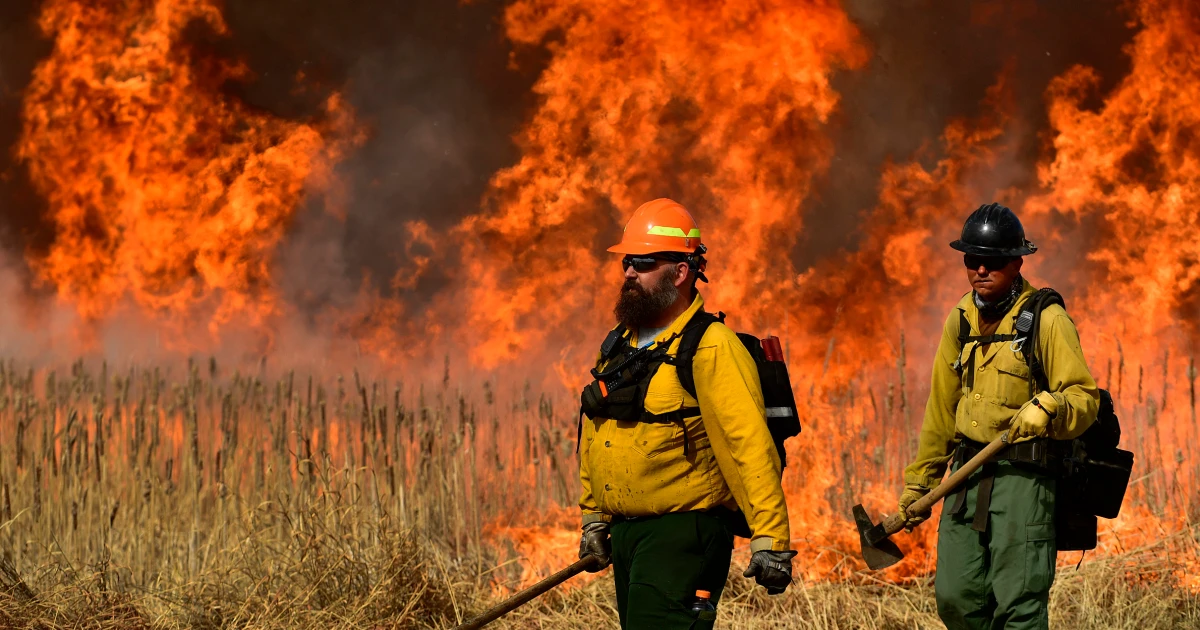
For the first time, federal firefighters are being encouraged to wear respirators to protect against smoke inhalation while battling wildland fires.
Subscribe to read this story without ads
Enjoy unlimited access to ad-free articles and exclusive content.

The U.S. Forest Service announced Wednesday that firefighters are cleared to use N95 respirators at fire scenes. This marks a significant policy shift since the agency had not permitted such protective gear for decades, despite evidence highlighting the health risks associated with wildfire smoke.
“It’s been a long time coming,” said George Broyles, a veteran USFS firefighter who has researched wildfire exposure risks. “There’s no question that individuals are at an increased risk for cancer and heart disease.”
For Broyles, this policy adjustment acknowledges that wildfire smoke is toxic and emphasizes the need to minimize risk for Forest Service employees.
Historically, the Forest Service has been slow to address the health implications of wildfire smoke and implement protections for workers in fire-prone environments.
Breathing in wildfire smoke can introduce harmful gases and particles into the bloodstream, leading to conditions such as asthma, lung cancer, and other chronic lung diseases. There’s also evidence that wildland firefighters face higher risks for lung cancer and cardiovascular issues.
The Forest Service will also initiate a cleanup program aimed at reducing firefighter skin exposure to toxins from soot and ash. Personnel will be compensated for time spent washing clothes, cleaning vehicles, and showering post-fire.
This policy is a preliminary step towards a comprehensive protection program that meets Occupational Safety and Health Administration (OSHA) standards.
“We are committed to developing a robust respiratory protection program without further delay,” stated Evan Birx, a spokesperson for the U.S. Forest Service. “While N95s are not mandatory, we advocate their use and allow firefighters to remove them if they become overheated.”
The Forest Service noted that fire managers and firefighters wishing to utilize respirators must complete a training program.
As wildfires increase in size and severity, researchers are urgently working to understand the health impacts associated with smoke exposure, particularly for wildland firefighters.
A 2019 study indicated that wildland firefighters face an 8% to 43% higher likelihood of dying from lung cancer and a 16% to 30% increased risk of cardiovascular disease, depending on career length and exposure days. Another research revealed that they are also more likely to be diagnosed with hypertension or arrhythmia.
“Access to N95s, decontamination protocols, and training can significantly lower exposure to harmful smoke and toxins,” remarked Steve Gutierrez, union representative for the American Federation of Federal Employees. “We must build on this progress with long-term respiratory protections, cancer screenings, medical monitoring, and enhanced facilities for decontaminating gear.”
While N95 masks offer some protection, they are not without drawbacks. They can be uncomfortable and increase breathing effort during physical exertion. Moreover, they do not safeguard against carbon monoxide, formaldehyde, and other toxic gases found in wildfire smoke.
The masks are not designed for use in steep terrains where fire conditions can shift rapidly or in close proximity to flames, according to the Forest Service.
“Currently, there is no universal solution for this issue,” said Reba Duncan, president of Grassroots Wildland Firefighters. She referred to N95s as “another temporary fix.”
However, implementing a comprehensive ventilation system adhering to OSHA regulations may take “many years,” Broyles noted.
Broyles and Gutierrez expressed concerns that many firefighters may opt not to use N95 respirators.
“This process will necessitate a cultural change,” Gutierrez emphasized.
This summer could pose significant challenges for wildland firefighters. The National Interagency Fire Center (NIFC) reports that over 34,000 wildfires have started, burning at least 2.7 million acres this year, both figures exceeding the 10-year average.
Many western states, including Utah and Colorado, experienced record spring snowfall, leading to drought conditions and heightened fire risk. Additionally, a strong El Niño pattern is developing, with global temperatures on the rise.
NIFC prediction maps indicate a potential for exceeding average fire activity until September, with some areas marked as “below normal.”
Source: www.nbcnews.com