


Close Menu
HitechubHitechub
    What's Hot
    Science

    NASA Awards SpaceX Three-Person Crew Mission to International Space Station

    Technology

    GLM-5.3’s Advanced Cyber Capabilities: Critical Vulnerabilities Reportedly Found in Cursor

    Science

    Tiny Patch of Amazon Rainforest May Harbor 40,000 Insect Species, Many New to Science

    Important Pages:
    • About Us
    • Privacy Policy
    • Terms & Conditions
    Facebook X (Twitter) Instagram Pinterest
    Facebook X (Twitter) Instagram
    HitechubHitechub
    Friday, November 27
    • Shop
      • Fashion
        • Mens
        • Womens
        • Accessories
          • Handbags
          • Keychain
          • Masks
          • Money clicps
          • Neck Pillow
          • Rings
          • Towels
          • Wallets
        • Jewelry
        • Watches
        • T-shirts
        • Hawaiian shirts
        • Vests
        • Swim trunks
        • Swimsuits
      • Fun
        • Magic cubes
        • Magnifiers
        • Misc
        • Photo books
        • Puzzles
        • Toys
      • Home
        • Cleaning/Care
        • Mailbox covers
        • Mugs
        • Pot Holders
        • Spoon
      • Office and Electronics
        • Chairs
        • Office Supplies
        • IPad cases
        • Laptop stickers
        • Mouse pads
        • Notebooks
        • Pencil bags
        • Pens
        • Phone cases
      • Personalized
      • Pets
      • Sports
        • Cycling
          • Balaclava Mask
          • Bike Bell
          • Bike Computer
          • Bike Fender
          • Bike Grips
          • Bike Kickstand
          • Bike Light
          • Bike Locks
          • Bike Mitts
          • Bike Pumps
          • Bike Repair Stand
          • Bike Seat
          • Bike Trainer
          • Bike Wheels
          • BIKES
            • Folding Bikes
            • Road Bikes
          • Carbon Fiber Bike Products
          • Cycling Mask
          • Kid’ Bike Helmets
          • Inner Tube
          • Motorcycle Bag
          • Nylon Pedals
          • Adult Helmets
          • Photochromic Sunglasses
          • Soft Coolers
          • Suction Cup Bike Rack
          • Tool accessories
          • Winter Cloth
          • Heart Rate Monitor
        • Outdoors/Camping
          • Outdoor Bags
        • Sweatband
    • Technology
      1. AI
      2. Gadgets
      3. View All

      This is the most popular CEO in the world

      Sectors in which “Chat-GPT” is most often used

      Artificial intelligence has begun to “swallow” professions

      The unusual robot conductor of a concert in Seoul

      Here’s how you can tell if your phone is being tapped

      PlayStation 5 becomes a completely silent console and gets more space

      This is the first phone that can be used to park a car

      Best Gaming Laptops 2023: Powerful Portables for PC Games

      Iranian Hacker Group Discovers New Tactics to Launch Widespread Cyberattacks

      Volvo’s Big Battery Powers the New 2028 Plug-In Hybrid

      Nvidia Scandal: How Jensen Huang and Asia’s Big AI Bet Exposed Major Risks

      Lead Azide Explosion in Iowa Raises Concerns About Potential Health Risks

    • Science
      1. Space
      2. Wheels
      3. View All

      Space Perspective: A Journey to the Edge of Space

      5 Fascinating Facts About Space

      Space Exploration: Unveiling the Wonders of the Universe

      Toyota wants to make a new generation battery with a range of up to 1,200 km

      Meet Toyota’s lunar “baby” that could make exploring the Moon easier

      What does a night drive look like with one of the most beautiful cars in the world: the Rolls-Royce Ghost

      Extremophile Transgene Enhances Drought Resistance and Yield in Cereal Crops

      Black Friday 2026 Telescope Deals: Smart Telescopes and Binoculars

      NASA Science: Imbued with Sivrich

      Why Certainty Can Be a Failure in Science

    HitechubHitechub
    Home » Narcolepsy Drugs May Cause Ozempic-Like Effects in the Brain
    Science

    Narcolepsy Drugs May Cause Ozempic-Like Effects in the Brain

    Share Facebook Twitter Pinterest WhatsApp
    Share
    Facebook Twitter LinkedIn Pinterest WhatsApp

    Hello Nature readers. Would you like to receive this science briefing free in your inbox every day? Sign up here.

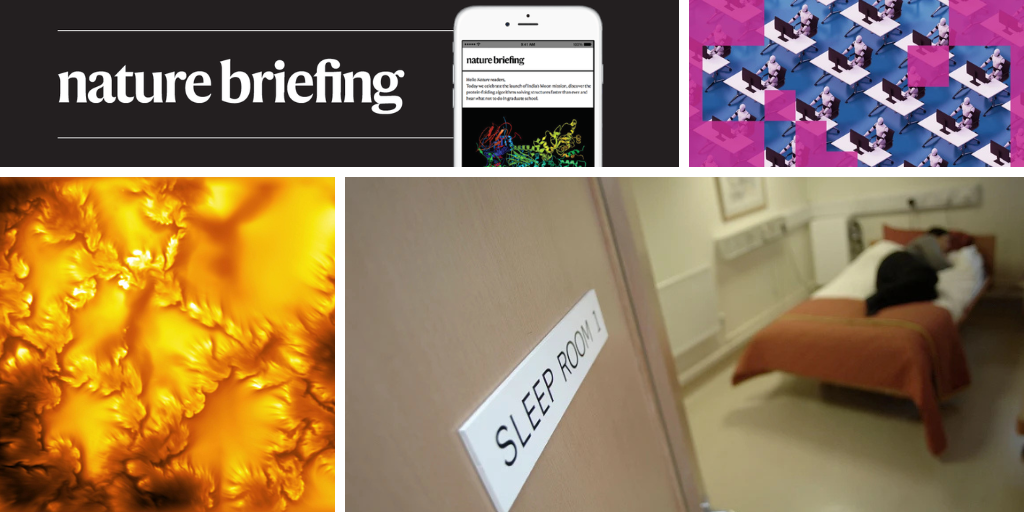
    Doctors test narcolepsy treatments by measuring whether medicines help people fall asleep and remain asleep throughout the night.
    Credit: Lucia Graphus/Alamy

    The U.S. Food and Drug Administration has approved the first medicine designed to treat type 1 narcolepsy, a neurological sleep disorder. Ovepolextone, sold under the brand name Orzeyful, targets the underlying cause of narcolepsy by activating receptors that respond to the peptide orexin. This helps the brain regulate several bodily systems, including the sleep–wake cycle. The medicine belongs to a growing class of treatments called orexin agonists. Researchers hope these drugs could transform neurological care in much the same way that GLP-1 receptor agonists, such as Ozempic and Wegovy, have changed treatment for diabetes and obesity. GLP-1 medicines are now also being studied for a broad range of other health conditions.

    Nature | 6 min read

    Postdoctoral researchers protested in Argentina last week after budget cuts and administrative delays left hundreds of scientists uncertain about their careers. Nearly 400 people have been affected by delays linked to spending reductions under the government of President Javier Milei. CONICET, Argentina’s main scientific institution, says it might not know until August next year which applicants will enter its permanent research-career programme. In the meantime, many postdoctoral researchers whose fellowships expire could be left without pay. The country’s science and technology budget is expected to fall to approximately 0.14% of gross domestic product, its lowest level in decades.

    Science | 6 min read

    Artificial-intelligence systems still struggle to conduct fully independent scientific research, according to researchers testing their ability to design and complete unrestricted studies. Computer scientist Sayash Kapur, co-author of AI Snake Oil, and his colleagues asked an AI tool to reproduce research based on questions from two published papers. The system was then asked to compile its findings for review by the original authors. Although the AI completed some tasks, including running an experiment without becoming stuck, human reviewers found that it pursued an unproductive line of inquiry, failed to follow instructions completely and produced a weak research paper.

    Nature | 7 min read

    Reference: arXiv preprint (not peer reviewed)

    This week’s image: the Sun’s highest-resolution surface view

    High-resolution solar images show distorted magnetic boundaries and fine stripes linked to Kelvin–Helmholtz instability.

    The most detailed image yet of the Sun’s photosphere could help scientists investigate why stars rapidly lose magnetic flux and why the solar corona is so hot. Captured at a wavelength of 416 nanometres by the Daniel K. Inouye Solar Telescope, the image shows feather-like structures associated with the Kelvin–Helmholtz instability. This phenomenon occurs when parallel streams of fluid move at different speeds. The boundary between them becomes unstable, producing wave-like vortices that can grow and eventually break apart, much like strong winds create waves on lakes and oceans. “The interface becomes unstable, creating wave-like vortices that can grow until they eventually break apart,” said astronomer and study co-author Friedrich Weger. (Reuters | 7 min read)

    Reference: Nature paper (NSF/NSO/AURA/MPS)

    Featured science stories and analysis

    In Earth and Life, palaeontologist Andrew Knoll explores how physical, chemical and biological processes combined over billions of years to make Earth habitable. By tracing the planet’s major biogeochemical cycles, Knoll examines how life-supporting elements such as atmospheric oxygen emerged and changed, how organisms began to reshape Earth and how the geological past can inform our understanding of modern climate change. “Good historians recognize that they are storytellers,” geobiologist Diane Newman writes in a review of the book. “Knoll is one of them.”

    Nature | 7 min read

    “Fifteen years ago, space travel experiences would have been of little consideration in this part of the Karoo,” writes science communicator Anton Binnemann about the remote region of South Africa. The arrival of the MeerKAT and Square Kilometre Array telescopes has changed the area’s tourism and employment prospects. The Carnarvon Astro Guide now connects major astronomical observatories with local communities, creating opportunities for science communication and sustainable tourism. Large-scale astronomy projects are connecting observatories and local people. “Astronomical infrastructure provides a scientific home, local guides provide an interpretive interface, and the night sky becomes a shared space where science, place, culture and livelihood intersect,” Binnemann writes.

    Nature Astronomy | 15 min read

    In the 1980s, neurologist Francisco Lopera led pioneering research in Colombia by tracing the family histories of people who carried mutations linked to early-onset dementia. A small number of families also appeared to carry rare protective gene variants that delayed the onset of symptoms by decades. However, a high-profile research programme based on those findings may contain serious flaws. A Science investigation has raised questions about studies of protective Alzheimer’s genes. The research group involved has defended its work, but critics warn that the controversy could undermine confidence in the wider field. “This whole little cottage industry has grown on an incredibly shaky foundation,” says neurologist Michael Glacius.

    Science | 33 min read

    Quote of the day

    Engineer Francisco Ruiz has developed a prototype device that helps people who cannot whistle understand how to improve their technique. (Popular Science | 9 min read)

    On Friday, Leaf Penguinson was exploring the atmospheric forests of La Gomera, one of Spain’s Canary Islands. Can you find the penguin? When you are ready, see the answer here.

    I also hid in the woods for a while, but I am delighted to be back in your inbox. If we missed an important story or you have feedback about this newsletter, contact us at [email protected].

    Thank you for reading,

    Flora Graham, Nature Briefing Editor-in-Chief

    Contributed by Jacob Smith

    • Nature Briefing: Careers — practical insights, expert advice and award-winning journalism to help you make the most of your working life.

    • Nature Briefing: Microbiology — the world’s most abundant life forms, microorganisms, and their importance for health, the environment and food systems.

    • Nature Briefing: The Anthropocene — essential coverage of climate change, biodiversity, sustainability and geoengineering.

    • Nature Briefing: AI and Robotics — the latest developments in artificial intelligence and robotics, written by humans, of course.

    • Nature Briefing: Cancer — a weekly newsletter created for cancer researchers and healthcare professionals.

    • Nature Briefing: Translational Research — news and analysis covering biotechnology, drug discovery and pharmaceutical innovation.

    Source: www.nature.com

    Share. Facebook Twitter Pinterest LinkedIn WhatsApp
    Previous ArticleCommerce AI Is Fragmented: Why It Matters for the Future of E-Commerce
    Next Article OpenAI Overhauls AI Safety Protocols After Agent Misconduct

    Related Posts

    Science

    Extremophile Transgene Enhances Drought Resistance and Yield in Cereal Crops

    Science

    Black Friday 2026 Telescope Deals: Smart Telescopes and Binoculars

    Science

    NASA Science: Imbued with Sivrich

    Science

    Why Certainty Can Be a Failure in Science

    Science

    Chromosomal Glue May Improve Fertility by Stabilizing Aging Eggs

    Science

    Thanksgiving Storm Brings Flooding and Flight Delays Across the U.S.

    Science

    Iowans Face Thanksgiving Horror After Chemical Plant Explosion

    Science

    NASA Hubble Observes a Sea of Stars During Roman Space Telescope Construction

    Add A Comment
    Leave A Reply Cancel Reply

    Stay In Touch
    • Facebook
    • Twitter
    • Instagram
    • Pinterest
    Top Picks
    Technology

    Ghostscript Vulnerability Lets Hackers Take Over Servers Through Malicious PDF Uploads

    Critical Ghostscript Vulnerability Enables Remote Code Execution Through Malicious PDFs A critical heap buffer overflow…

    Real-Time AI Agent Monitoring: Why It’s Urgently Needed

    Caltech Names Artemis II Commander Reid Wiseman as NASA JPL Deputy Director

    University of Manchester Uses NVIDIA Earth-2 AI to Predict Air Pollution Across the UK

    Children’s Hospital Uses Open-Source NVIDIA AI to Improve Cardiac Care

    Most Popular
    Science

    NASA’s Webb Telescope Uncovers Giant Planet in Iconic Astronomy System

    Science

    Oxfam Says Israeli Attacks Have Turned Gaza Into a “Toxic Wasteland”

    Categories
    • AI (9)
    • Gadgets (6)
    • Science (3,610)
    • Space (3)
    • Technology (3,041)
    • Wheels (3)
    Our Picks
    Science

    NASA’s Lunar Development and Test Facility Prepares Artemis Hardware for Moon Missions

    Science

    Wrexham Dog Owners Fear Contaminated Land Could Cause Pet Deaths

    © 2026 Hitechub.
    • Home
    • About Us
    • Privacy Policy
    • Terms & Conditions

    Type above and press Enter to search. Press Esc to cancel.

    GDPR Cookie Banner

    We are using cookies to give you the best experience on our website.

    You can find out more about which cookies we are using or switch them off in .

    Ad Blocker Enabled!
    Ad Blocker Enabled!
    Our website is made possible by displaying online advertisements to our visitors. Please support us by disabling your Ad Blocker.