


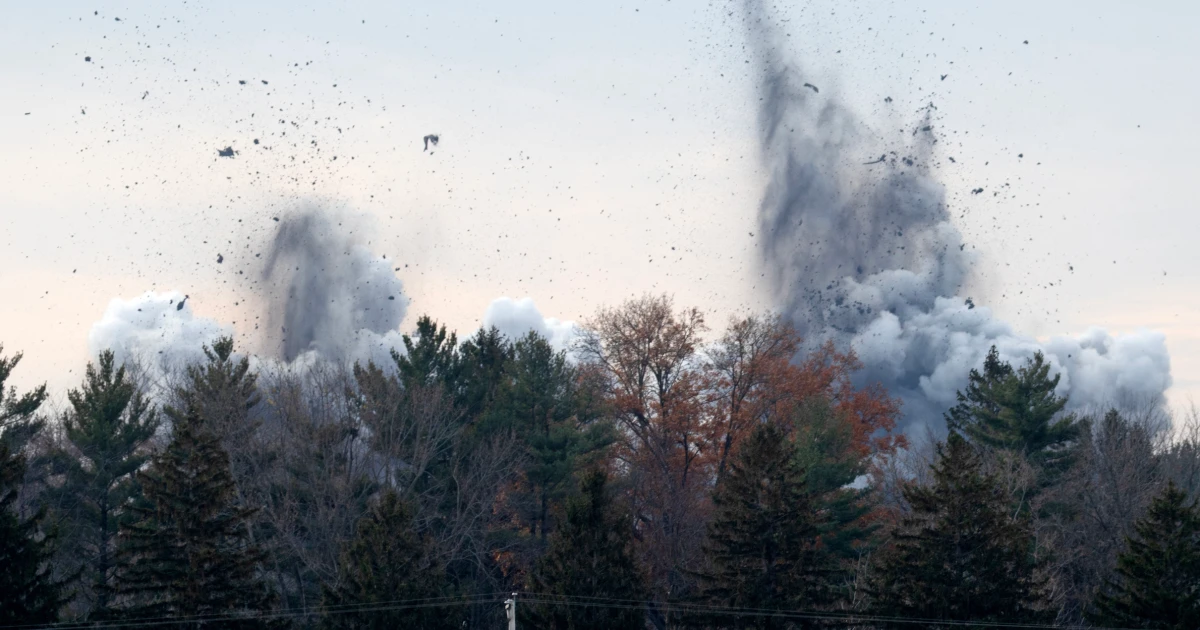
Federal officials returned to the Iowa Army Ammunition Plant on Thursday, one day after the Army detonated a deteriorating stockpile of lead azide, to collect more than 1,000 air, soil and water samples. The testing followed years of concern over the volatile compound and lingering uncertainty among residents, even as Middletown prepared to observe Thanksgiving.
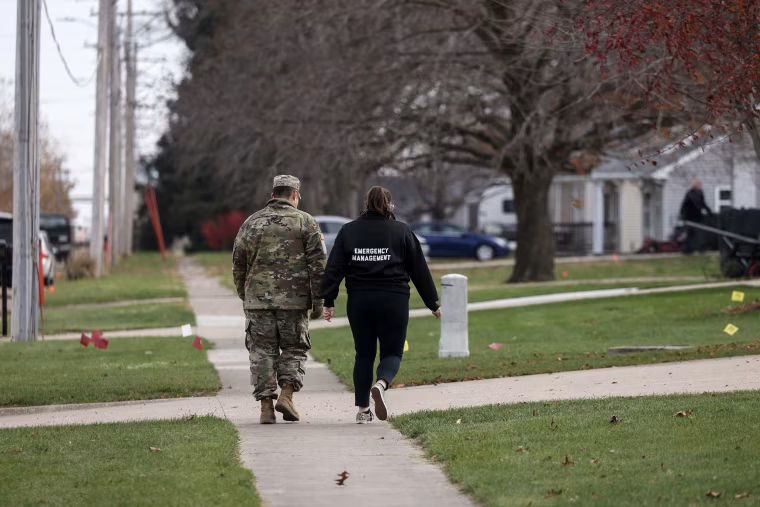
More than 300 Environmental Protection Agency employees and contractors were collecting samples from homes, schools, farms and drinking-water sources, EPA Administrator Lee Zeldin said in a social media post. The agency expected to complete the work by the end of Thursday and “transparently provide all the results coming in from the lab” within a day or two, he said.
The announcement was welcomed by residents of Middletown, a small farming community in southeastern Iowa. Sixty-eight drums of lead azide, a compound once used to make bombs, had been stored at the plant before the Army decided to destroy the material in a controlled explosion. The operation prompted voluntary evacuations and environmental concerns around the blast site.
After Wednesday’s explosion, the military said the operation appeared to have succeeded. Its initial findings indicated that the dust plume did not reach nearby farms or homes, while EPA air monitoring detected no lead.
As Tim Thoman prepared to host 15 relatives for Thanksgiving, he watched a nearby command center remain a “hive of activity” as workers patrolled the site and collected soil samples.
“The Army said it looked like a success,” Thoman said while planning a holiday meal of turkey, ham and homemade ice cream. “I just hope they continue testing so we can feel safe.”
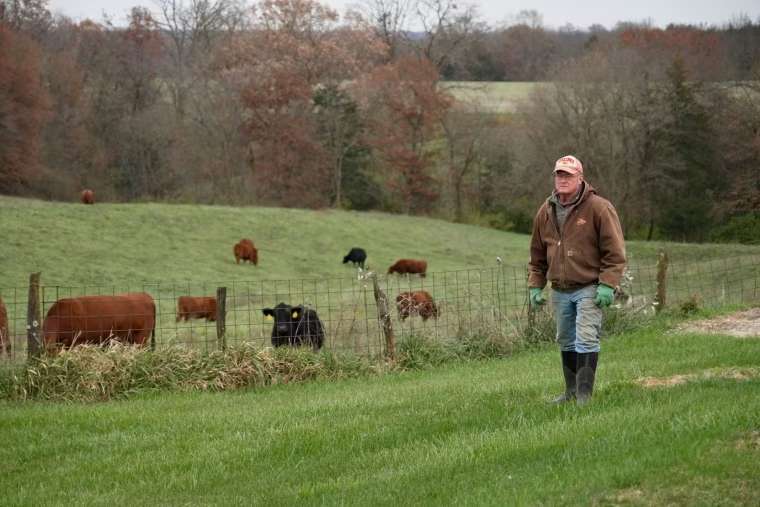
Blaine Dial, who lives near the munitions factory, spent the days before the explosion sealing his windows and doors rather than preparing for Thanksgiving.
Dial said Thursday that continued environmental monitoring was “absolutely important” after learning that lead azide, a heavy-metal compound, can be particularly dangerous to children and pregnant women.
“The way the wind blows, you don’t really know where something landed,” Dial told NBC News.
Residents and environmental groups had raised concerns about potential health and environmental effects, as well as a lack of information about the operation, after the military announced and then postponed plans to detonate the material over the previous two weeks.
Why the Army detonated the stockpile
The military said immediate detonation was the safest option because the stockpile was deteriorating and could spontaneously explode as temperatures fell.
Maj. Gen. Eric Shirley, who led the Army operation, said the risk had been “reduced to as close to zero as humanly possible.”
“As we saw immediately after from the air, all of the lead azide barrels were definitely removed,” Shirley said Wednesday after the explosion. “There were no secondary explosions or kickouts, and there was no damage to infrastructure within or around the facility.”
Officials built earthen barriers and poured foam and water into two bunkers containing five tons of lead azide. They said the measures appeared to absorb most of the explosion.
An alert sent to cellphones late Wednesday afternoon said residents could resume normal activities. The Federal Emergency Management Agency also issued a warning around the plant, according to a military report.
President Donald Trump posted on social media that the Army “did a great job.” Acting Secretary of the Army Adam Tell and the Republican governors of Iowa and Missouri said the explosion appeared to have been successfully contained.
Testing could take weeks
Andrew Welton, an environmental engineering professor at Purdue University who has helped communities recover from chemical disasters, said the EPA’s air-quality data was promising. However, he said laboratory testing was needed to determine whether people faced health risks.
“This should take days to weeks,” Welton said. “But what we may see is different guidance being issued to different communities based on their distance from the blast area and whether they are upwind or downwind.”
Colin Wellenkamp, executive director of the Mississippi River Urban Planning Initiative, said water-treatment plants along the Mississippi and Missouri rivers are regularly tested to ensure there are no detectable spikes.
Robert Secada, director of the Bureau of Alcohol, Tobacco, Firearms and Explosives, said the stockpile had been brought to Iowa from bases around the country in 2009. The lead azide was kept in case the military needed to use it again.
Questions remain about why the Army allowed the material to deteriorate for so many years that a controlled explosion became necessary, creating risks for property and the environment.
“The material should never have been allowed to deteriorate to this extent,” Sen.-elect Josh Turek, an Iowa Democrat, said in a Facebook post.
Kevin and Linda Ross, who own a home and pottery shop in Weber, about a mile from the plant, conducted their own lead testing because they feared their gardens and fish ponds could be contaminated.
On Thursday, they said the first 10 tests taken near their home had come back negative. They had already postponed their family Thanksgiving celebration until Friday while protecting the property, including wrapping their chicken cage in plastic.
“It was about to get so crazy that I just went next to my daughters,” Linda Ross said. “But it worked out well for my family, and that’s fine.”
Residents were urged to evacuate or shelter indoors
The Army scheduled the explosion for Wednesday because winds were moving southwest, away from populated areas such as Burlington, a city of fewer than 25,000 people on the Mississippi River.
Government officials advised residents closest to the site and within the plume’s potential path to evacuate, while telling others to remain indoors.
Schools that had not already closed for Thanksgiving canceled classes, and many businesses shut down.
Matt Mitchell, a Middletown truck driver, witnessed Wednesday’s explosion. He expected a noticeable blast, but said he did not hear a loud bang or see a large debris plume. Instead, he said, it sounded no different from other experimental noises heard from nearby power plants.
As he traveled toward the Wisconsin border for Thanksgiving, Mitchell said he was grateful for the continued testing and for the return of peace and quiet to a community that had drawn national attention.
“Honestly, I can’t wait for social media to calm down again,” Mitchell said.
Source: www.nbcnews.com