


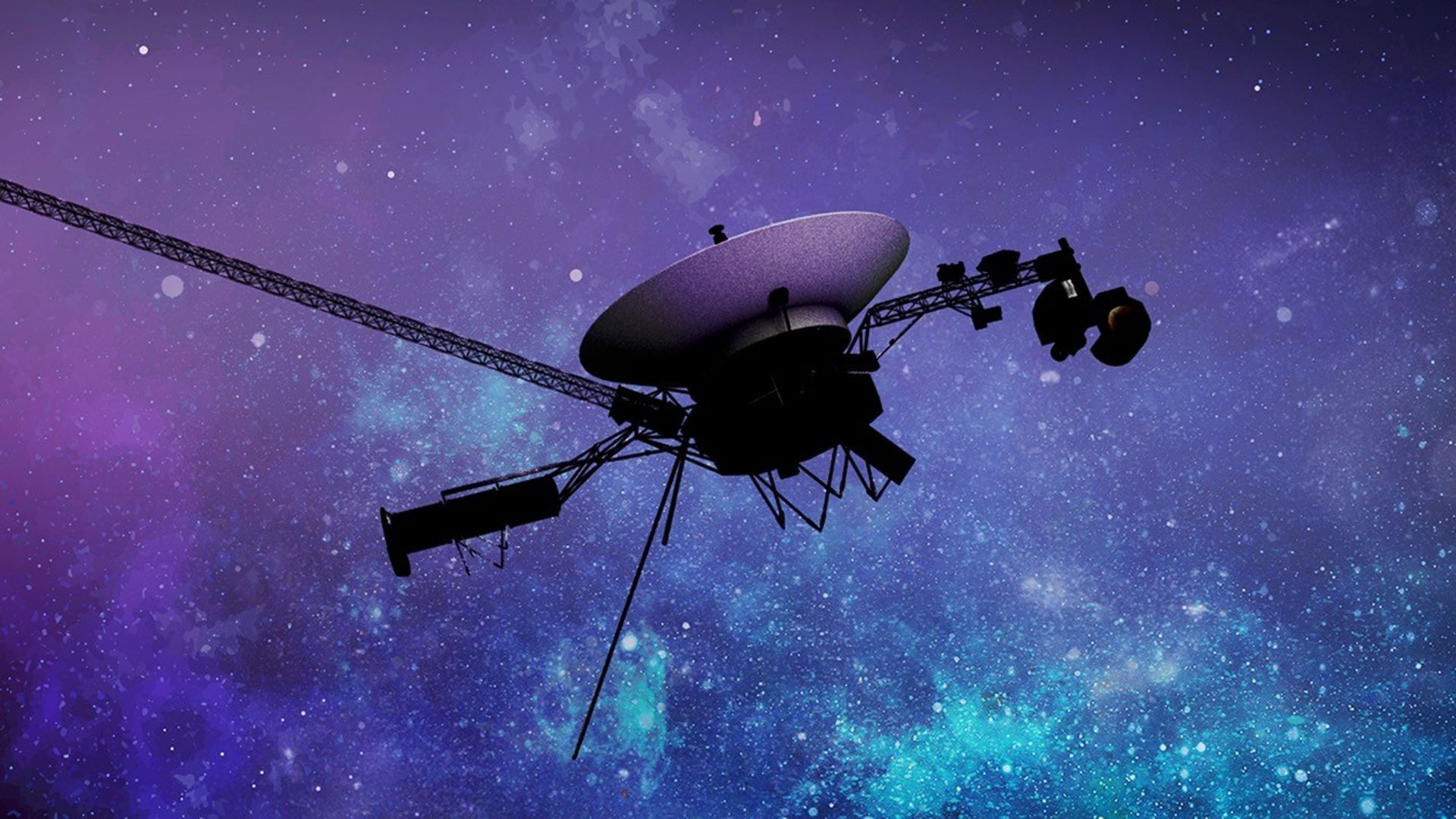
NASA engineers are preparing a new power-saving maneuver to extend the life of Voyager 1, humanity’s most distant spacecraft, after successfully using the same strategy to help keep Voyager 2 operating billions of miles from Earth.
According to a NASA statement released Aug. 4, engineers completed a carefully planned procedure known as the “Big Bang” on Voyager 2. The maneuver is designed to conserve power and prevent the spacecraft from losing another of its three remaining science instruments later this year.
The Voyager probes are powered by radioisotope thermoelectric generators fueled by plutonium. As the plutonium naturally decays, each spacecraft loses approximately 4 watts of power every year. NASA must therefore make difficult decisions about which instruments and systems can remain active while keeping the probes warm enough to function in the extremely cold environment of interstellar space.
“The idea is to swap out a group of powered devices all at once — hence the nickname — turning some things off, and replacing them with lower-power alternatives, to keep the spacecraft warm enough to continue gathering science data,” representatives from NASA’s Jet Propulsion Laboratory, which manages the Voyager mission, explained in an April blog post.
Latest Videos From Live Science
NASA tested the power-saving procedure on Voyager 2 before carrying it out in May and June. The agency has now reviewed the results and says the power transfer was successful, giving the spacecraft additional time to collect scientific data from beyond the heliopause.
“The savings should provide power to keep its three instruments operating for at least an extra year,” NASA representatives wrote.
Voyager 1 is in a more difficult position than its twin. In April, mission scientists were forced to switch off one of Voyager 1’s remaining science instruments after its available power continued to decline.
NASA plans to perform a similar “Big Bang” maneuver on Voyager 1 within the next few months. The goal is to preserve its remaining science capabilities for as long as possible and continue studying the space between the stars.
NASA’s Voyager probes are going out with a bang
NASA chose to perform the power-saving maneuver on Voyager 2 first because the spacecraft is healthier and closer to Earth than Voyager 1. Voyager 1 is currently nearly 171 astronomical units (AU) from Earth, while Voyager 2 is approximately 143 AU away. One AU is the average distance between Earth and the sun.
Both spacecraft are exploring the region beyond the heliopause — the boundary where the sun’s influence gives way to interstellar space. They are the only operational spacecraft sending direct scientific data from this distant region of the solar system.
The vast distance creates a major communications challenge. In November, Voyager 1 is expected to reach a significant “light day” milestone, meaning a radio signal will take 24 hours to travel one way between Earth and the spacecraft. If both probes remain operational, they will celebrate 50 years in space in 2027.
Voyager 1 and Voyager 2 launched in 1977. A rare alignment of Jupiter, Saturn, Uranus and Neptune allowed Voyager 2 to conduct a “grand tour” of the outer solar system, using each planet’s gravity to travel onward while conserving fuel.
Voyager 2 flew past all four planets, completing its Neptune encounter in 1989. Voyager 1, meanwhile, was directed above the plane of the solar system after its close encounter with Saturn in 1981.
Once the spacecraft completed their planetary flybys, NASA gradually switched off instruments and other systems to extend the mission. However, the probes’ aging power supplies have made it increasingly difficult to keep their scientific equipment running.
The plutonium generators aboard both spacecraft are steadily weakening. Voyager 2 would have needed to shut down one of its three remaining science instruments later this year without the Big Bang maneuver. Voyager 1 suffered an additional power loss in February after a planned deep-space maneuver, leaving only two of its 10 original science instruments powered after the instrument shutdown in April.
By carefully reallocating electricity, NASA hopes to keep both Voyager spacecraft alive long enough to deliver more data about interstellar space — a region no other active mission is currently exploring.
Source: www.livescience.com