


Close Menu
HitechubHitechub
    What's Hot
    Science

    Jupiter’s Electron Acceleration Near-Light Speed: Unveiling the Origins of Cosmic Rays

    Science

    California Sees Largest Mushroom Poisoning Outbreak in U.S. History: Rising Cases Reported

    Space

    “Espace” presented the new lander “Apex 1.0”

    Important Pages:
    • About Us
    • Privacy Policy
    • Terms & Conditions
    Facebook X (Twitter) Instagram Pinterest
    Facebook X (Twitter) Instagram
    HitechubHitechub
    Sunday, June 21
    • Technology
      1. AI
      2. Gadgets
      3. View All

      This is the most popular CEO in the world

      Sectors in which “Chat-GPT” is most often used

      AI Pioneer Expresses Concern About Potential for AI to Surpass Humanity

      Artificial intelligence has begun to “swallow” professions

      What’s new in Android 14

      Europeans have about 700 million old mobile phones in their drawers

      Here’s how you can tell if your phone is being tapped

      “Sneaker X” – computer case in the shape of a sneaker

      Russian Gamers Unite to Prevent Nuclear War: Join the Fight Online

      Challenges of Space Travel: Why Journeying to Space is So Difficult

      NASA Astronaut Casts Historic Vote from Space

      Discover the Future of Comfort: What If You Could Wear a Chair?

    • Science
      1. Space
      2. Wheels
      3. View All

      Galaxies in the universe are growing more slowly than they should

      “Espace” presented the new lander “Apex 1.0”

      The largest asteroid sample ever collected has arrived on Earth

      (VIDEO) Incredible flight of the Parker Solar Probe

      Toyota wants to make a new generation battery with a range of up to 1,200 km

      Meet Toyota’s lunar “baby” that could make exploring the Moon easier

      Microlino – Is this the perfect city car?

      Alfa Romeo 4C gets an electric successor

      Two Key Signals That Might Indicate Contact with Aliens

      Why Am I Farting So Much? Discover the Surprising Science Behind Flatulence

      Next-Generation Highly Sensitive Radio Telescope Array to Be Constructed in Nevada Desert

      What Happens When Two Narcissists Fall in Love? Insights on Narcissistic Relationships

    HitechubHitechub
    Home » Next-Generation Highly Sensitive Radio Telescope Array to Be Constructed in Nevada Desert
    Science

    Next-Generation Highly Sensitive Radio Telescope Array to Be Constructed in Nevada Desert

    Share Facebook Twitter Pinterest WhatsApp
    Share
    Facebook Twitter LinkedIn Pinterest WhatsApp

    A secluded area in the Nevada desert, located in the Great Basin, will soon host the world’s most advanced array of radio telescopes. This groundbreaking project aims to revolutionize radio astronomy.

    The California Institute of Technology, spearheading this initiative, has recently confirmed construction of the telescope will commence after securing sufficient funding. Known as the Deep Synoptic Array, this innovative project features 1,650 individual radio antennas, designed to explore supermassive black holes, pulsars (rapidly rotating dead stars), and fast radio bursts—intense signals from the far reaches of space.

    Greg Hallinan, a professor at Caltech and principal investigator of the Deep Synoptic Array, remarked, “The extensive number of antennas sets this telescope apart from any existing models.”

    Radio telescopes capture naturally occurring radio waves emitted by celestial bodies like stars, planets, and galaxies. By analyzing radio emission patterns, astronomers gain insight into their structures and properties, including temperature and composition.

    While traditional radio telescopes don’t produce images like optical observatories, they can convert received radio signals into valuable data visualizations.

    Once constructed, the Deep Synoptic Array is expected to outperform all previous ground-based radio telescopes, scanning the sky 100 times faster and generating unprecedented quality radio images.

    Regarding radio-emitting objects in space, Hallinan noted, “If we aggregate data from all telescopes built over the past century, we’ve identified approximately 20 million radio sources; this telescope could double that figure within the first 24 hours.”

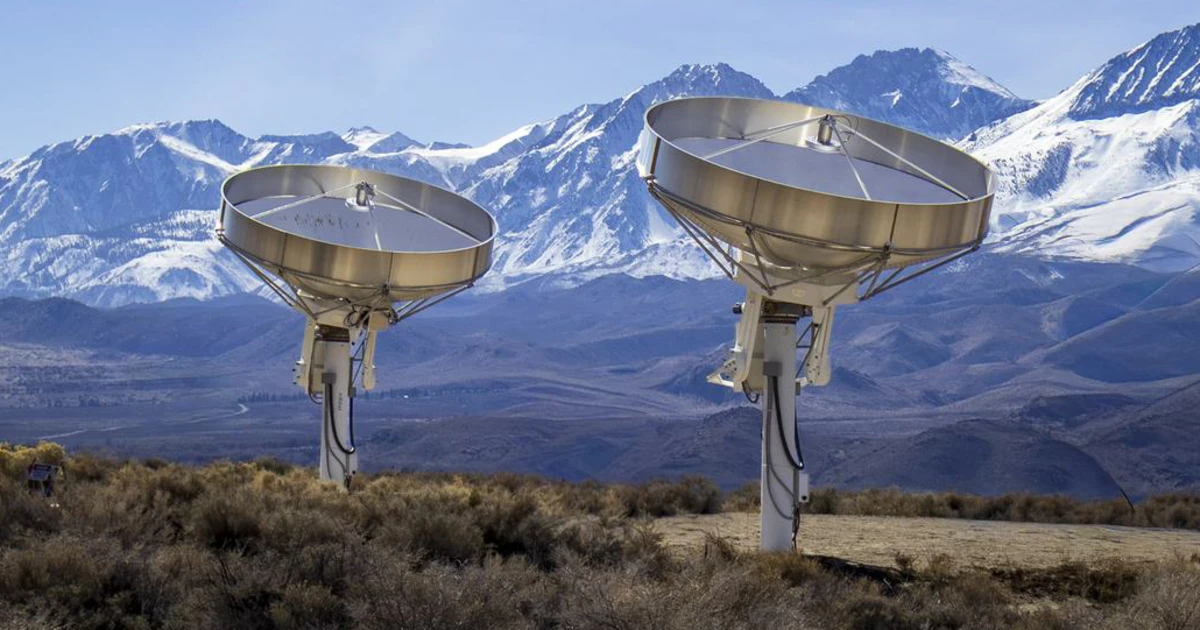
    Each dish in the project is approximately 20 feet in diameter, creating one of the largest radio telescope arrays ever constructed. Located in White Pine County, Nevada, the facility is managed by the Bureau of Land Management and will span over 123 square miles.

    Hallinan explained that the project is currently in the permitting phase, aiming to begin construction next year and achieve completion by 2029.

    Ground-based radio astronomy typically employs two types of telescopes: single large dishes, such as the Green Bank Telescope in West Virginia (328 feet in diameter), and expansive arrays of smaller dishes like New Mexico’s Very Large Array, featuring 27 dishes arranged in a Y-pattern.

    While single dishes excel in sensitivity for detecting faint radio waves, radio arrays facilitate clearer imaging. Hallinan asserts that deep synoptic arrays can achieve both functionalities.

    Members of the Caltech Deep Synoptic Array Team in a collaborative environment.
    Members of the 2026 Caltech Deep Synoptic Array Team.Katie Jameson / California Institute of Technology / DSA Project

    The Deep Synoptic Array aims to capture radio emissions from millions of celestial objects that emit radio light, significantly enhancing our understanding of the universe.

    “Radio astronomy is evolving from rough sketches to detailed photographs,” noted Vikram Ravi, professor of astronomy at Caltech and co-principal investigator of the Deep Synoptic Array. He elaborated in a statement. “The DSA is designed to observe a broader universe more frequently than any other telescope presently available.”

    Researchers plan to leverage the array for at least five extensive sky surveys, identifying intriguing radio emissions for further observation by other facilities.

    “We will pinpoint the exact location of any detected radio sources so that other telescopes—whether optical, infrared, or X-ray—can focus on them,” Hallinan asserted.

    Funding for the Deep Synoptic Array has been provided by the Schmidt Science Foundation, a philanthropic organization established in 2024 by former Google CEO Eric Schmidt and his wife, Wendy. Schmidt, who became CEO of rocket company Relativity Space last year, recently won a major NASA contract to deliver scientific equipment to Mars in 2028.

    Recently, two prototype plates were constructed near Bishop, California, as technology demonstrations, according to Hallinan.

    In search of the ideal location, Hallinan and his team explored various sites across California, Nevada, New Mexico, and Utah. They aimed for a remote area free from radio frequency interference like cell phone towers, Wi-Fi, and other electronics.

    Hallinan commented, “This telescope is so sensitive that it can detect cell phone signals from as far away as the sun.”

    Nevada’s Great Basin provides a natural barrier against significant interference, making it an optimal site.

    “The area boasts quiet valleys with very low populations,” he concluded. “The site in White Pine County was the most tranquil we found, making it highly suitable for radio astronomy.”

    Source: www.nbcnews.com

    Share. Facebook Twitter Pinterest LinkedIn WhatsApp
    Previous ArticleWhat Happens When Two Narcissists Fall in Love? Insights on Narcissistic Relationships
    Next Article Why Am I Farting So Much? Discover the Surprising Science Behind Flatulence

    Related Posts

    Science

    Two Key Signals That Might Indicate Contact with Aliens

    Science

    Why Am I Farting So Much? Discover the Surprising Science Behind Flatulence

    Science

    What Happens When Two Narcissists Fall in Love? Insights on Narcissistic Relationships

    Science

    Severe Weather Disrupts U.S. Travel: Storms, Floods, and Heatwaves Coincide with World Cup and Holiday Rush

    Science

    Scientists Reveal: Earth’s Early Reproduction Was Far From Ideal

    Science

    Science Predicts the World Cup Winner: Here’s Who Will Take the Trophy

    Science

    113-Million-Year-Old Pterosaur Fossil Uncovers Diet of Ancient Flying Reptiles

    Science

    New Insights: Earth’s First Land Animals Were Likely Not Like Amphibians

    Add A Comment
    Leave A Reply Cancel Reply

    Stay In Touch
    • Facebook
    • Twitter
    • Instagram
    • Pinterest
    Top Picks
    Science

    Matt Freeze: Harvard Graduate from a Renowned Scientific Family Poised to Lead the U.S. to FIFA World Cup Glory

    How did you reach success? Matt Freeze has steadily climbed through the ranks of college…

    Why Britain’s Mild Heatwave Feels Hotter Than America’s Most Severe Heatwave

    The new Raspberry Pi 5 has arrived!

    Discover the Countries with the Highest and Lowest Cholesterol Levels Worldwide

    113-Million-Year-Old Pterosaur Fossil Uncovers Diet of Ancient Flying Reptiles

    Most Popular
    Science

    Chronology of Earthquake-Induced Tsunamis in Japan: A Comprehensive Overview – Sciworthy

    Science

    Unlock Faster Cryptocurrency Mining with Energy-Efficient Quantum Computers

    Categories
    • AI (13)
    • Gadgets (10)
    • Science (307)
    • Space (9)
    • Technology (37)
    • Wheels (9)
    Our Picks
    Technology

    The story of traffic lights

    Science

    A revolutionary technique for connecting electronic devices with human cells

    © 2026 Hitechub.
    • Home
    • About Us
    • Privacy Policy
    • Terms & Conditions

    Type above and press Enter to search. Press Esc to cancel.

    We are using cookies to give you the best experience on our website.

    You can find out more about which cookies we are using or switch them off in .

    Ad Blocker Enabled!
    Ad Blocker Enabled!
    Our website is made possible by displaying online advertisements to our visitors. Please support us by disabling your Ad Blocker.
    Hitechub
    Powered by  GDPR Cookie Compliance
    Privacy Overview

    This website uses cookies so that we can provide you with the best user experience possible. Cookie information is stored in your browser and performs functions such as recognising you when you return to our website and helping our team to understand which sections of the website you find most interesting and useful.

    Strictly Necessary Cookies

    Strictly Necessary Cookie should be enabled at all times so that we can save your preferences for cookie settings.