


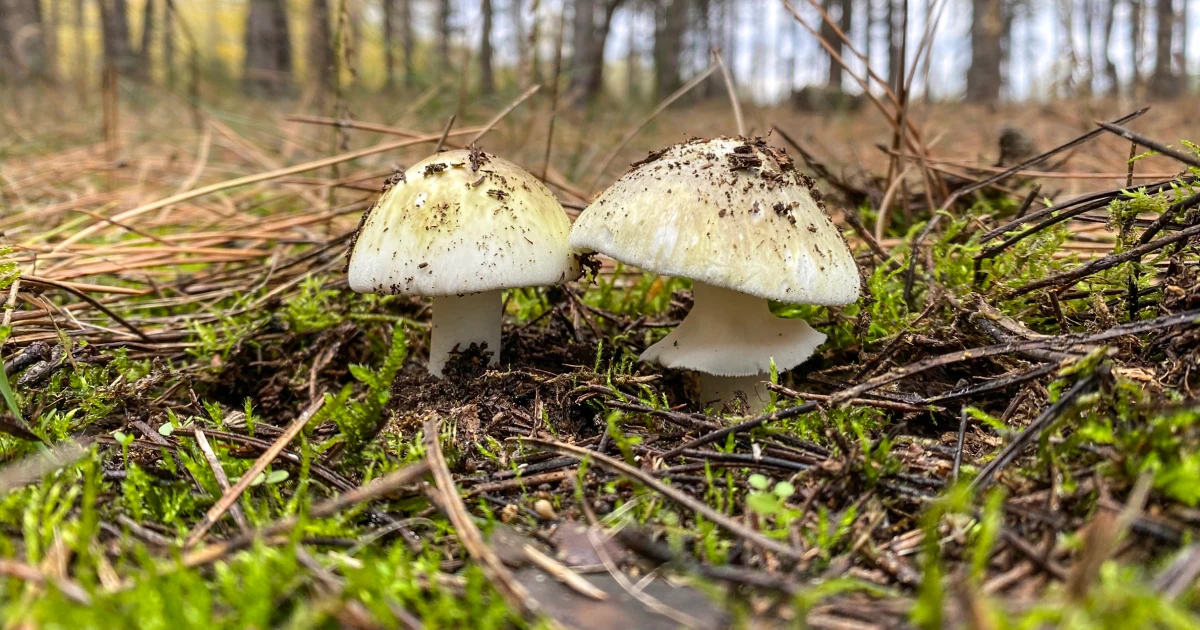
A significant surge of mushroom poisonings in California has tragically resulted in four deaths and 43 hospitalizations, marking it as the largest outbreak of this kind in U.S. history, according to experts.
Subscribe to read this story without ads
Get unlimited access to ad-free articles and exclusive content.

Earlier this week, three additional cases were reported, well after the usual growing season for mushrooms that cause illness. This has left public health officials and mycologists baffled about the extent of the poisonings and the factors driving this trend.
The latest three cases involved family members foraging mushrooms in Napa County on Saturday, falling ill on Sunday, and being admitted to Stanford Medical Center, as stated by Napa County Public Health Officer Dr. Kristin Wu.
Since the outbreak commenced in November, patients range from as young as 19 months to 84 years old. The California Department of Public Health notes that cases have appeared in clusters, with several families likely sharing the same batch of toxic mushrooms. Notably, four individuals have undergone liver transplants.
Poisoning incidents have emerged in over a dozen counties throughout the San Francisco Bay Area and along California’s central coast. Following a spike in cases last fall, health officials strongly advised against consuming foraged mushrooms.
“This outbreak is considerably larger than previous years, has lasted longer than anticipated, and continues to extend into this year,” remarked Heather Hallen-Adams, chair of toxicology for the Mycological Society of North America. “We may never fully understand why.”

Ann Pringle
The primary agent of poisoning is the invasive death cap mushroom, also known as the fly agaric. Another species, referred to as the Western destroying angel or amanita, accounts for certain cases. Typically, about 50 amanita poisoning incidents occur yearly in the U.S., yet California has already witnessed a considerable number. This month alone, five additional cases have surfaced.
“This surge is unusual,” stated Anne Pringle, a mycology professor at the University of Wisconsin-Madison. “Usually, the death season peaks during December and January. What could be the reason behind it?”
The ongoing outbreak has highlighted significant flaws within California’s public health infrastructure and the insufficient scientific understanding of mushrooms that generate these toxins.
Currently, healthcare providers are not mandated to report amatoxin poisoning to public health authorities, as per state regulations. Consequently, the California Department of Public Health relies on a more challenging and less structured tracking process compared to other conditions such as E. coli, West Nile virus, and shellfish poisoning.
“At present, information about these incidents typically reaches us through the California Poison Control System,” Wu remarked. “They are actively tracing and reporting these cases to the CDPH.”
Wu pointed out that the state health department is in the process of adding amatoxin poisoning to the categorization of reportable diseases. The department has yet to respond to requests for comment.
Wu disclosed that the three family members who fell ill recently were not residents of Napa County; they had allegedly been foraging mushrooms in the county’s rural areas.
“Their case was flagged solely because… they found mushrooms in Napa County,” Wu explained, emphasizing the importance of such information to safeguard other community members.
Since the outbreak began in California, a majority of the affected individuals identify as Spanish speakers, although others communicate in languages including Chinese, Ukrainian, Russian, Mam, and Mixteco (an indigenous language from Central America).
Consequently, public health experts suspect that some individuals are employing foraging techniques developed outside the U.S.
“We understand that when death cap and Western destroying angel mushrooms are active, they closely resemble certain native edible mushrooms from their regions of origin,” stated Wu.
To raise awareness, the Napa County Public Health Department has initiated radio advertisements in English, Spanish, and Mixteco regarding poisonous mushrooms. The California Department of Health has created flyers in nine languages.
“I’m quite surprised that we haven’t emphasized outreach to the Spanish-speaking community more — it’s a pressing public health concern,” Wu stated. “We will intensify our efforts in this area.”
The death cap mushroom is an invasive species that originated in Europe, introduced to California alongside imported seedlings in the 1930s. The Western destroying angel species varies by region. In California, death caps typically flourish around oak and occasionally pine trees. This mushroom typically measures several inches tall, sometimes larger, featuring white gills, a pale yellow or green cap, and a ring encircling the stem.
Amatoxins produced by these mushrooms can inflict damage to the kidneys, liver, and gastrointestinal tract. Symptoms of amatoxin poisoning may take up to 24 hours to emerge and encompass nausea, vomiting, diarrhea, and abdominal pain. More severe repercussions, including lethal liver damage, can occur within 2 to 3 days. Amatoxin is largely responsible for fatal mushroom poisonings, and even small quantities, comparable to a sugar cube, can prove fatal.
Mike McCurdy, president of the San Francisco Mycological Society, emphasized the swift spread of death cap mushrooms over the weekend.
“This is quite alarming; it’s not a trivial phenomenon — it extends from Monterey to Napa,” stated McCurdy. “No one can recall a spring spike of this magnitude.”
McCurdy reported spending around 20 minutes searching for death cap mushrooms on Saturday and identified over 20 “fruiting bodies” (the visible fungal structures) surrounding five live oak trees along the coast.
Pringle, who specializes in studying death cap mushrooms, remarked on the mystery surrounding their unusual abundance this year and their persistence late into the season.
“It’s amusing yet frightening,” she expressed.
In comparison to plants and animals, mushrooms receive notably less scrutiny and research funding, Pringle pointed out. Many of the toxins they produce remain poorly understood.
“Science requires funding to tackle this issue,” she asserted. “If we can discover strategies to mitigate this intrusion, we can curtail the associated risks.”
Source: www.nbcnews.com