


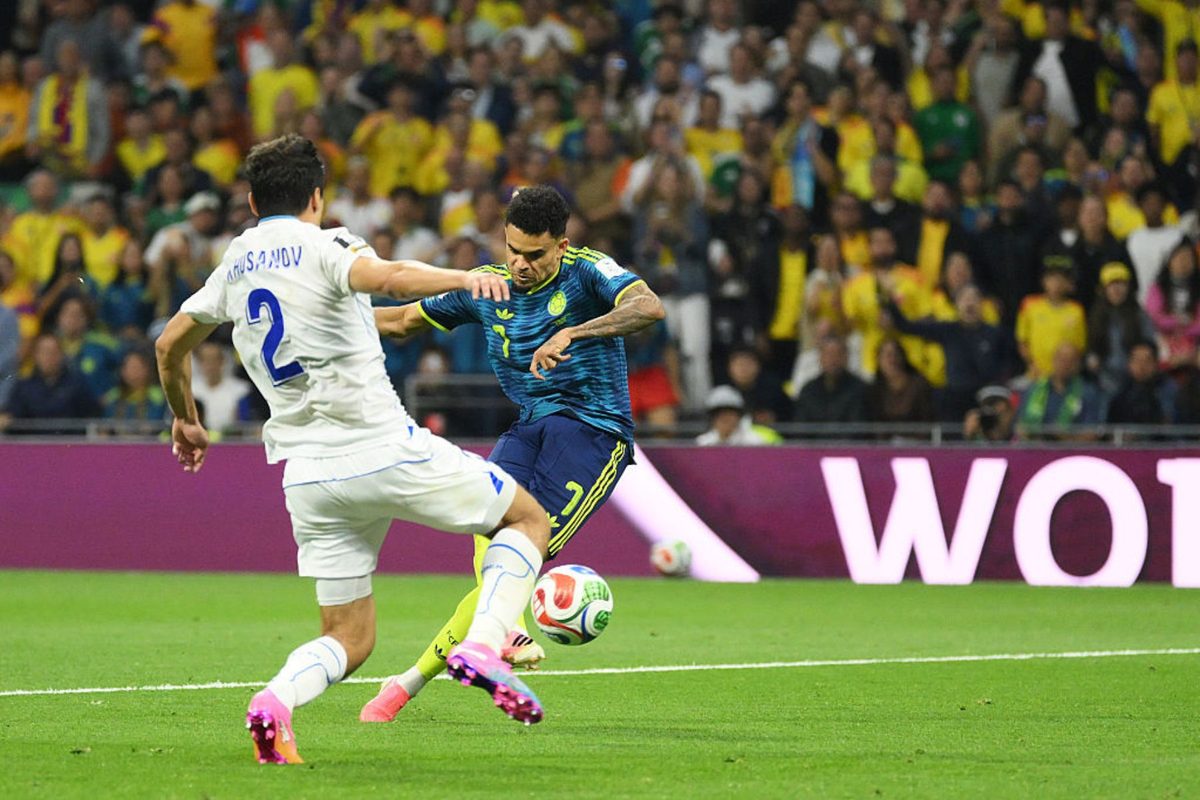
A team of European statisticians has developed an innovative machine learning algorithm capable of predicting the winner of the 2023 FIFA World Cup.
This advanced model analyzes extensive data on national teams and players, subsequently running 100,000 simulations to determine the most probable winner.
According to Dr. Achim Zeileis, lead author and statistician at the University of Innsbruck, Spain is the top contender to win this year’s tournament, closely followed by England, as explained in a blog post.
This isn’t the first instance where this group, which includes researchers from Germany’s Dortmund University of Technology and Munich University of Technology, Norway’s Molde University, and Austria’s University of Innsbruck, has employed machine learning to forecast the World Cup champion.
In 2018, the team successfully predicted the United States as the victor of the 2019 Women’s World Cup, but their predictions for the 2023 Women’s and 2022 Men’s tournaments, selecting Spain and Argentina respectively, were less accurate.
The algorithm predicting this year’s World Cup champion analyzes data from all domestic matches over the past eight years.
This information is complemented by ‘expected’ strength assessments for each team, sourced from combined odds data provided by international bookmakers.
The relative strength of each team is refined based on individual player ratings, which consider performance metrics at both club and international levels, as well as expectations in the global transfer market.
This comprehensive data is then inputted into a Random Forest machine learning algorithm, which evaluates each team’s winning prospects across various match scenarios.
While confident in the model’s predictions, Zeileis cautions that these outcomes are probabilistic and subject to unpredictable events, like the recent goalless draw between Cape Verde and Spain.
“All our predictions are based on probabilities and are less than 100% certain,” Zeileis acknowledged. “We can measure this uncertainty through various tournament scenarios, but the actual tournament’s outcome cannot be predicted in advance.”
This effort to predict the World Cup winner is not unprecedented; in 2014, mathematician Joachim Clement accurately forecasted Germany’s national team’s triumph in that year’s tournament, along with the winners of three subsequent competitions.
This followed his highly successful match-by-match predictions for Euro 2008 and the predictions made by a famous octopus that accurately selected Spain as the winner of the 2010 tournament before its untimely demise.
Read more:
Source: www.sciencefocus.com